Archive for the 'writer blog' Category

Telling Personal Stories

When I was in grade school I wanted to be a writer and one of the first things my English teacher told me was that to be a good writer you must be a good reader. Since that day, I have been a lover of books and have some ever-lasting visual memories of my mother taking me to the library and coming home with a stack of books piled all the way up to my chin.

My preference has always been to read real stories written by real people doing real things. Ralph Waldo Emerson once said, “No matter where you begin, read anything for five hours a day and you will soon be knowing.” My parents used to tell me that “knowledge is power,” and after having survived World War II and having lost most of their possessions as a result, they believed that knowledge was something that could not be taken away from you.

While growing up and through my teen years, I devoured biographies. I enjoyed compelling stories about spiritual journeys and also about other teens adjusting to the trials and tribulations of adolescence. Later, when my daughter got mixed up in a bad crowd, I sought stories written by other parents to help me cope with raising a strong-minded and rebellious adolescent. I even wrote a few of my own stories on the subject. When faced with cancer, I read cancer survivor stories. All these stories helped me navigate difficult times. Reading and learning about people in similar situations helped me realize that I was not alone in my journey.
The ringing in of a new year is a good time to come to grips with what might have plagued us in the previous year.

Journaling is a good way to do this, and another way is to read and hear the voices of others who have been in similar difficult situations. This was my impetus for compiling with co-editor, Jim Brown, my forthcoming anthology, Writers on The Edge: 22 Writers Discuss Dependency and Depression. As renowned author Jerry Stahl states in the foreword, “Open to any piece in this collection, and the scalding, unflinching, overwhelming truths within will shine light on places most people never look.” In fact these are the places many people want to visit – the dark places which are the most difficult to face. Many of us have experienced or at least been exposed to someone with an addiction or depression and the writers in this collection share their stories with honesty and candor. Some write as a cathartic exercise, while at the same time helping others through their own tenuous times. These short essays, confessions, or mini-memoirs share the author’s emotional truth about their addiction. The stories offer hope and ideas and all have a positive slant discussing addictions such as drugs, alcohol, food, sex, love, and gambling.

Poet Chase Twichell in her essay, “Toys in the Attic,” says, “A poem is a portrait of consciousness. It’s a recording of the motions of a mind in time, a mind communicating to others the experience of its own consciousness. When I read or write a poem, I’m trying to open a window between my mind and the minds of others. Poetry is written for others. But it’s also a study of the self, which is a private kind of work.”
In discussing memoir, William Zinnser in his classic book, Inventing the Truth, says, “Memoir is how we make sense of who we are, who we once were, and what values and heritage shaped us.” In another book, Writing About Your Life, he beautifully states, “We come from a tribe of fallible people, prisoners of our own destructiveness, and we have endured to tell the story without judgment and to get on with our lives.” The authors in Writers on the Edge do just that, whether they were involved in a twelve-step program or used writing as a healing modality—they have all succeeded despite their demons, and lead productive lives.

Reading the stories of others can help you learn about yourself. Discoveries are made, memories are revealed and wisdom is shared. Memoir writers courageously face the issues of their pasts and they can serve as role models for all of us. Their stories can provide an understanding of the inner workings of different types of people. Sometimes hearing someone else’s transformative story can inspire you to write your own, keeping in mind that the best writers allow the reader to formulate their own conclusion about the dark places that they or loved ones visit.

Please make your comments here and on where this article was originally published:

http://www.huffingtonpost.com/diana-m-raab/the-power-of-personal-sto_b_1187170.html

Have a super week!
Diana

Tribute to John Lennon — 31 years later …

(October 9, 1940 – December 8, 1980)

Last week celebrated the 31st anniversary of John Lennon’s death. As a hippie of the 1960s, who danced and made love to his music all day and night, my memories of his essence and songs will live with me forever. Like the rest of America, I remember seeing him first appear as part of the Beatles on the Ed Sullivan Show in 1965. There was something about the music, which resonated with everyone, and the proof is that The Beatles were one of the most successful commercial groups in the history of popular music. What is even more interesting is how the lyrics can continue to resonate in your head even this many years later. Lennon had an edge to him and perhaps it was his rebellious nature, politically, socially and musically which really resonated with many of us. Rolling Stone Magazine rated him the 5th greatest singer of all time. As what you might expect from a man with five sisters, he really understood women and his relationship with Yoko Ono is one, which many of us admired.

I just finished a few pages in my journal dedicated to Lennon and the powerful influence he had in my life. In addition to loving his music, I have another connection with Lennon. My last boyfriend, before getting married lived in the Dakota, and I know exactly where he got shot by Mark David Chapman. But that’s another story…
Check out this You-Tube of Lennon and one of my favorite songs of his: IMAGINE…

Here are the lyrics:

IMAGINE
Imagine there’s no heaven
It’s easy if you try
No hell below us
Above us only sky
Imagine all the people
Living for today…
Imagine there’s no countries
It isn’t hard to do
Nothing to kill or die for
And no religion too
Imagine all the people
Living life in peace…
You may say I’m a dreamer
But I’m not the only one
I hope someday you’ll join us
And the world will be as one
Imagine no possessions
I wonder if you can
No need for greed or hunger
A brotherhood of man
Imagine all the people
Sharing all the world…
You may say I’m a dreamer
But I’m not the only one
I hope someday you’ll join us
And the world will live as one

Serendipity, Synchronicity and Stanilav Grof

Serendipity and synchronicity are two words that I always get mixed up, yet I am fascinated by them both. As a writer I decided I should use make a more gallant attempt to use the words appropriately, so in the past week I have done some reading. Here’s what I learned. Serendipity refers to happy events which occur by chance, such as when you meet the love of your life at the most opportune time. It is a form of luck in someone’s life. Synchronicity refers to a series of thoughts or events that seem to be related but their connections are not overtly obvious. It is a coincidence that can be accompanied by a feeling that there is a reason or purpose behind occurrences, such as when you keep seeing the same person over and over in different places and think, “ok we should introduce ourselves, there’s a reason we keep running into one another.” These occurrences are usually difficult to explain as was something which happened to me last week.
Every Tuesday night some local writers gather for drinks at a local bar here in Santa Barbara. It’s casual and everyone attends when they can. We all have a great time when we are all together, as if no time passed in between. Due to travel and work load I had not been in about two months, but something compelled me to attend last week. I arrived late and there were no seats left around the table for ten. Two gracious male writers hunted down a chair for me and put it beside the only person I did not know at the table. Her name was Melodie Sullivan. We introduced ourselves to one another. On the table in front of her was a children’s book. “Melody has a new book,” another writer told me from the other side of the table. “That’s awesome,” I said picking it up. There was a beautiful illustration of a caterpillar on the cover and in the lower right corner Melody’s name as the writer and beneath it was “Stanilov Grof, illustrator.” Grof was the keynote speaker at my first seminar at The Institute of Transpersonal Psychology in September where I am doing my doctorate. I had written a blog about him on his fascinating research September 5th, 2011.
I wish I could have seen my face at that moment when I saw his name on the cover of a children’s book, the last place I thought I would see the name of a man who has researched non-ordinary states of consciousness for healing and who has researched the effect of LSD on the psyche!
“How do you know him?” I asked. She sighed and said, “Now that’s a long story.” In short she took one of his breath work seminars. In talking to him she learned that he was an illustrator and when she decided to write a book about one of her dreams, she solicited his illustrations. She told me that his passion in his younger years was to be an illustrator and by some fluke (another interesting story) he ended up studying psychology. I glanced at the bio note on the back flap and there was nothing mentioned about his psychology background. We joked and I said, “I noticed they didn’t mention anything about his work with LSD.
“Ha,” she added, “We decided that would not be something to add to a children’s book and my publicist said that the mention that he was a therapist might, in fact, hurt book sales!”
We laughed together, however, I returned home and thought that was not very comforting for me, the writer who is studying to be a psychologist, but so be it!
I walked away in awe and at home watched a video of Grof reading this fabulous book. If you are in need of a children’s book for a holiday gift, this would be a great option — and might be in line with your studies. Here it is:

Giving Thanks !

As many of my readers know, Thanksgiving is my favorite holiday because not only do we have a lot to be thankful for, but it’s also not a materialistic holiday. What can be so bad about a holiday which focuses on good food and being surrounded by loved ones?

Many writers and poets have written about Thanksgiving and gratitude and I always think of this holiday as a good time to engage in gratitude journaling.

If for a moment we slow down, we easily realize all that we have to be thankful for. Starting a gratitude list or journal is one way of putting your life into perspective. It is also a good idea to save this list for difficult times when we need a new perspective cast onto our lives. Some people prefer doing gratitude journaling in the morning and others prefer doing it just before retiring for the night. A writing colleague of mine kept her gratitude journal on her bedside table and made a list each night of five things she was grateful for. This exercise can inspire you to look for positive events during the day. It will help take the focus off the negative. After a while that attitude spills over into everything else you do.

Here is one of my favorite poems to share this time of year. It is from Mary Oliver’s first collection of poetry called, Thirst.

Messenger*

by Mary Oliver

My work is loving the world.
Here the sunflowers, there the hummingbird—
equal seekers of sweetness.
Here the quickening yeast; there the blue plums.
Here the clam deep in the speckled sand.

Are my boots old? Is my coat torn?
Am I no longer young, and still not half-perfect? Let me
keep my mind on what matters,
which is my work,

which is mostly standing still and learning to be
astonished.
The phoebe, the delphinium.
The sheep in the pasture, and the pasture.
Which is mostly rejoicing, since all the ingredients are here,

which is gratitude, to be given a mind and a heart
and these body-clothes,
a mouth with which to give shouts of joy
to the moth and the wren, to the sleepy dug-up clam,
telling them all, over and over, how it is
that we live forever.

• from Thirst.© Beacon Press, 2006; (copyrighted material for educational use only)

Wishing you all a wonderful feast on Thanksgiving!

Journaling in China

I just returned from two spectacular but exhausting weeks in China, visiting Shanghai, Xian, Hangzou and Beijing. Traveling always inspires new perspectives and a multitude of journaling ideas and angles. If you were to ask what was my favorite part, I would simply say, the part that I was visiting at the time. Their world is so different than our world that I walked around each and every day in amazement. Particularly captivating was the long historical backdrop of the dynasties and the lives of the emperors and how much time was spent in making the emperor’s lives so superior during their lifetimes and in the afterlife. The palaces and mausoleums left me in awe, saying nothing about the number of concubines each emperor had. As someone who has been reading a great deal on Buddhism, I was also amazed by the gigantic temples and number of larger than life-size Buddhas. Here is a summary of the trips highlights:

Shanghai. At the airport I was glad to be greeted by a guide, because no signs were in English. There was a sense of culture shock in other ways also, such as not being able to access certain aspects of the internet from Google to social networking sites. In some areas, internet was either not possible or intermittent in a way that had little to do with remoteness, but more as a result of government control over services. This city has been considered the Paris of the east because of its women and sex clubs. In general, it was not as congested, polluted or dirty as I imagined. Many of the city’s sensibilities were a merging of east and west, the businesses and the fashion, for example. What I witnessed were the results of a massive growth spurt during the last 15 years. We visited the Shanghai Museum, an eclectic collection of relics, bowls, phenomenal Buddhas and more. We visited what was known as the Jewish Quarter or by western definition, the tenement quarters, where three or four families lived in an area smaller than my kitchen. I had heard about all the Jews who fled the Nazis to land here, but I had no idea about their enormous influence on the city’s growth. Philanthropist businessmen like Viktor Sassoon and the Kadoorie family who owned many of the city’s hotels, made their productive mark in so many parts of the city.

The Chinese people have sayings about everything – I could not write quickly enough. Some made immediate sense while others I needed to ponder. Here are only some which I quickly scribbled down while the guides interjected their wisdom into their historical discussions:

• the bird is a messenger to heaven
• the peach is a symbol of longevity and has nine lives. good to give as a gift
• bamboo is loved by the Chinese as they see it as meaning a long life. they should always be upright as this means there should always be something to learn
• Chinese coins are always round (symbolizes heaven) and square (symbolizes earth)
• Buddha was born under the gingko tree therefore it is considered a Buddhist plant
• Do not step on thresholds because they are thought to be the shoulders of Buddhas and should never be stepped upon.
• The Chinese (or people in general) believe in religion because it guides you and gives you parameters
• Laughing Buddhas hold a bag with troubles in their hand. They fill them up and forget them. I love this idea and will try to incorporate it in my life!
• In talking about relatives – they like when their family lives ‘soup distance,’ away, meaning that by the time you bring soup it will still be warm. Not many of us in the United States have this luxury, and certainly with all three of my kids on the east coast, I do not, but look forward to possibly one day being able to bring my homemade soup to them!
• The lotus is a symbol of purity and integrity.
• The Lily flower is used at weddings and signifies the couple will have a harmonious life for 100 years to come. Never use willows because if a woman is compared to a willow it means that she is flirtatious. However, if a woman is compared to a lotus, it means she is a natural beauty and does not need make up. Speaking of marriage– The Chinese say that the husband makes all the important decisions, but it’s the wife who decides what’s important!

Hangzhou. I loved this place. Our hotel was situated on beautiful West Lake. The first night we saw a water show of an unusual sort. There was a stage about three inches under the water, spanning the lake and the performers/dancers were dressed in traditional attire. They were like dancing fish performing a remarkable love story. Absolutely spectacular, with large boats and little row boats taking the lovers off into the sunset.

Hangzhou has been known as a honeymoon town and hometown of silk and tea. As a lover of green tea, I adored the private tour of the Mei family tea plantation and tea ceremony known for the best green tea in China, especially Dragon Well tea. (BTW, after buying boxes and bags of the stuff, I heard that we can get this tea, although a lesser quality, at Teavanna which is only minutes from my house!) This tea has three qualities, depending upon the season in which it was harvested. By the way, the water for a good cup of tea should not be brewed in a temperature more than 85 degrees. The hotter the water, the more bitter the leaves. The best time to drink is 30 minutes after meals as it aids in digestion. There is a big statue of Lu Yu (Literati) because he was considered the father of Chinese tea. He wrote the first book on Chinese Tea. I will never use tea bags again and I might have figured out why the Chinese women have such good figures.

We visited an herbal pharmacy that has been in business for centuries. I learned that herbal medicine consists of herbs, animal parts and mineral rocks.

Beijing. The great wall goes on and on. We were on the west side of the wall and took a cable car part of the way. The towers were built first and it’s amazing they even built a wall on this very mountainous terrain…there were a few times when I wondered about its real purpose! Visiting Tiananenmen Square and the mausoleum of Chairman Mao was a powerful way to end the trip. There were many visitors on this week day and we were told that many younger families bring their older relatives to remind them of the way things were. It was fascinating to see the history sweep across the faces of the seniors who vividly remember the perils of the Communist Regime. Our guide told us that two things the Chinese really value is their food and their freedom—and after visiting China, I can attest to this, even though I don’t think I will have another bowl of rice or marinated meat for a long time. We welcomed a big platter of French fries on our last evening out.

One last thing. When we asked the guide what American tourist attractions they associate with us, he said, Hollywood and Vegas! Now that’s a thought to ponder! No mention of the Empire State Building, The Statue of Liberty, Mount Rushmore, The White House or The Grand Canyon!

Thank You Cancer ….

Dear Readers

There is no cancer in my family, no cancer of any kind, except for mine. I am now 57 and it’s been 10 years since my diagnosis and I have never felt better.

Read more on my latest blog entry in honor of Breast Cancer Awareness Month, on The Huffington Post

http://www.huffingtonpost.com/red-room/breast-cancer-surgery-_b_967025.html

Here’s to your health ..

Namaste,
Diana

Writers and Their Dark Places

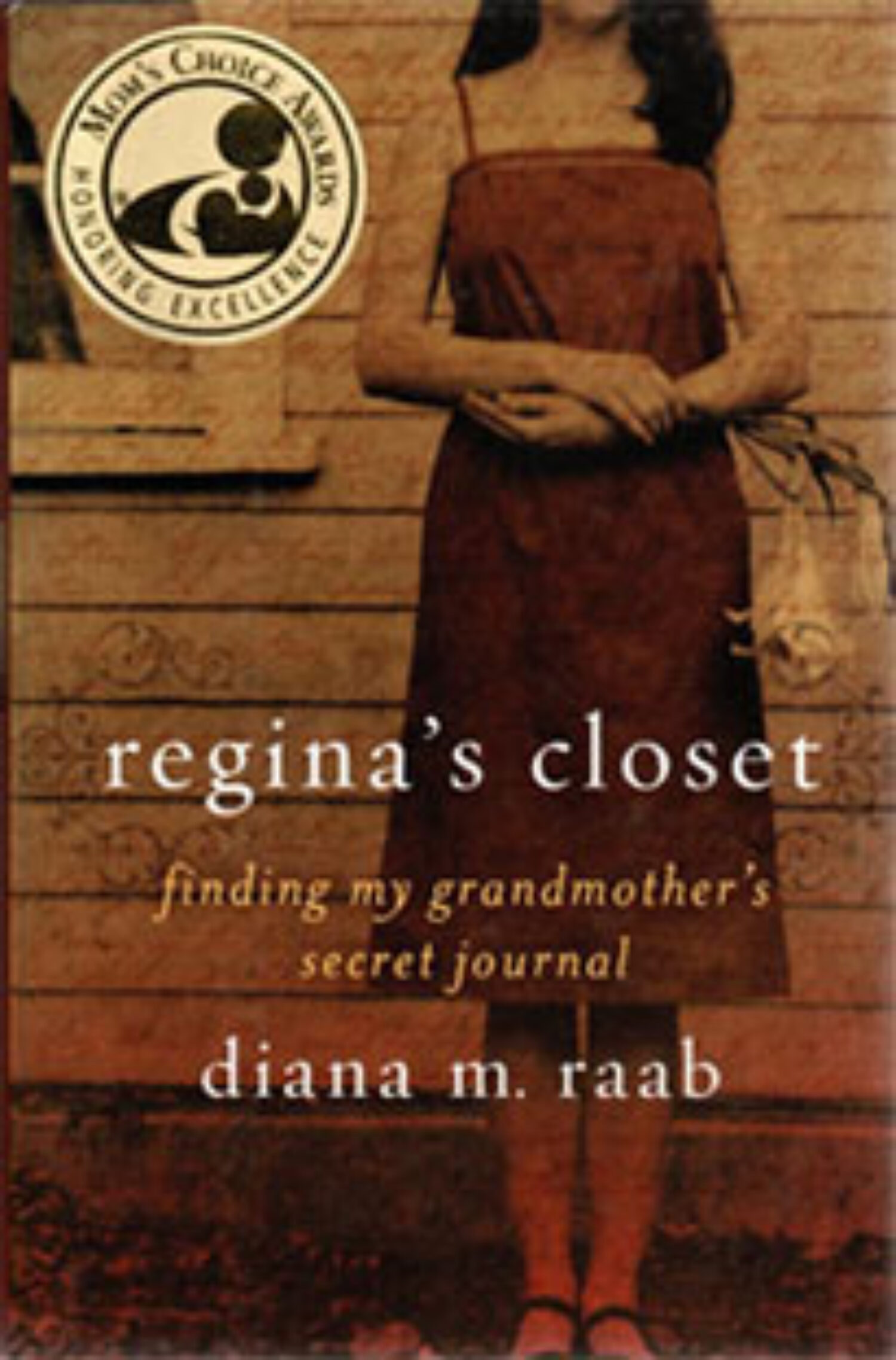
When I was ten years old my grandmother and caretaker committed suicide in her bedroom beside mine. It was Labor Day weekend and I knocked on her bedroom door to see if I could swim in a friend’s pool. With a child’s intuition, I knew something was seriously wrong and phoned my mother at work. Within minutes, an ambulance arrived at the front door. They took my grandmother away on a stretcher and I never saw her again. The emotions and visuals from that experience left me with an indelible wound which writing helped me heal.

It was the 1960s, a time when children were not typically welcome at funerals. Instead, my mother bought me a gold-embossed Khalil Gibran journal with sayings on the top of each page. She left me with a babysitter and told me to write down my feelings on the pages of my new journal.

To read more … check out my blog post in THE HUFFINGTON POST..

http://www.huffingtonpost.com/diana-m-raab/writers-and-their-dark-pl_b_994138.html


Have a good week !

Namaste,
Diana

Remembering Steve Jobs

Dear Readers:

Last week’s news about Steve Job’s passing left me speechless. It’s not that we were not all expecting it, but it just seems that sometimes we just get a sense that some people are immortal. He was one of those individuals. Jobs was a brilliant human being, innovator and visionary who will remain in our hearts and in our lives for a very long time. People often ask me how I am so efficient. In all honesty, I could not do all I do without Jobs–his creativity and innovations. His creations have made work fun. My MAC is like a friend … reliable and always there for me. My iPhone has become my confidant and I don’t go anywhere without it and if I do, I turn around and return home to retrieve it. It’s my connection with the world and with myself. Thank you Steve Jobs for everything. May you rest in peace…

I would like to share the wonderful words on the Apple Website:

Remembering Steve Jobs

Steve Jobs
1955-2011

Apple has lost a visionary and creative genius, and the world has lost an amazing human being. Those of us who have been fortunate enough to know and work with Steve have lost a dear friend and inspiring mentor. Steve leaves behind a company that only he could have built, and his spirit will forever be the foundation of Apple.

If you would like to share your thoughts, memories and condolences, please email rememberingsteve@apple.com

The Joy of Meditating

In keeping with my young adulthood passions, I have recently circled back to my young adulthood passion of group meditation in addition to my private practice at home every morning. Recently I have been attending the local Buddhist Center that practices Kadampa Buddhism founded by Geshe Kelsang Gyatso. This type of practice is dedicated to people everywhere to help us find meaning and purpose in our everyday lives. The goal is to develop a sense of peace and happiness. In this week’s discussion the Monk spoke about how the spiritual mind feels a larger goal in life and does not get caught up in the little things happening. He tends to focus on what he can do.
Often times when I talk about meditating, people tell me they want to do it but don’t know how to start. Of course, the answer is there are many different ways to meditate and you must find the right one for you. For example, some people like guided meditation to music while others prefer the quiet. It is really a wonderful way to start your day. Here are some basic guidelines for beginners:

- Find a quiet time and place
- Sit cross-legged on a cushion or a chair. It’s important that your back is straight.
- Rest your hands comfortably on your knees or lap, palms facing upward
- Close your eyes
- Focus on your breath. Nostril breathing is best.
- Do this for 10-15 minutes a day

The biggest challenge is fighting what Natalie Goldberg calls “the monkey mind.” Whenever your thoughts wander away from your breath, it’s important that you bring your attention back to your breath. Do not become obsessed or wrapped up in an idea or “to do list.” This is not the idea of meditation. It’s all about relaxation. Over time, you will notice a sense of calm and spacious feeling of the mind. You can also practice this exercise with your eyes open, waiting in line at the bank, supermarket or seated in a doctor’s office. Focusing on your breath can be enlightening. Try it!

Journaling (Non-Religious) Spirituality

Over the years I have oscillated back and forth on a spiritual continuum. After much contemplation I have come to the conclusion that I am a spiritual person but not a religious person. My spiritual journey began at the age of ten, when my mother gave me a red leather journal with Khalil Gibran sayings on the top of each page to help me cope with the then recent death of my grandmother. “Write down your feelings,” she told me, in an effort to help me through the loss. Gibran’s words of wisdom resonated with me at a deep level. His ideas also gave me something to grasp onto as I navigated through the pain and searched for reasons why she might have taken her life.

After my grandmother’s death, I also tried to find solace in traditional Passover rituals, but they just confused me. Not only did I not understand Hebrew, I didn’t even understand what the prayers meant in English and nothing was ever explained to me. As an only child of working immigrant parents I was taught to take things at face value and not look beyond.

During my early college years, I continued to search for meaning and signed up for an introductory course in transcendental meditation (TM) with Mahareshi Mahesh Yogi. The first meeting was held in an old two-story mansion. After being greeted by two young smiling women with ponytails and a sparkle in their eyes, we were escorted into the dining room where chairs were lined up in church-like fashion. When all of the seats were occupied, Maharishi gave an introduction into the practice of TM.

When the time came to raise my family, the question of religion surfaced once again. My husband and I decided to do what my father did and continued to be “Minimalist Jews,” meaning we would follow the holiday traditions, but remain unaffiliated. When our children began questioning, we chose to handle it differently than my own parents. We booted up our computers and bought some reference books and researched the meaning behind all the Jewish traditions. Fortunately, this information was much more accessible than during my own childhood where the only resource was typically the World Book Encyclopedia.

After my father passed away in 1991, we slowly abandoned many of the Jewish traditions and accentuated with our kids the simple importance of being honest, being a good person and practicing loving kindness. I also encouraged my children to meditate and take yoga classes.

In 2008 when the Dalai Lama visited my home town, I found myself passionately yanked into and moved by his words. Buddhist beliefs resonated with me at a deep level, perhaps because many are similar to those of the Jewish tradition instilled in me by my father. Others were simply common sense reminders of the importance of goodness. Here are only a few of his powerful tenets: be kind to others, whether your beliefs are similar or not; cultivate a habit of inner discipline; when our hearts are filled with love, there is no room for suspicion; one of the most beautiful aspects of being human is being able to smile; our attitude is critical for inner peace; negative thoughts and emotions obstruct our basic aspirations for happiness; and compassion belongs in every sphere of activity.

My spiritual journey has evolved from following mysterious rituals in childhood to seeing the clarity of Buddhist beliefs today. Losing my grandmother and the other sad moments in my life have made me appreciate the good times. I now welcome compassion and the fine art of living. Although Buddhism has many facets, the basic tenets of caring for and acting out of the concern for others, regardless of our religious traditions unites people, rather than dividing. This idea is so important during these tenuous and challenging times as we all search and struggle for some global meaning and sense of internal and external peace.