
Praise for Writing for Bliss:
“This is an excellent book that is very readable, instructive, inspiring and healing. The author Diana Raab, PhD has vast experience writing and teaching others how to write memoirs, journals, books and poems. She has a Masters degree in Arts and a PhD in Transpersonal Psychology. The book is easy to read and can be enjoyed by lay and professional audiences alike. Raab has the rare ability to alternate comfortably between personal sharing, educational instruction and scholarly references and quotes in a way that can catalyze healing, wholeness, growth, insight, well-being and potentially life transformation. …
The core of Writing for Bliss, however, centers around the 7 step plan:
1. Preparing to Write focuses on creating a sacred space, calming the mind, grounding yourself, feeling gratitude, being courageous and nurturing creativity, inspiration and flow.
2. Cultivating Self-Awareness focuses on using techniques and approaches drawn from transpersonal psychology and related disciplines such as setting intentions; mindfulness meditation, lovingkindness meditation, guided creative visualization, hypnosis, breath work, recalling dreams and working with your shadow. Raab quotes freely from Maslow, Jung, Frankl, Thich Naht Hahn and Anais Nin (her favorite writing mentor) and many others in her journalistic field. The quotes alone are powerful, informative, educational and uplifting.
3. Speaking Your Truth focuses on the art and power of storytelling; writing your emotional truth; finding your authentic voice; embodied and reflective writing and memory and imagination. Throughout this and all chapters Raab invites the reader to use her numerous writing prompts which cover a wide range of emotions, meanings and basically the challenges and struggles experienced during one’s whole life span. The prompts alone are probably worth the price of the book. By using the prompts, one’s life begins to unfold in a new and transformative way filled with higher perspectives, clarified purpose and reframed meanings.
4. Examine Your Life focuses on life purpose and themes; the meaning of experiences; the patterns in our lives; writing about difficult times; wounded healers and storytellers; healing stories; mortality as a teacher and inner child healing. Just reading the dialogue and stories in the book encourages the reader to reflect on all aspects of his/her life. This includes experiences from childhood to the present. In the process the reader has the opportunity to create and stimulate personal, relationship and spiritual growth, balance, emotional stability, joy, purpose, and wholeness, from periods of turmoil, trauma and crises.
5. Finding Your Form focuses on different tools for journal writing such as notebooks, letters, essays, blogs and journals of various kinds. Raab discusses in particular dream journals, gratitude journals and travel journals as well as memoirs (her personal favorite), biographies and autobiographies and writing fiction. In the process she discusses how to make a memoir compelling (more stories and less telling) and some essential writing tips.
6. Unleashing With Poetry (she is also a poet) focuses on types of poetry; poetry as inspiration; poetry as healing and therapy; reading poetry; the courage to write poetry; writing compelling poetry and the role and use of metaphor.
7. Sharing Your Writing focuses on writing about others and what to include and leave out; writing about family secrets; about sex and intimacy; writing love letters; revising and editing; showing drafts to others for feedback and encouragement; publishing basics and where to submit your work for publication.
Writing for Bliss is very comprehensive. If you follow Raab’s instructions and use the prompts it might just change your life in very positive and uplifting ways. It can be used to facilitate healing from all kinds of emotional pain: grief, loss, anxiety, guilt, anger, rage, betrayal, fear, shame, frustration, disappointment and confusion and bring the reader to greater levels of peace, love, happiness, joy, acceptance, forgiveness, gratitude, insight, blessings and perhaps even grace and bliss. It has the possibility as well of healing relationships of all kinds. In addition, the writing prompts and ideas in the book can be used by many different therapists and healers as a tool to accompany the many techniques they already use to facilitate change.
Diana Raab is clearly a very talented writer and healer. She has brought together a lifetime of knowledge, tools, approaches, wisdom, scholarship, life experience and creativity in this, her latest, very integrative and uplifting book. It can bring you from darkness to light. I am grateful I had the opportunity to read it. Writing for Bliss is highly recommended. It might just help change your or your client’s life.”
~PHILIP FRIEDMAN, PhD, Director of the Foundation for Well-Being
“Poet and memoirist Raab (Lust) credits her lifelong love of writing and its therapeutic effects with inspiring her to write this thoughtful and detailed primer that targets pretty much anyone interested in writing a memoir. Most compelling here is Raab’s willingness to share her intimate stories (e.g., the loss of a relative, ongoing struggles with cancer, a difficult relationship with her mother). Her revelations are encouraging …
~PUBLISHERS WEEKLY
“Writing for Bliss is about the profound ways in which we may be transformed in and through the act of writing. I am grateful to Diana Raab for sharing it, and I trust that you will feel the same as you read on. May you savor the journey.”
~from the foreword by MARK FREEMAN, PhD
“Part writing guide, part memoir, and part love letter to the craft of writing, Diana Raab’s Writing for Bliss is a caring and motivational guide. Raab’s love of words and her belief in the power of story shine through.A lifelong writer, psychologist, and cancer survivor, Raab pours all of her experiences and background into this slim book, advocating for the healing powers of writing. Exploring everything from mindful breathing and meditation to personal transformation through poetry and journaling, this is a guide on how to live a more fulfilling life….
This book will speak to all who value self-discovery. It offers life-changing tips and practices to guide its audience through loss and grief, as well as through changes and joy. It will prove especially useful for those who have already developed a love of writing.
With prompts scattered throughout the book, there are many opportunities for writers to expand their talents and mine their personal experiences for material. Raab’s guidance will also prove helpful for writers who feel stuck in one genre; she advocates trying out every format, including journaling, personal essays, and poetry. Writing for Bliss does an excellent job of explaining how such practice can enhance lived experiences.
Raab’s own story plays heavily into the work, adding depth and emotion. The daughter of Jewish immigrants, she was deeply affected by her mother’s distance and by the suicide of her grandmother. Writing was her place of solace, and it continued to be a source of salvation through difficult pregnancies, two bouts with cancer, and other upheavals. Raab’s insights resonate, making each of her points more impactful.
Raab’s love of words and her belief in the power of story shine through. With its hypnotic and personal stories, interviews with other authors, and many useful writing prompts, Writing for Bliss will find a valued spot on the bookshelves of those seeking greater understanding.”
~FOREWORD REVIEWS
“By listening to ourselves and what we are saying and feeling the true story of our life’s past experience is revealed. Diana Raab’s book gives us the insights by which we can achieve this through her life coaching wisdom and our writing…”
~BERNIE SIEGEL, MD, author of The Art of Healing and 365 Prescriptions For The Soul
“This, by far is one of the best books I have ever read. It is so organized and well thought out that everyone should have it. From preparing to write, cultivating self-awareness and speaking the truth, to finding your form and sharing your writing, the author displays a rich and well-worth learning experience for a writer…. The book even goes into detail about how you can write about sex and intimacy or write love letters and what to include when revising or editing a piece. There is nothing off topic and everything receives a well in-depth placement in this book. Anyone searching for a therapeutic way to heal or to deal with trauma can benefit from this book. It encourages you to write a memoir and to keep a diary. I specifically loved how the author invites you to write without thought, making you realize later where your trains of thoughts take you and how significant the outcome of it is. I highly recommend Writing for Bliss to writers, psychology majors and anyone that wishes to heal through writing.” ~UNDERRATED READS “… for those who hope to use writing as a way to gain a deeper understanding of themselves, Raab offers a uniquely helpful approach. A worthy, practical guide for the aspiring memoirist.” An experienced author shares how to gain a better understanding of oneself in a book that’s part self-help tome, part writing manual… Throughout her life, Raab (Healing with Words: A Writer’s Cancer Journey, 2011, etc.) turned to writing to cope with trauma. Now, she combines her knowledge of that art with her study of the mind (the author has a PhD in psychology) in a book that aims to help people use words to find joy and healing. Lessons and accompanying writing prompts are designed to “inspire and teach you to learn more about yourself, tap into your emotional truth, find your authentic voice, and write about your own losses, challenges, and joys.” The process begins with tips on creating a sacred space for writing, a discussion of the mind-body connection, and an overview of meditation techniques. Then Raab moves on to advice on finding one’s voice, deciding which life stories to tell, and developing a journaling habit. (The author advocates pen-and-paper journals but asserts that “writing on a computer is better than not writing at all.”) Throughout, Raab includes anecdotes from her life, including how memoir writing helped her come to terms with her grandmother’s suicide. Most of the book is focused on working in that popular genre. The author dedicates one chapter to verse, in which she disdains formalism in favor of a confessional style that produces “more accessible poems in which there is resonance between the reader and writer.” Fiction gets short shrift, with just a few pages tacked on to the end of one chapter. She deftly tackles the tricky issue of preparing a book for publication, particularly how to communicate with family members who might be subjects of the work. Throughout, the emphasis is on writing as part of a larger process of healing or discovery. Readers looking for advice on plotting or character development won’t find much here. But for those who hope to use writing as a way to gain a deeper understanding of themselves, Raab offers a uniquely helpful approach. A worthy, practical guide for the aspiring memoirist.” ~KIRKUS REVIEWS “The power of storytelling and it’s ability to transform one’s physical, mental, and spiritual well-being are expertly presented in this inspirational guide that navigates the reader on a creative journey toward self-discovery.” ~US REVIEW OF BOOKS “Diana Raab is an award-winning memoirist, poet, blogger, workshop leader and speaker. In Writing for Bliss she draws upon her years of experience and expertise to provide aspiring writers with techniques and prompts for that will lead even the most novice writers to tap into their creativity through storytelling and poetry. Writing for Bliss also examines how life-changing experiences can inspire writing, pursue self-examination and self-discovery … ~MIDWEST BOOK REVIEW “Dr. Raab offers you a blueprint for transforming your life through writing. Her insightful book is full of great writing prompts to help you gain clarity of past events in your life, and the emotions associated with them. Writing for Bliss takes transformation through writing to another level. It will help you remove the thorns in your psyche, so you can free yourself from the bondage of your past, and realize true inner peace and happiness. I highly recommend her new book!” ~CHARLES A. FRANCIS, Cofounder and Director of the Mindfulness Meditation Institute “Writing for Bliss brims with the truths of Raab’s life, as well as that of other established and beloved authors and philosophers. Writing for Bliss is far more than a “how-to-manual,” it enlightens the creative process with wisdom and a delightful sense of adventure. Bravo to Bliss!” ~LINDA GRAY SEXTON, author of Searching for Mercy Street: My Journey Back to My Mother, Anne Sexton and Bespotted: My Family’s Love Affair With Thirty-Eight Dalmations “Writing for Bliss is a wonderfully warm, generous and inspiring book on the transformative powers of writing in our daily lives. Only a talented writer who has fought hard to overcome life’s many obstacles could take her readers by the hand and lead them through the writing process with such enormous compassion, amazing insight, and kindness. Diana Raab is a powerful, wise, intelligent guide well worth our following.” ~JAMES BROWN, author of The Los Angeles Diaries and The River “In Writing for Bliss, Diana Raab reminds us to begin every page with an open mind, a curious heart, and fresh eyes. The prompts are thoughtful, stimulating, and a valuable resource for any writer’s mental health and spiritual growth.” ~DINTY W. MOORE, author of The Mindful Writer “With the help of this indispensable guide to therapeutic writing, you’ll understand yourself better and be able to deal with various challenges in your life, such as depression, anxiety, addiction, loss of loved ones, diseases, and life transitions.A personal narrative can truly have healing and transformative powers. In her inspirational new book, Writing for Bliss, Diana Raab, PhD, examines how life-changing experiences can inspire you to write a compelling narrative of your life…. Geared for the emerging writer, the seasoned writer, and those in academia, this book leads spiritual seekers down the path of self-discovery through writing prompts, tools for journaling, and embodied and reflective writing techniques; and offers ways to find the best vehicle for profound self-expression. Those who can benefit from writing a life narrative may have been exposed to early-life trauma, loss, or addiction. Writing your story is a way to reclaim your voice, reveal a family secret, or simply share your story with others. Journaling is a cathartic and safe way to work through your feelings and “direct your rage to the page.” With the help of this indispensable guide to therapeutic writing, you’ll understand yourself better and be able to deal with various challenges in your life, such as depression, anxiety, addiction, loss of loved ones, diseases, and life transitions. Offering step-by-step practical exercises for journaling your thoughts, emotions, and memories, along with techniques to jump-start your writing, Writing for Bliss will help you achieve the therapeutic results of writing for healing, and provides essential information for using this technique to transform your life in a meaningful way.” ~AWESOMEGANG “Engrossing techniques for reflective writing and self-expression, with the aim of bringing about growth and personal transformation through telling your own life story. Suitable for both experienced and emerging writers, students and academics.” ~THE BOOKSELLER “Diana Raab describes my writing process to the tee. She nails it. All that we write is us, the universal experience of life comes from the specific details we explore in our own lives. The disturbances we observe and the sense we make of things become the stories we tell, which, in turn, become the catharsis we need to live from one day to the next…. ~STEPHEN A. SCHWARTZ, L.A. Times bestselling author of Boulevard and Beat “Uniquely blending inspiring insights with practical advice, Diana guides you on a path to discover the story that is truly inside you and yearning to be told.” ~PATRICK SWEENEY, coauthor of the New York Times Bestseller Succeed on Your Own Terms “Writing for Bliss is jammed with examples (personal and from other authors), tips, a plethora of writing prompts, and a chock full list of books for further reading. Raab’s ability to reach out and tenderly touch her audience is nothing less than awe-inspiring.“There are many reasons why people become writers, and their reasons are all valid. In Diana Raab’s case, she began journaling as a source of healing—a way to express her feelings after the only grandmother who she knew (as well as her long-time caretaker) committed suicide…. “My intention in creating this present book, Writing for Bliss, is to share my passion for writing and how it has helped me heal over the course of six decades. I hope it will help you transcend what immediately meets your eyes by digging deeper into your psyche and hearing the voice of your true authentic self, while listening to the messages of your heart rather than suppressing them.” Writing goes hand-in-hand with reading, so if you think you’re not much of a reader or writer but have a desire to go there, then you’ve come to the right place. Maybe you’re at the other end of the spectrum—a seasoned reader and writer. Raab has plenty to steer you into an eye-opening “trajectory,” as Raab puts it. In a nutshell, Raab’s “seven-step plan for telling your story and transforming your life,” as her subtitle indicates, is all about introspection—a topic that is as old as scriptures in the Bible. Unfortunately, for many, choosing to “examine oneself” fits into the category of “the road less traveled” since it requires facing one’s fears—an action that is as frightening as the fears themselves. “Self-reflection,” Raab states, “encourages you to examine your thoughts, feelings, attitudes, and beliefs.” Her proactive approach to self-examination may be methodical as well as user-friendly, but on a larger scale, it is laced with a huge heart of compassion. Life can be tough, and everyone goes through trials on various levels. People may be on different journeys, but their paths lead to the same place of desiring to achieve the highest of dreams possible. That said, she encourages her audience to read her book the first time through to get a basic overview, and then zero in on the areas that speak loudly and clearly during the second round. The first four steps concentrate on engaging in the introspection process. Topics range from “rituals to writing” and transpersonal psychology (“the newest and fifth branch of psychology”) to “the art of power of storytelling” and “the meaning of experiences.” The last three steps provide tools to help readers find their voice, such as journaling, poetry, as well as publishing for those who love the challenge of going the extra mile and sharing their memoirs to others who could use a helping hand. Barely over 200-pages in length, Writing for Bliss is jammed with examples (personal and from other authors), tips, a plethora of writing prompts, and a chock full list of books for further reading. Raab’s ability to reach out and tenderly touch her audience is nothing less than awe-inspiring. Closing on Raab’s words, she leaves her audience with these thoughts: “My hope is that readers will become inspired to write during their joyous and difficult times, while also experimenting with different genres and ways of writing and being.” Quill says: An absolute must read for those seeking real breakthroughs in their lives.” ~FEATHERED QUILL BOOK REVIEWS “Writing for Bliss brings to an aspiring author everything necessary to accomplish a finished book. Raab’s detailed instruction includes her own journey from journaling in childhood to completed published works. She shares a look into her ‘warrior-self’, and how to use prompts to write from an inner point of view—the transpersonal-self.” ~BARBARA SINOR, PhD, author of Finding Destiny and The Pact: Messages from the Other Side “Diana Raab keeps simple and yet profound in this persuasive book about why and how writing can heal us and lead to transformation in our lives. For anyone who has ever wanted to write a story, poem, memoir, or create a blog, journal or spiritual writing practice, Raab gives you powerful tools to untie your knots, open your heart, and find more happiness. This wonderful book is for everyone, beginning and seasoned writers alike will be inspired to write with more authenticity, joy, and truth.” ~JULIE GOHMAN, PhD, author of 10 Sacred Questions for Every Woman and “Diana Raab’s life, philosophy and academic preparation combine in this volume to guide readers into understanding themselves and the writing process. Her words will guide you to your own discoveries, both spiritual and practical and allow bliss to become a significant aspect of your life. As a sister survivor of cancer at City of Hope, our lives, our teachings, and our writings are forever intertwined.” ~JULIE DAVEY, Author of Writing for Wellness: A Prescription for Healing “Diana Raab’s promise of bliss is no exaggeration. Take her wisdom. Follow her advice. They indeed lead to success no matter the creative bonnet you have donned today. And, yes, Bliss.” ~CAROLYN HOWARD-JOHNSON, poet fiction writer, and book marketer “This is a very useful resource, one that writers of all genres will return to frequently.” ~READERS FAVORITE “I have read quite a lot of books, websites, and other resources, but this one definitely stands out…The book provides abundant writing tips to the novice as well as seasoned writers. In a nutshell, pick up this book if you are looking for some inspiration to write.” ~BOOKISH REVIEWS
This, by far is one of the best books I have ever read. It is so organized and well thought out that everyone should have it. From preparing to write, cultivating self-awareness and speaking the truth, to finding your form and sharing your writing, the author displays a rich and well-worth learning experience for a writer.
10 Sacred Questions for Every Mother
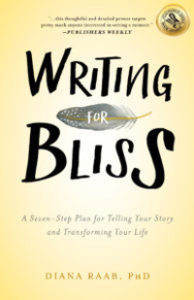
Excerpts from Writing for Bliss:
Writing and Bliss
Well Being Journal. September/October 2017
Writing as Therapy
Creativity Portal. September 4, 2017
Are you a Seeker?
How to Tell & Tap the Transformative Power of Writing
(excerpt from Writing for Bliss)
Yoga Journal online. September 1, 2017
Writing Poetry for Beginners
Women Writers, Women’s Books. September 1, 2017