Tag Archive for 'Journals'

Happy Columbus Day – Happy Day of Discovery !

Today we celebrate Columbus Day, the arrival of Columbus in the Americas back on October 12, 1492. When I was a child we celebrated on the actual day, but times have changed and protocols have evolved. These days, we have gotten greedy for 3-day weekends so this and other national holiday celebrations now conveniently fall on Mondays. It’s funny how it works for National holidays but not for birthdays and anniversaries, but this would be the subject of yet another blog.

I wonder what would have happened if Columbus did not arrive in America on that fall day back in 1492. Where would we all be now? Would we even be? It’s scary to think that one action like a boat ride, one decision and one discovery can affect an entire global destiny. The idea of discovery has always fascinated me.

According to the Oxford Dictionary, “discovery” is defined as “the act of finding something unexpectedly or in the course of a search.” Certainly we have all had discoveries in our lives which have changed us forever. Today, I would like to honor those discoveries.

For me, there were many signposts in my life that changed me forever. For example, arriving for work at my future father-in-law’s farm in 1972 and unexpectedly meeting my husband-to-be. Who would have thought that when our parents discovered one another in a hotel restaurant that they would become good friends and the following summer I would end up working at their nursery in Canada. From a literary standpoint, I was delighted during my MFA Program at Spalding University to discover the diaries of Anaïs Nin, who has served as my inspiration for so many years now. Nin began her journals at eleven during a boat trip from Europe to New York with her mother and two brothers. The journal began as a letter to her estranged father who years earlier left the family to live with a younger woman. Over the years, Nin’s journals, like mine, became her best friend and confidante. Initially she had no intention of publishing the journals which amounted to more than 15,000 typewritten pages and 150 volumes, but in 1966 she found a publisher who published the series. Today, there are seven volumes available.

I am not sure whether my journals will be as interesting to future generations. Nin’s are extremely sensuous and philosophical. Mine are more stream-of-consciousness in nature. Nin studied psychoanalysis with Otto Rank and Carl Jung. Her journals were a true sampling of a woman’s voyage of self-discovery and a source of inspiration for women and men world-wide. Her journals were more than simple diaries, as each volume had a theme and included numerous letters to her intimate friends, including her lover, Henry Miller. She believed that self-knowledge through journaling was the source of our personal liberation. Amen, Anaïs.

DEAR READERS: I WOULD LOVE TO HEAR ABOUT YOUR SPECIAL DISCOVERIES !

Journaling About and Coping With Toxic People

You can either give negativity power over your life or you can choose happiness instead.” Anais Nin

The week of the full moon always brings out interesting stories in my journal. On the morning of the full moon, I began writing about how to cope with toxic people. This is a term I started to use years ago, about the time I turned 45, at time when I decided that life is too short to surround myself with those who bring me down instead of building me up.

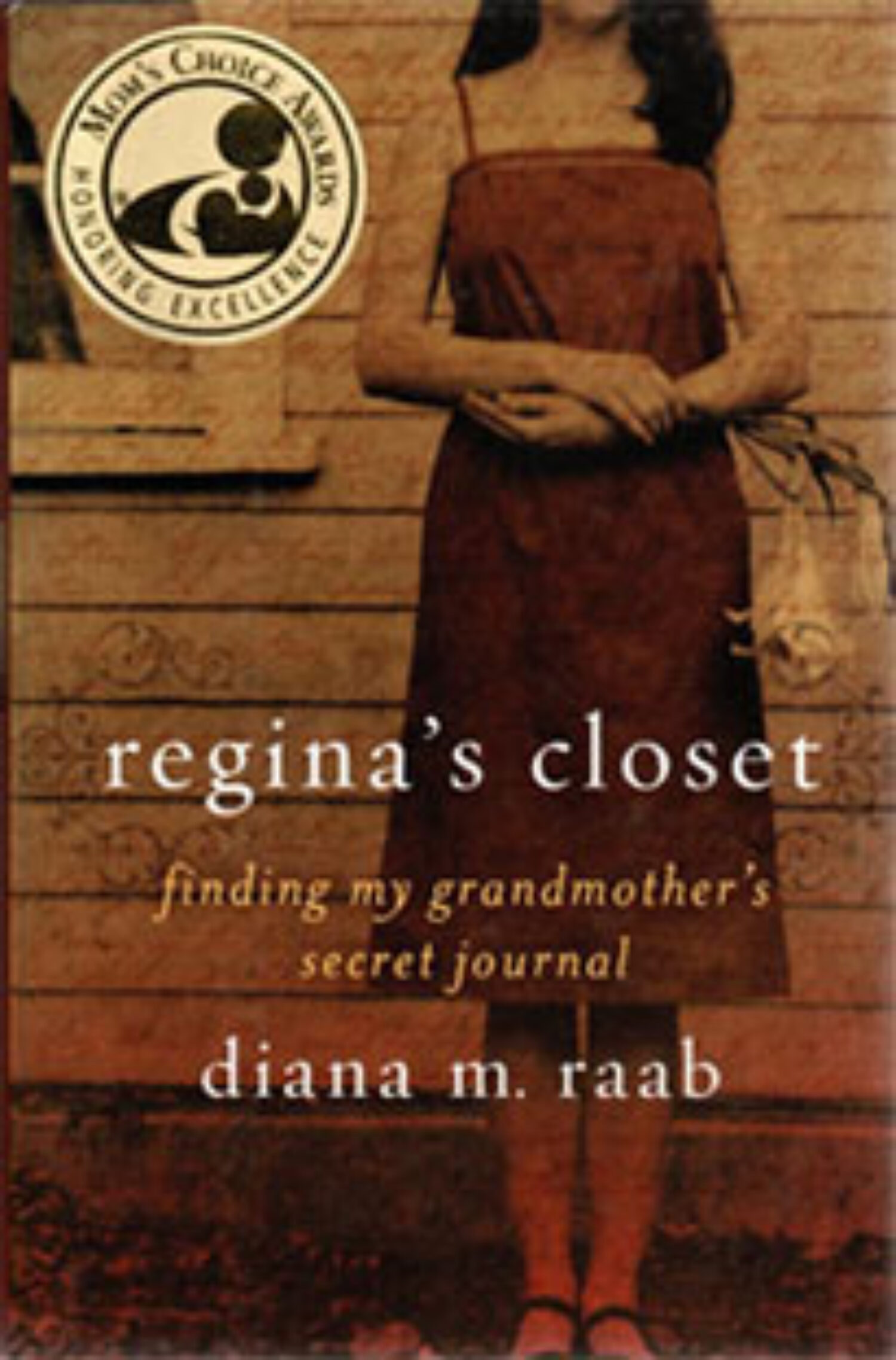
For those of you who have read my first memoir, Regina’s Closet: Finding My Grandmother’s Secret Journal, you know that even though my mother was the one responsible for giving me my first journal and who I will forever be indebted, to also put an indelible mark on my life. She was often prone to depression but her refusal to take medication resulted in her  becoming toxic to those around her. Unfortunately, I was one of the victims. Over the years I have learned to accept her and cope by putting a box around myself while in her presence, but there were times when her ways really hurt me.

So how does this affect you, my reader? Over the course of our lives, we meet hundreds or perhaps thousands of people. There are those who we connect with right away and others with whom we don’t. Sometimes there is chemistry and sometimes not. Some people are easy to be around, others you wouldn’t want to touch with a ten foot pole. We all know the feeling, but sometimes we tend to ignore what we are feeling down deep. Ignoring this feeling can get us into trouble or bring on unhappiness.

Those who negatively impact our lives are called, “toxic people.” I don’t remember where I first heard this term, but I understood it right away. They can be seen anywhere—in our local store, on airplanes, in foreign countries or even in our own family, but one thing is for sure – they are easy to spot. In general terms, they are unhappy, dislike their own lives and carry around a great deal of anger, resentment and bitterness. They seem to complain all the time and might even make you feel that it is your fault that things are not going well. Often, they seem happier after making you unhappy. You feel these traits when you are near them and if you are with them long enough, they could rub off on you.

Those with major depressive disease and/or bipolar disorder are more susceptible to toxic people because they are more easily triggered. I learned this in nursing school during my psychiatry rotation when I asked my mentor how I can tell if someone is depressed. She told me, other than listening to what they say, you can just feel it in their energy.  “When you are with them, you just feel down,” she told me. I have carried this nugget of wisdom with me for the rest of my life and it has served me well.

The other thing about toxic people, which my mother taught me through her actions, is that they often fling insults and hurt towards others. They can be condescending without even realizing it. Being with toxic people can really negatively affect your mental well-being, because they have the innate ability to ‘suck the joy out of life.’

One important thing to remember is that you cannot change someone else’s behavior, but you can adjust your own. Here are some possible ways to cope with a toxic person:

1)    Voice your concerns

2)    Avoid or minimize contact

3)    Try to bring joy into their lives

In summary, you can try to help toxic people, but if they don’t want to help themselves, it will be a losing battle and the best solution will be to just stay away. It will be good for your health.

I have done this quite knowingly with a few select people in my life and have never felt better!

TO MY DEVOTED READERS: There will be a blog, hiatus but I will be back on September 20th. In the meantime, be happy!

Boosting Your Creativity

Whether you’re  a writer, artist or businessperson, chances are creativity is vital to some part of your profession. Some of you may already have tricks on how to tap into your creativity, but what I suggest is to start with keeping a notebook or journal or daybook, whatever you choose to call it. These days many people, especially those in my son’s Generation X, take notes on a computer or iPhone—but what I’m suggesting is to use the old-fashioned method of a notebook.

There are many books with directive learning modalities and tools to hold your hand through the process, such as Julia Cameron’s, The Artist’s Way and Natalie Goldberg’s Writing Down the Bones, which provide a more in depth immersion into the process—both excellent resources.

However, here’s,  a free crash-course:

Buy a notebook or journal from a book store, pharmacy or grocery store. Choose your favorite pen. Put the date on top of the page. Do some longhand writing. Do some doodling or drawing. Whatever tickles your fancy. Stay in the moment. Write what is on your mind. You can start by writing, “Right now I am thinking about …” Let your words flow and if one thought leads to another or takes you in another direction, that’s fine too. There are no rules and spelling and grammar don’t matter.

It’s a good idea to make this a daily practice. You will see that your ritual will tap into your creativity. Writing is a great way to cultivate a constant flow of ideas. Feel free to include other people’s ideas in your writing. What you are doing is brainstorming on the page instead of in a conference room or sitting area.

Sometimes I journal in this way before beginning a new project thinking it might result in a new opening—but it often becomes what I call my ‘throat-clearing’ section which is typically discarded. It’s akin to piano scales, stretching before exercising or dashes before sports.

This free-writing gets rid of all the junk in your head—the neurosis, the deflating comments, the negativity. It’s difficult to be creative if this junk is kicking around your head creating all this unwanted noise. How can you create with noise, anyway?

Another bonus to writing is that it gives you some down time and quiets your mind—it can be meditative.

The page can also help you try out new ideas. It’s a place to write down the pros and cons. You can write, “What if …” to describe the various possible scenarios.  If you are not happy, write about what would bring a smile to your face and see if you can make that happen.

Most successful writers have ritual/s before they start their creative work, whether it’s getting rid of all the junk, getting a cup of coffee or answering emails. It’s your prep time. It’s a time for your muse to be invited into the wide open green pasture which has been cleared of its weeds.

The other great thing about having a notebook is convenience. How many times have you had ideas at the most unexpected times—walking the dog, working out, driving or at a dinner party. That’s the muse visiting you and even if you think you will remember the message, chances are you won’t. If you don’t have a notebook available, that thought will be a fleeting one.

Some other creative exercises:

1) Write about your most creative challenge. 2) Write about where you want to be in five years.

3) If you could be doing one thing now, what would it be? 4) Write a letter to someone who passed away.

The most important tip is to do is to write for at least 20 minutes. After you invite this routine into your life, you will see that it becomes sort of like an addiction – a healthy one. Imagine that!

The New Journal – Author Blogging

Dear Reader ~

The art of being an author means that it is no longer enough to craft a compelling manuscript and submit to an agent or publisher. We are now told that no matter what the size of our publishing house we need to do our fair share of marketing.  We must now be excellent promoters of their work and with this revolution comes the relatively new interface of the author blog.

Over the years, my journals have been a conglomeration of personal and impersonal—

scribblings which sometimes lead to published work, but other times include lists of things to do and books to read. Now that some of my scribbles have gone public, I find myself a little more reflective. I try to keep my blog entries general enough so that those who are not authors will also find them stimulating, but those particularly interested in the writing life will gain some personal insight into their chosen field.

In general, there continues to be an intrigue and mystique associated with the writing life. I learned this while editing my last book, Writers and Their Notebooks (The University of South Carolina Press, 2010), and how fascinated readers are to hear about how the writer’s mind works. Even though we don’t get paid much, many people still say they would love to be a writer if they had time. In fact, yesterday I had lunch with a dear friend whose son asked her, “Mom, if you could be famous for anything what would it be?” She turned to him and in spite of working in a completely unrelated field, said, “I would want to be a famous writer.”

Surely everyone else’s grass looks greener, but if you love to read you probably would be proud to call yourself a writer. OK. I’m veering from the subject of blogging, but also making a point that there are different types of author blogs and it’s beauty is that it gives you a chance to ramble and muse. Alas, I have made a promise to my readers that my blog will never exceed 1000 words, and most often they hover around 700. Long blogs will loose readership. We simply all have too much to do.

Many authors already have blogs, but if you are considering one, here are some things you should know about the different types of blogs:

Daily Blog – Even though at first, this may seem like a wonderful idea because it inspires regular writing, these types of blogs are very difficult to maintain over a long period of time. The idea is that writing your blog should not be a chore, but something you actually look forward to doing. You also want to make them stimulating and interesting to read, unlike the journals you kept as a young child. In your first draft, you can start by writing, “Dear Diary,” and write from your heart, write about what really interests you and chances are it will also interest your readers. Then go back and cut what might not be interesting.

Weekly Blog – This is what I do, because a week’s time frame presents itself with enough material to filter through and find something captivating to write about. If nothing happened or sparked your interest in the past week, then write about something in the news which interests you. Write about what you’ve read. Write about a movie you saw.

Subject-directed blog – This is a good type of blog, particularly if you are a nonfiction writer who specializes in a particular topic, whether you’re a politician, scientist, activist, photographer, fashion designer, medical practitioner, painter or filmmaker. These types of blogs stir up the most controversy and will probably get the most comments.

Group Blogs – This is a good way to go if you are unable to make the commitment to a weekly blog. You might want to gather a group of authors together who write similar books and take turns blogging. If you choose this route, make sure you have a list of guidelines laid out in the beginning. In addition to my personal blog, I am a guest blogger and columnist on a few other blogs and I enjoy the occasional and refreshing nature of this arrangement.
What makes a powerful blog? This is an important question because unlike diaries, there’s really no use for a blog without readership. I suppose we should ask our readers, but many of mine have told me that they were just thinking about the subject I blogged about, which I guess means that my blogs are very timely. So here are some tips I live by which might help you:

1 – Have your finger on the pulse on the times.

2 – Let your personality shine through. Readers are attracted to passion in writing.

3 – Write well and compelling text. Sometimes a good writer can make an uninteresting story or life sound very interesting. It’s all in the writing.

4 – Update regularly. My readers expect my entries on Monday.

5 – Stay ahead of yourself. Typically I am one week ahead, just in case and I cannot blog on a Monday, I always have an entry in the hopper.

And the best news of all, (before this blog entry gets too long), is once in a while we hear that blogs can sometimes lead to a book contract – now wouldn’t that be a perk?

Happy International Women's Day !

Today, we celebrate the economic, political and social achievements of women and  indeed, we have so much to celebrate.

First and foremost, how wonderful it was to see Kathryn Bigelow make history last night by being the first female director in the 82-year history to win the Academy Awards and on top of that it was for a war movie. Bravo Bigelow! Yesterday also marked the death of the oldest living person in the United States, Mary Josephine Roy, who was a sports-loving, card-playing woman and if you can imagine, was born before Henry Ford built his first car. In the end, she outlived her husband by forty years, had two sons, eight grandchildren, thirteen great grandchildren and five great-great children. Now that is quite a legacy, don’t you think?

International Women’s Day has been celebrated since 1911—even  before women were allowed to vote.

Today, in my journal I am going to take some time to reflect on the most influential women in my own life, both alive and dead.

TO ALL YOU MALE READERS– I just read that in Great Britain, male cosmetic sales are growing at twice the rate of those in the female market. There has been talk about males wanting to keep up and keep young. Perhaps you are all getting ready for your big day – International Men’s Day to be celebrated November 19 — so don’t fret, you will have your turn!

Namaste!

Why We Write

As a journaling advocate who has been writing for over forty years, I have often reflected on the reasons why people have chosen writing as a career. My journaling habit has served as a foundation for my life as professional writer. I have a lot of gratitude for those little red diaries with lock and key that my mother gave me each birthday during my childhood.

There are many reasons why writers are compelled to the page, including having a story to tell and the desire to bridge the gap of loneliness. In order to sit down and put words on the page, writers must submerge themselves in a zone which ignites their creative energy and spirit. Sometimes this requires the simple act of closing an office door, making an escape to a writing retreat, or going to a local bookstore or café. In other cases, it might take a more profound removal from day-to-day life. Sometimes darkness is brought on or initiated by something real in the writer’s life.

According to Margaret Atwood, in her book, Negotiating With the Dead: A Writer on Writing, (2002), “Writing has to do with darkness, and a desire or perhaps a compulsion to enter it, and, with luck, to illuminate it, and to bring something back out into the light.”

Marguerite Duras, in her book, Writing (1993) says, “Finding yourself in a hole, at the bottom of a hole, in almost total solitude, and discovering that only writing can save you. To be without the slightest subject for a book, the slightest idea for a book, is to find yourself, once again, before a book. A vast emptiness. A possible book. Before nothing. Before something like living, naked writing, like something terrible, terrible to overcome.”

The childhoods of writers are thought to have something to do with their chosen vocation. Although many are quite different, what they’ve often contained, were books and solitude. My own childhood had all the vital ingredients to provide a lifetime or writing. When I was a child, there were no films or theatres and the batteries in the radio always seemed to be dead. Yet, something ever present was books. I had a shelf above my desk and there was also another big one in our living room.

I learned to read at an early age. My mother was an avid reader and inspired the same in me. Each week she took me to the public library and I’d leave with a stack of books reaching all the way up to my chin. Margaret Atwood also spent a lot of time reading as a child. “My mother liked quietness in children, and a child who is reading is very quiet,” she writes.

As a child, journaling was the only place where I could visit myself and be alone with my thoughts as I tried to make sense out of the world around me. William Faulkner argued that there’s a more profound reason why writers write. “An artist,” he says “is a creature driven by demons. He has a dream. It anguishes himself so much he must get rid of it.” That’s why many of us working on longer projects can get by with very little sleep. The demons just won’t let us stop until they are satisfied and there’s no telling how long it will take them to be satisfied.

In many ways, writing and psychotherapy are both healing and could be thought of as a modern, guilt-free replacement for confession. This might be one reason so many people are drawn to writing memoirs and personal essays. Writing about real life experiences is like a snake shedding its skin and leaving a former self behind. It’s easier moving forward when the baggage from the past is dropped.

Soren Kierkegaard describes what it is to be a poet: “A poet is an unhappy being whose heart is torn by secret sufferings, but whose lips are so strangely formed that when the sighs and cries escape them, they sound like beautiful music….” The way I look at it is that we are all blessed to be writers.

Joan Didion in her essay, “Why am I a Writer,” says, “Had my credentials been in order I would never have become a writer. Had I been blessed with even limited access to my own mind there would have been no reason to write. I write entirely to find out what I’m thinking, what I’m looking at, what I see and what it means. What I want and what I fear.”

As expressed by these exceptional writers, in essence, we write to know ourselves. Even our darkest—or unknown—thoughts, memories and fears can transform to reveal value and meaning for us. And with any luck, for others as well.

Forgetfulness

I wrote this blog in honor of my cousin, Jed’s 55th birthday. (Happy Birthday, Jed!)

Most of my favorite poems are found on the pages of Billy Collins’s poetry collections. So many of his sentiments and images resonate with me. If I had to chose one poem to share, it would be, “Forgetfulness.” The main reason is that this poem inspired me to rediscover the poet in me who had been dormant since childhood.

This is how it happened. It was 2003 or 2004, and I was in the charter class of Spalding University’s low-residency program, working on my MFA. Our class was invited to a Billy Collins reading at a neighboring university. It was just after Billy completed his term as Poet Laureate of the United States. The university auditorium was packed and Billy read many poignant poems, including “Forgetfulness.”

I vividly remember chuckling to myself throughout his entire reading. It was just about the time of my fiftieth birthday and I was beginning to forget more than I remembered. Billy received a lot of laughs during his reading, but with an audience filled with baby boomers, I think he got the most chuckles while reading this poem. If you have ever heard Billy read, you understand his talent and dry voice. In his poem, “Forgetfulness,” he incorporates his classic teasing technique told in a conversational and accessible manner. His imaging is extremely clever and it continues to resonate with me this many years after that first discovery.

I rarely will choose to spend the time to stand in line for an author signings, but after Billy’s reading, I purchased all his books piled all the way up to my chin and decided to wait for his signature on each one.  I didn’t care how long it took me to reach the front of the line. I knew that his reading would launch the new poet in me and I wanted to avail myself of the opportunity to read the poems of a giant.

You can hear him read on u-tube or you can read it here:

http://www.youtube.com/watch?v=wrEPJh14mcU

Forgetfulness

The name of the author is the first to go

followed obediently by the title, the plot,

the heartbreaking conclusion, the entire novel

which suddenly becomes one you have never read,

never even heard of,

as if, one by one, the memories you used to harbor

decided to retire to the southern hemisphere of the brain,

to a little fishing village where there are no phones.

Long ago you kissed the names of the nine Muses goodbye

and watched the quadratic equation pack its bag,

and even now as you memorize the order of the planets,

something else is slipping away, a state flower perhaps,

the address of an uncle, the capital of Paraguay.

Whatever it is you are struggling to remember,

it is not poised on the tip of your tongue,

not even lurking in some obscure corner of your spleen.

It has floated away down a dark mythological river

whose name begins with an L as far as you can recall,

well on your own way to oblivion where you will join those

who have even forgotten how to swim and how to ride a bicycle.

No wonder you rise in the middle of the night

to look up the date of a famous battle in a book on war.

No wonder the moon in the window seems to have drifted

out of a love poem that you used to know by heart.

In Memory of J.D. Salinger

If I had to choose my favorite novel of all time, it would be Catcher in the Rye. Learning about the passing of J.D. Salinger’s passing last week, marked the end of a personal and societal era. It was consoling to know that he died peacefully in his home in New Hampshire at the age of 91, after what have been fifty reclusive years.

I always wondered what makes an author become a recluse. Or anyone for that matter. Are they trying to escape the attention of fans or are they just antisocial characters? Perhaps they are a combination of the two. If we look at literary history, we observe that many creative people do indeed seek solitude, either to focus on their work or stay out of the limelight. In reality, Salinger’s private life is irrelevant because what we should remember about him will be that he produced a book with a very memorable protagonist, one who has resonated with more than five generations. Catcher in the Rye is one of those rare books like Le Petite Prince that parents and children both stand to gain something from discussing.

There are so many things I love about the book, including the personal narrative of Holden Caulfield who truly depicts the angst and issues of adolescence by illustrating his deep sense of alienation, continuous questioning, and rebelling against authority. I loved Salinger’s blending of the typical adolescent character with his cynical sense of humor and sensitivity which sometimes peeked through the terror of his inevitable hormonal rages. Holden frequently voiced the common belief held by many adolescents that adults are both phony and superficial.

Salinger’s writing style and voice has so inspired much of my own writing. In fact, I have read the book a number of times, particularly when trying to find the voice in my prose. I have tried reading his short stories, but they did not resonate with me nearly as much as Catcher in the Rye. Much of Salinger’s writing focuses on the youth and in fact, he was once quoted as saying, “I almost always write about very young people.”

As I prepared to write this blog, I did some research on Salinger’s life and came upon some interesting factoids that coincidentally resonates with my New Year’s resolution. Although the son of a Polish Jew, in his late twenties Salinger studied Zen Buddhism and adhered to Vendanta Hinduism which advocated celibacy and detachment from responsibilities. Perhaps these interests contributed to his reclusive nature. Salinger also adhered to the principles of kriya yoga and other eastern spiritual, medical and nutritional beliefs including those of Edgar Cayce.

I am curious to learn more about Salinger. Perhaps his heirs will discover hidden secrets, journals or unpublished manuscripts that they might choose to share, as such is usually the case. It seems to be that we are more inspired and curious about the lives of deceased artists than living ones. and as my son recently mentioned in an email, “some of the most famous artists are only recognized through their death.”

What do you think?

Journaling About Inspiring Moments

 Whenever a writer moves on, I believe we should take a moment to reflect on their work and I have made this my own particular practice. Even if you were not a great admirer of their work, I believe it is important to stop and examine not only their contributions to the literary world, but also what drove them to the page in the first place.

In yesterdays’ newspaper, I learned that the confessional poet, W.D. Snodgrass had died of old age. I had not read a lot of his work, but with the click of my Google finger it was easy to read some of his most popular poems. Even though Snodgrass wrote more than 30 books, the book of poetry which brought him his Pulitzer Prize in 1960 was called Heart’s Needle. This particular book grew from his apparent heartbreak of losing custody of his daughter in a very bitter divorce.

Even though many have credited Snodgrass as the founding member of confessional poetry, he disliked the term, believing it had too many religious connotations and he was not religious. I tend to agree, although the term for me denotes a certain amount of intimacy and an invitation for the reader to enter into the poet’s life.

Most authors are compelled to the page because of an inciting incident, something that may have happened early in their lives. I have always been fascinated by studying these inciting incidents amongst my peers. For me, personally, the incident which drove me to the journal and a lifetime of writing was the suicide of my grandmother.

Reading about Snodgrass’ life inspired me to journal about inciting incidents. What about you Are you able to identify what has drawn you to the written word? If so, I’d love to hear from you.

Traveling For Inspiration

p10002641My recent trip to Africa continues to be a major source of inspiration for me. I continue to generate poems about the experience and jot down notes and ideas in my journal as subjects for future stories.

Traveling can be a source of inspiration for everyone. William Randolph Hearst is a perfect example. Yesterday, I had the honor to visit The Hearst Castle in San Simenon, a mind-boggling property overlooking some of California’s most magnificent coastal views. The actual castle sits on a hilltop at the end of a winding road up from the Pacific. The castle’s design was inspired by Hearst’s travels as a little boy. When he was about ten his mother decided to take him on a one-and-a-half year trip to Europe, exploring its culture and magnificence. It is there where he developed his fascination and appreciation for castles and architecture. Little did his mother know how that trip would have affected him for the rest of his life.

These days people do not have a lot of disposable income and traveling is often the first expense to be cut from the budget. The fact is, you don’t need a lot of money to travel. It might just mean getting in the car and driving somewhere different, taking a book and a journal and seeing where the experience takes you. If you live in the city, you can even hop on the  bus or train and make believe you are somewhere else. Let your imagination run wild and take you places you’ve never been before.

We all need inspiration, particularly when times are thought, so give yourself a break and go somewhere, it does not have to be far and it does not have to be expensive!