Tag Archive for 'Author’s Blog'

How to Make Your Writing Sparkle — For Publication or Pleasure

Whether you are a fiction writer, nonfiction writer, artist or business person who wants to get reader attention, there are a number of things you can do to grab your reader’s and keep them with you. Those of you who are published writers, have probably heard these tips numerous times, but sometimes we all need a gentle reminder. Whatever your reason for writing, when crafting your next letter, story, article or poem, try to keep the following in mind:

1)    Use the active voice – the subject of the sentence performs the action specified by the verb rather than the subject being acted upon. These sentences have energy and are direct.

2)    Show don’t tell –  this should be a writer’s mantra. This is done using dialogue, sensory language (taste, touch, smell), providing description and being specific by giving details.

3)    Maintain one point of view – write from either your perspective or someone else’s. Switching points of view can confuse the reader. While writing, be sure to be aware of who is telling the story.

4)    Avoid repetitiveness  – do not use the same word twice in a sentence. Also, vary sentence structure by refraining from starting subsequent sentences with the same word.

5)    Avoid run-on sentences.

6)    Use strong verbs.

7)    Use short sentences and paragraphs.

8)    Stick to the subject of your writing and also to the main point.

9)    Avoid clichés – these are overused phrases which make writing flat and boring and show a sense of laziness on the writer’s part. (for example: “Her eyes were as blue as the sky,” or “The job was as easy as pie.”)

10) Read your writing out loud to detect flow and inconsistencies.

11) Review and revise what you’ve written and only share when you are satisfied with your words.

Reading good writing reference books is also a good way to brush up on your writing. The classic book, The Elements of Style by Strunk and White can be quite amusing to read. Check it out: http://www.amazon.com/Elements-Style-50th-Anniversary/dp/0205632645/ref=sr_1_1?ie=UTF8&s=books&qid=1282591779&sr=8-

A BONUS:

Some of you might be interested in seeing my latest TV interview on the Gregory Mantel Show, already posted on u-tube:

http://www.youtube.com/watch?v=QdQCvVZPjOk

Writing a Compelling Memoir

On Saturday, I participated in a panel at the Ventura Book Festival called, “Writing a Compelling Memoir.” For those who were unable to attend, here are some highlights from presentation:

Abigail Thomas, in her book, Thinking About Memoir, says that writing a memoir is about keeping your eyes, ears and heart open. It’s about letting your mind open up and wander and about letting one thing lead to another.

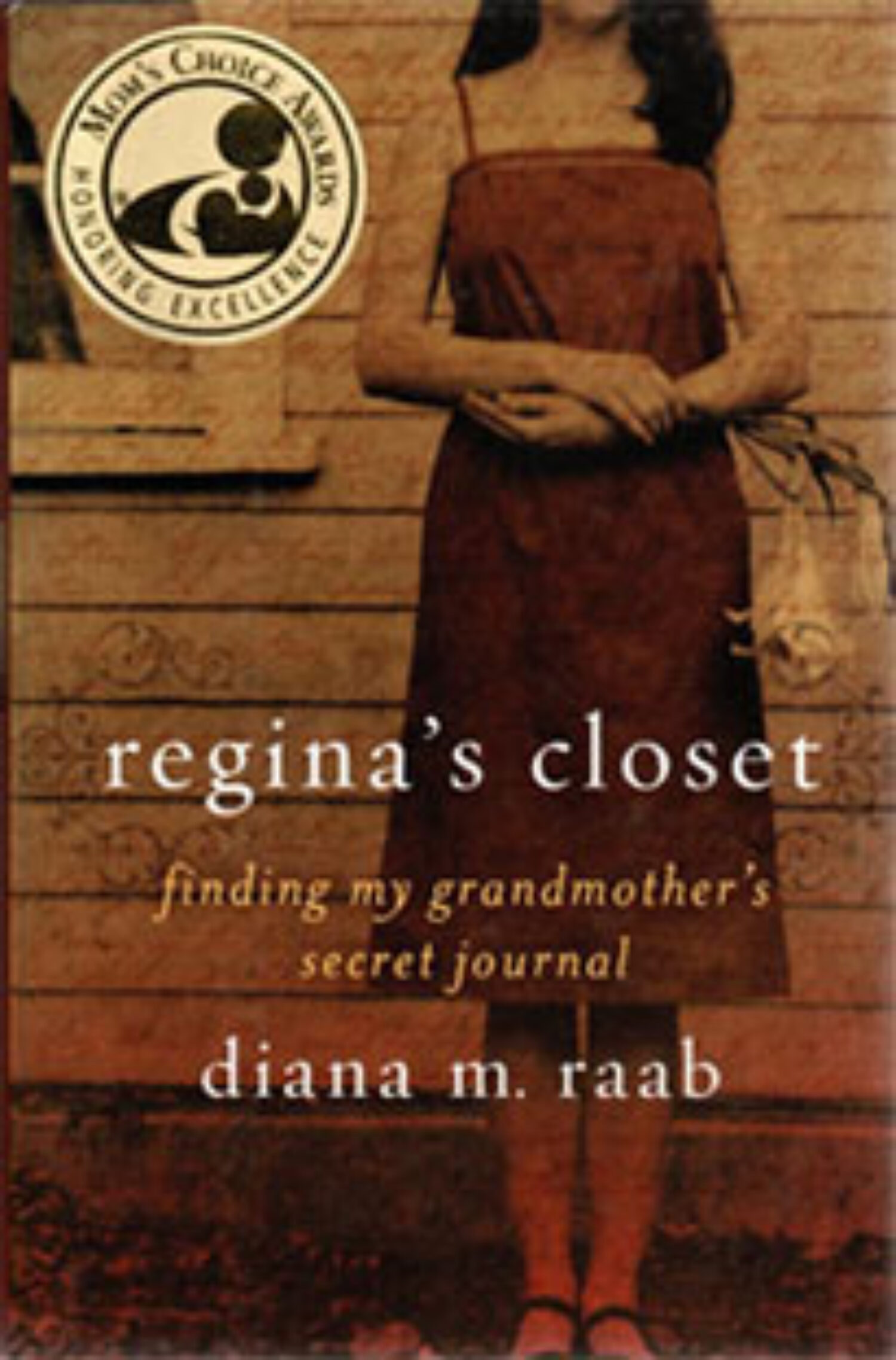
Many people are driven to write memoir as a result of pain, loss or trauma. But when considering publication, one question you must ask is, “who cares?” Why would people want to read your book? You must have something to share which is universal. The impetus for writing my first memoir, Regina’s Closet: Finding My Grandmother’s Secret Journal (http://www.amazon.com/Reginas-Closet-Finding-Grandmothers-Journal/dp/0825305756/ref=sr_1_1?s=books&ie=UTF8&qid=1279570174&sr=1-1) was to explore the motivation behind my grandmother’s suicide. It’s not that I was contemplating suicide, but after my first diagnosis I became depressed. I knew that my grandmother battled the same demon and I wanted to understand how she dealt with it. I also wondered if maybe she too had cancer and took her life because of the stigma associated with the disease in the 1960s. In the end, I learned that she did not have cancer, but never fully healed from the traumas she encountered as an orphan in Poland during World War I.

The way in which you begin your memoir, depends upon your story. An effective way is to begin by writing about a transformational moment in your life. For Regina’s Closet, I wrote about the day I found my grandmother dead. This became the book’s opening scene. In Healing With Words, (http://www.amazon.com/Healing-Words-writers-cancer-journey/dp/1615990100/ref=sr_1_1?ie=UTF8&s=books&qid=1279569966&sr=8-1), I began by describing what I thought would be a routine annual mammogram, but which ended up being a breast cancer diagnosis. This became that book’s opening scene.

According to Lee Gutkind in his book, Keep it Real, “scenes are the primary building blocks of creative nonfiction. They are little stories, episodes, anecdotes or other opportunities for the creative nonfiction writer to be artful and use all the literary techniques available to fiction writers, such as dialogue, description, action and suspense.”

When identifying a scene remember that something must happen. There must be a beginning, middle and end and a bunch of things that happen in between in order to have the building blocks for the story.

From a broader perspective, here are eight tips on writing a compelling memoir:

1) Find the memoir’s focus

2) Find the memoir’s structure

3) Show don’t tell

4) Use a compelling voice

5) Create compelling scenes

6) Use reflection and musings

7) Use fictional technique

8) Write your emotional truth

In summary, many people write memoir not necessarily because they want to write one, but more often because they have a story which they need to tell, either to find an answer to a mysterious question or to make some sense of a situation. Writing is a journey like no other. Whatever  one’s motive is for reason for writing a memoir, it will surely be a rewarding experience!

Happy National Nurses Week !

It’s been over 30 years since I practiced nursing, but it has been said that once you’re a nurse, you’re always a nurse. Occasionally, I still receive phone calls from loved ones (especially my children) requesting medical advice for themselves or their friends. Plus, along with Errol Norwitz, M.D. from Yale University, I also recently updated my book, Your High Risk Pregnancy: A Practical and Supportive Guide which was initially published in the 1980s.

In many ways I feel quite removed from the profession, well, at least until the month of May between May 6th and 12th, when nurses are honored nation-wide. May 12th is Florence Nightingale’s birthday and May 7th is mine, so I had a couple of things in common with the mother of nursing. I was really born on Mother’s Day; can you imagine me as a Mother’s Day gift? Never mind that was too many years ago to reminisce, but I would like to offer a few words about the important role of nurses.

Nursing is aptly described as an art and a science. The profession embraces dedicated people with varied interests who wear many hats, from staff nurse to educator to nurse practitioner to nurse researcher. Regardless of their specialty, I can promise you that nurses have a passion for their profession.

As a journaling advocate I have a ‘Google Alert’ set for the word “journaling.” I was delighted that it showed up on a nursing site. The writer, Gail Guteri, discussed a book called Inspired Nurse, by Rich Bluni, RN that explores what nurses can do to maintain the needed passion and interest in their profession. As a former director of nursing in a chronic care hospital, I know this to be an ongoing problem—unfortunately burnout at some point of their career is inevitable. I think all helping professions experience some degree of burnout and now with economical changes, nurses have been hit hard. Bluni makes a number of suggestions on reducing stress and reconnecting with one’s passion for nursing. One which resonated with me was therapeutic journaling. I bow to Bluni’s suggestion.

This year, the American Nurses Association, the largest nursing association in the United States salutes nurses with the theme: “Nurses: Caring Today for a Healthy Tomorrow.” Nurses have always been at the forefront of patient education, but with healthcare reform, their role will become even more prevalent. Although there are pros and cons to the law, in many ways it will help build a healthy tomorrow in that Americans will all be blessed with health care. Nurses will have to grow and adapt to changes and preventative medicine will become an even more essential part of life.

Now more than ever, I feel compelled to inspire others to nurture their own health and nourish their bodies on both a spiritual and physical level. Some of my heart strings are pulled as I write about health issues, because nurturing health is at my core and the task can be so challenging to face. National Nurses Week symbolizes my gratitude to everyone who helps nurture and inspire wellness.

To your health, and thanks to nurses, everywhere!