Tag Archive for 'Author Blog'

Balancing Optimism and Pessimism

I have always thought or believed that it is healthier to be an optimist than it is to be a pessimist. An article in the September 2010 issue (http://www.odemagazine.com/doc/of)  of “Ode: For Intelligent Optimists,” called, “No Silver Linings, Please,” says that recently a handful of psychologists think differently about optimism and pessimism. They are saying that, in fact, healthy doses of pessimism may be an important ingredient to overcome  psychological obstacles and the achievement of personal goals.

“Defensive pessimism,” can be employed when you get a book proposal rejected or when you get a cancer diagnosis twice in five years as I did—is a psychological stance that involves accepting the fact that things can go drastically wrong and being able to defensively prepare oneself for any eventuality. In other words this is an offense to achieve a positive outcome.

Thus it is suggested that we not get too elated or joyous when receiving good news. In this way there is less of a chance to be disappointed. In other words, a tinge of pessimism can be the most optimistic thing you can do.

Those living with cancer can react in two ways when given the bad news—they can treat the diagnosis with anger and resentment or turn a negative into a positive. This can be done by framing the disease as a gift to write and share stories to help and inform others in similar situations.

Creative individuals, particularly writers, are typically very hard on themselves and their creative process. They often air on the side of pessimism thinking that their work is not good enough and will be rejected by agents, editors and publishers. The positive side of this is that those who are in a negative frame of mind tend to be more alert to their surroundings compared to those who are in positive states of mind. Being alert to one’s surroundings is a vital characteristic for the writer. Perhaps in certain situations, a healthy dose of pessimism can be advantageous. In other words, hope for the best, but prepare for the worst!

Happy Columbus Day – Happy Day of Discovery !

Today we celebrate Columbus Day, the arrival of Columbus in the Americas back on October 12, 1492. When I was a child we celebrated on the actual day, but times have changed and protocols have evolved. These days, we have gotten greedy for 3-day weekends so this and other national holiday celebrations now conveniently fall on Mondays. It’s funny how it works for National holidays but not for birthdays and anniversaries, but this would be the subject of yet another blog.

I wonder what would have happened if Columbus did not arrive in America on that fall day back in 1492. Where would we all be now? Would we even be? It’s scary to think that one action like a boat ride, one decision and one discovery can affect an entire global destiny. The idea of discovery has always fascinated me.

According to the Oxford Dictionary, “discovery” is defined as “the act of finding something unexpectedly or in the course of a search.” Certainly we have all had discoveries in our lives which have changed us forever. Today, I would like to honor those discoveries.

For me, there were many signposts in my life that changed me forever. For example, arriving for work at my future father-in-law’s farm in 1972 and unexpectedly meeting my husband-to-be. Who would have thought that when our parents discovered one another in a hotel restaurant that they would become good friends and the following summer I would end up working at their nursery in Canada. From a literary standpoint, I was delighted during my MFA Program at Spalding University to discover the diaries of Anaïs Nin, who has served as my inspiration for so many years now. Nin began her journals at eleven during a boat trip from Europe to New York with her mother and two brothers. The journal began as a letter to her estranged father who years earlier left the family to live with a younger woman. Over the years, Nin’s journals, like mine, became her best friend and confidante. Initially she had no intention of publishing the journals which amounted to more than 15,000 typewritten pages and 150 volumes, but in 1966 she found a publisher who published the series. Today, there are seven volumes available.

I am not sure whether my journals will be as interesting to future generations. Nin’s are extremely sensuous and philosophical. Mine are more stream-of-consciousness in nature. Nin studied psychoanalysis with Otto Rank and Carl Jung. Her journals were a true sampling of a woman’s voyage of self-discovery and a source of inspiration for women and men world-wide. Her journals were more than simple diaries, as each volume had a theme and included numerous letters to her intimate friends, including her lover, Henry Miller. She believed that self-knowledge through journaling was the source of our personal liberation. Amen, Anaïs.

DEAR READERS: I WOULD LOVE TO HEAR ABOUT YOUR SPECIAL DISCOVERIES !

(Happy) Breast Cancer Awareness Month

Hello Girlfriends – this is your reminder that October is breast cancer awareness month. So if you are due for your self-breast exam or mammogram, now is the time!

Since my latest memoir, Healing With Words was released in June and also because I am a registered nurse, I cannot resist promoting health awareness. For those of you who journal, you might want to pick up a copy of the book, available on Amazon and bn.com as there are many journaling prompts and resources. In addition, the author proceeds are donated to the Mayo Clinic.

SOME FACTOIDS

  • If you are 40+ you should have a screening mammogram every year unless it’s suggested more frequently
  • Avoid scheduling a mammogram when you have tender breasts, i.e. the week before your period
  • Do not wear deodorant or powder when going for your mammogram
  • Women in their 20s and 30s should have a clinical breast exam (CBE) as part of a their health exam. This should be done at least every 3 years. After age 40, women should have a breast exam by a health professional every year.
  • Breast cancer is the second leading cause of cancer death in women, exceeded only by lung cancer
  • The chance that breast cancer will be responsible for a woman’s death is about 1 in 35 (about 3%)
  • About 207,090 new cases of invasive breast cancer will be diagnosed in women each year
  • About 54,010 new cases of carcinoma in situ (CIS) will be diagnosed (CIS is non-invasive and is the earliest form of breast cancer)

SOME ORGANIZATIONS AND SUPPORT GROUPS (from Healing With Words)

American Breast Cancer Foundation

(877) 539-2543

www.abcf.org

American Cancer Society

(800) ACS-2345

www.cancer.org

BreastCancer.org

www.breastcancer.org

The Breast Cancer Fund

(415) 346-8223

www.breastcancerfund.org

Breast Cancer Network of Strength

(800) 221-2141

www.networkofstrength.org

California Breast Cancer Organizations

(530) 304-2746

www.cabco-org.us

Cancer Network

www.cancernetwork.com

Cancer Research Institute

(800) 99-CANCER

www.cancerresearch.org

Johns Hopkins Avon Foundation Breast Cancer Center

(443) 287-2778

www.hopkinsbreastcenter.org

International Cancer Alliance

(301) 656-3461

www.icare.org

Lance Armstrong Foundation

(877) 236-8820

www.livestrong.com

Living Beyond Breast Cancer

(888) 753-5222

www.lbbc.org

Mothers Supporting Daughters with Breast Cancer

(410) 778-1982

www.mothersdaughters.org

National Asian Women’s Health Organization

www.nawho.org

National Breast Cancer Coalition

(202) 296-7477

www.stopbreastcancer.org

National Cancer Institute

(800) 4-CANCER

www.cancer.gov

National Center for Complementary and Alternative Medicine

(888) 644-6226

www.nccam.nih.gov

National Cancer Coalition

www.nationalcancercoalition.org

National Coalition for Cancer Survivorship

(888) 650-9127

www.canceradvocacy.org

National Women’s Health Network

(202) 682-2640

www.nwhn.org

Native American Cancer Research

(800) 537-8295

www.natamcancer.org

Office of Minority Health Resource Center

(800) 444-6472

www.minorityhealth.hhs.gov

OncoChat

www.oncochat.org

Patient Advocate Foundation

(800) 532-5274

www.patientadvocate.org

Dr. Susan Love Research Foundation

(866) 569-0388

www.dslrf.org

Susan G. Komen Breast Cancer Foundation

(877) 465-6636

www.komen.org

Cancer Support Community

(888) 793-WELL

www.thewellnesscommunity.org

Young Survival Coalition

(877) YSC-1011

www.youngsurvival.org

Here’s to your health!

Have a great and remember whatever your experience, make sure to write about it in your journals and notebooks!

Cheers,

Diana

Journaling About and Coping With Toxic People

You can either give negativity power over your life or you can choose happiness instead.” Anais Nin

The week of the full moon always brings out interesting stories in my journal. On the morning of the full moon, I began writing about how to cope with toxic people. This is a term I started to use years ago, about the time I turned 45, at time when I decided that life is too short to surround myself with those who bring me down instead of building me up.

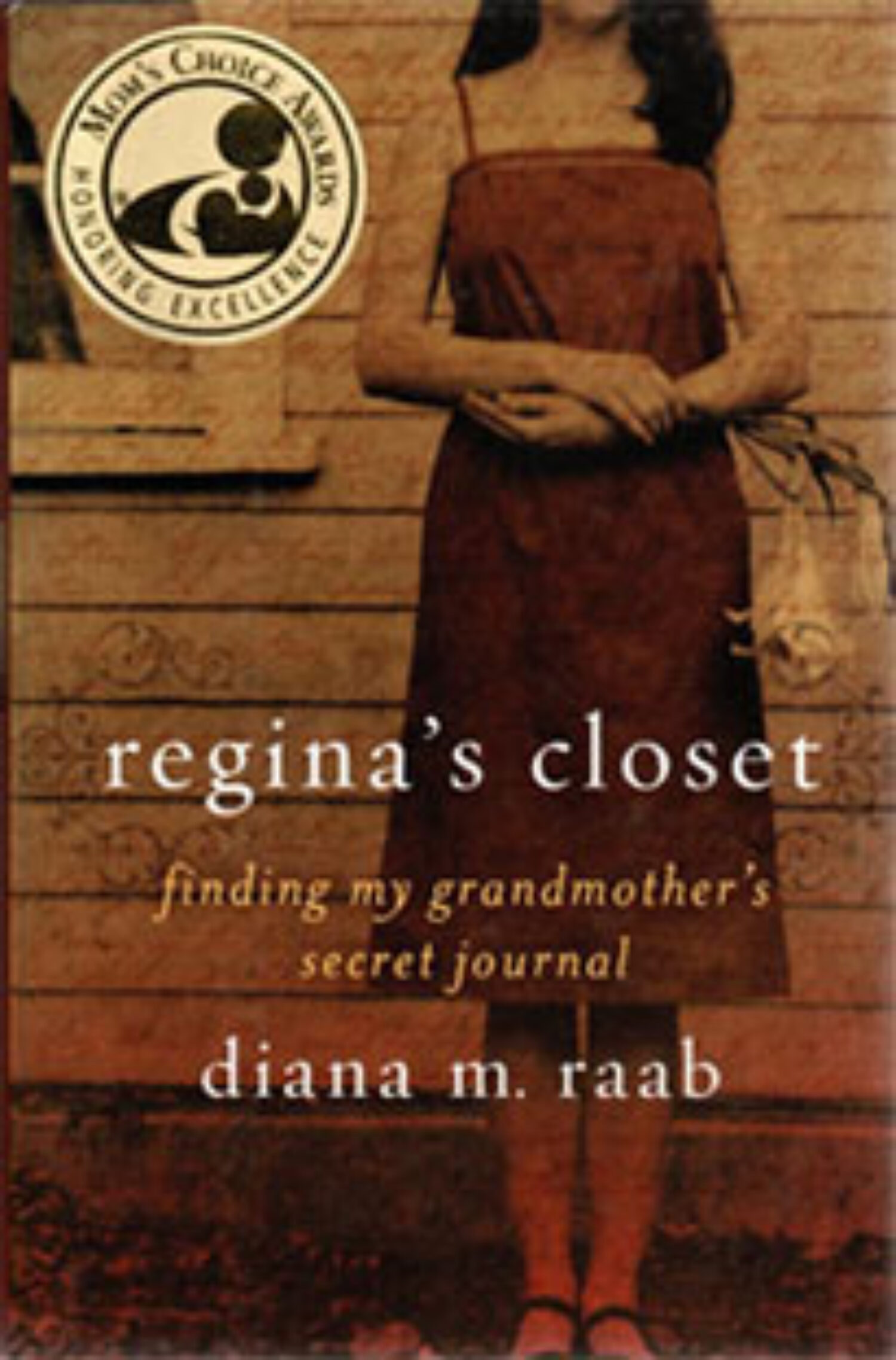
For those of you who have read my first memoir, Regina’s Closet: Finding My Grandmother’s Secret Journal, you know that even though my mother was the one responsible for giving me my first journal and who I will forever be indebted, to also put an indelible mark on my life. She was often prone to depression but her refusal to take medication resulted in her  becoming toxic to those around her. Unfortunately, I was one of the victims. Over the years I have learned to accept her and cope by putting a box around myself while in her presence, but there were times when her ways really hurt me.

So how does this affect you, my reader? Over the course of our lives, we meet hundreds or perhaps thousands of people. There are those who we connect with right away and others with whom we don’t. Sometimes there is chemistry and sometimes not. Some people are easy to be around, others you wouldn’t want to touch with a ten foot pole. We all know the feeling, but sometimes we tend to ignore what we are feeling down deep. Ignoring this feeling can get us into trouble or bring on unhappiness.

Those who negatively impact our lives are called, “toxic people.” I don’t remember where I first heard this term, but I understood it right away. They can be seen anywhere—in our local store, on airplanes, in foreign countries or even in our own family, but one thing is for sure – they are easy to spot. In general terms, they are unhappy, dislike their own lives and carry around a great deal of anger, resentment and bitterness. They seem to complain all the time and might even make you feel that it is your fault that things are not going well. Often, they seem happier after making you unhappy. You feel these traits when you are near them and if you are with them long enough, they could rub off on you.

Those with major depressive disease and/or bipolar disorder are more susceptible to toxic people because they are more easily triggered. I learned this in nursing school during my psychiatry rotation when I asked my mentor how I can tell if someone is depressed. She told me, other than listening to what they say, you can just feel it in their energy.  “When you are with them, you just feel down,” she told me. I have carried this nugget of wisdom with me for the rest of my life and it has served me well.

The other thing about toxic people, which my mother taught me through her actions, is that they often fling insults and hurt towards others. They can be condescending without even realizing it. Being with toxic people can really negatively affect your mental well-being, because they have the innate ability to ‘suck the joy out of life.’

One important thing to remember is that you cannot change someone else’s behavior, but you can adjust your own. Here are some possible ways to cope with a toxic person:

1)    Voice your concerns

2)    Avoid or minimize contact

3)    Try to bring joy into their lives

In summary, you can try to help toxic people, but if they don’t want to help themselves, it will be a losing battle and the best solution will be to just stay away. It will be good for your health.

I have done this quite knowingly with a few select people in my life and have never felt better!

TO MY DEVOTED READERS: There will be a blog, hiatus but I will be back on September 20th. In the meantime, be happy!

The Art of Letter Writing

The letter can be a vital tool to clarify your feelings to either yourself or to others. The purpose of a letter might be to inform, instruct, entertain, amuse, explore psychological problems, keep in touch, or offer love. The advent of the telephone was viewed as a replacement for letter writing, but with the birth of email, there seems to be a resurgence of the age-old art of letter writing.

Many people use  letter writing to release pent-up emotions, such as complaint letters to companies about a malfunctioning product  or letters to the editor about a pressing current event. Typically, when confronting someone on an issue, it’s easier (and healthier) to blow up on the page rather than directly toward the person. Letters are also a good venue to gather your thoughts first, and can be used as a segue to discussion.

Most writers are good letter writers. Authors such as Pam Houston, Fenton Johnson and Shawn Wong frequently write letters. Wong views letter writing as practice for his craft. He says:

“When I was eighteen I started thinking about becoming a writer but as an undergraduate student and later as a graduate student in creative writing, I didn’t really have a career as a writer so I wrote letters, sometimes as many as five or six letters a day. In looking back at the thousands of pages of letters, I realize those letters were how I practiced my writing.”

Author, John McPhee, once said that every book he wrote began with the words, “Dear Mother.” His letters didn’t typically usually end up in his published book, but serves its purpose—it gets him writing. Diarist Anaïs Nin began her first journal entry as a letter to her deranged father as a way to remain connected with him, although she also never sent it. In fact, it is not always necessary to send letters. Sometimes the exercise in writing the letter is all that is needed to clear the mind and calm the psyche.

Some writers use the letter form to warm up their writing. Sometimes it helps to one get into the swing of a story and helps to develop voice. Many, such as myself, write letters in their journal, particularly if they’re having difficulty developing a character in their story.

Others may decide to write letters to their pets. You can really write to whoever or whatever inspires you. It is important to date your letters and in case you decide to send the letter, to keep a copy of it. In the future, it will be amusing and informative to reread your letters, plus you never know how their contents may be used in a future literary work.

When beginning a letter, the best way to start is to say what prompted you to write the letter or why you were thinking of the person at that particular time. The letters we most enjoy receiving are those which carry the writer’s personality. When reading well-written letters we feel as if the person is sitting beside us, looking at us and speaking to us.

Perhaps the most satisfying aspect of letter writing is the opportunity to communicate exactly what’s on your mind. What more could a writer ask for than a specific, hand-picked, captivated reader? So, if you could say anything you wanted to anyone in the world, who would you address?  What would you say?  Sit down, take out a sheet of paper or crack open your journal, choose your audience and begin your journey!

Some Letter-Writing Tips

•                Use simple and easy to understand sentences

•                Avoid using complicated and long words

•                Be specific

•                Break your letter into small parts or paragraphs

•                Make sure your voice or tone is appropriate to the subject of the letter

•                For clarity, read the letter aloud

•                Write, rewrite and polish your letter

Writing Happiness

August is “Admit You’re Happy Month” and August 8th is “Admit You’re Happy Day” and even though it sounds like a ridiculous reason for a celebration, think again.

People so often focus on the negative and it’s always good  to step back and look at the things in our lives which bringing us happiness. It seems as if writers are more often driven to the page when there is something causing turbulence in their lives, rather than when they are happy. In fact, most memoirs focus on traumatic events, which is fine, but it’s a good idea to find a balance and also identify the good times. In the classes I teach at UCLA Extension, I advocate both positive and gratitude journaling.

In my recent readings on Buddhism, I’ve learned that one of the chief sources of anger is the quest for happiness. Just think about why someone would get angry while waiting in a long line in the airport or why someone would honk if someone was driving too slowly in front of them. The angry person just wants to be happy, but ironically, this quest for happiness is the source of his unhappiness. As, Eric Hoffer, a philosopher known for his adages observed, “The search for happiness is one of the chief sources of unhappiness.”

His Holiness the Dalai Lama believes that the pursuit of happiness is so important that he’s devoted his life to preaching about it. His book The Art of Happiness: A Handbook for Living is packed with useful information, mainly centered around the idea that “the purpose of our existence is to seek happiness.” So, the question becomes, if we want happiness, then how do we seek it? One way is to understand that negative emotions and behaviors are harmful, and positive emotions are helpful. The negative emotions hurt not only ourselves, but others as well.

So while journaling or writing about happiness, write about all the different ways you can bring happiness to others, whether it is doing a good deed for a friend, colleague or neighbor. A few weeks ago we had a party and  thought about what to do with the leftovers and decided to bring them to the homeless lining the streets of downtown parks. The act of kindness went a long way to make both us and the homeless happy.

Alexandra Stoddard has a great book called, Choosing Happiness, a quick and inspirational read which might be worth picking up, not only for journaling ideas but to make you smile and feel better.

Remember, happiness rarely comes from just thinking about yourself. Victor Frankl says, “Joy comes into our lives when we have: (a) something to do, (b) someone to love, and (c) something to hope for.”

I don’t think I could have said it better!

Finding Focus

The last time I discussed finding focus was in my memoir workshop in Ventura, California.  What I want to talk about here, however, is how to find focus in our daily life. Whether you are an author, artist, health care worker, therapist, esthetician, painter, publicist, scientist, developer, entrepreneur, grower, parent or senior citizen, it’s an important skill to have.

We all might have our own ways of slowing down and finding a peace of mind. For me, regular meditation definitely helps. Even though some may be under the illusion that regular meditation practice is complicated, it’s really not. All you need is patience, time and a technique that works for you. I began my practice in the 1970s with Mahareshi Yogi and I have tried many different disciplines over the years. What I learned is that the most important thing is consistency.

The recent issue of Yoga At Home Magazine — http://www.yogajournal.com —  a great article called, “Peace of Mind” by Janice Gates where she shared some ways to help you get your mind to focus. In combination with sharing my own ideas about the practice, I would like to mention some of the tips she offered.

Many who meditate do so regularly. Some prefer meditating early in the morning as a nice way to begin the day, while others might do it at the end of their yoga practice. If you have young children or other early morning commitments, it may be more challenging to find a slot of time which will work for you, but surely you can make it happen.

Personally, I like beginning my day with meditation before the busyness sets in. After identifying the best time of day for you, the next thing to do is to find a place where you will not be disturbed. It’s best to sit on a cushion on the floor, but a chair with a back will also work. It is important to have a quiet place. Close your eyes and cross your legs in Indian fashion. While seated, check in with yourself to see how you are feeling emotionally and physically. Some practitioners suggest making an intention for each meditation, such as cultivating calm, happiness and health. Remember, the more regularly you meditate, the easier the practice will become.

Next, the challenge is to train your  mind to focus and stay in the moment. It is perfectly normal for your mind to wander, but to stay focused try to bring your attention back to your breath. Let your thoughts come to you and with each breath, let them float away like a cloud. If you still have difficulty focusing, try counting your breaths. For example, inhale, then say the number “one” and then exhale and say the number “two.” Do this all the way up to ten and then start over again.

Another way to stay focused is with the use of a mantra or chant. When I studied transcendental mediation we were each given a personal mantra, but really, you can just repeat any word or sound in your head. Some people repeat the word “shanty,” which means peace, over and over again.

Another way to focus is to use a burning candle. Place the candle on a table near where you are meditating –preferably about two feet away. Without blinking, stare at the flame for about one minute. Then close your eyes and imagine the flame in the area of your third eye (the space between your eyebrows).

If you are the type of person who has difficulty sitting still, you might consider a an outdoor walking meditation. In walking meditation, the idea is to focus on each step you take. Notice how the ground feels beneath your feet. Whenever your mind wanders, bring it back to your feet like you did bringing it back to your breath. After you’ve done this for a while then bring your attention to your surroundings; notice the colors and textures of nature.

In summary, it takes time to develop and perfect a new habit like meditation. So as Janice Gates suggests, be patient with yourself. Start with five or ten minutes a day and if you are able, gradually increase to forty-five minutes.

Creating Memories

Whether writing about them, reviewing them or creating them, memoirists are obsessed with memories. I was recently reminded of this phenomenon during the events surrounding my middle daughter, Regine’s wedding to Daniel del Valle, her high school sweetheart.

Not only was it a magical wedding celebration resonating with happiness as the two families united during this spectacular family reunion, but what struck me at a deep level, was the importance of the family unit and how lucky I am to have the family I do. We have all had relatives who embarrass us or make us proud, but these types of family gatherings reiterate the similarities rather than the differences between family members. It was a reminder of the importance of celebrating the good times, because those are the memories we will carry with us into our old age. In addition, I was reminded of the importance of savoring memories by remaining in the moment.

I delighted in having a table of seniors which included my mother, in-laws and some aunts, all of them in their eighties. I realized how this year so many of my cousins have become orphaned and how no matter how old you are when your parents die—becoming orphaned is a traumatic event. Seeing all the seniors at one table also reminded me of the wealth of memories they hold in their heads and hearts.

The pain of loss has driven many poets and memoirists to the page and surely my father and grandmother have been an inspiration for my own work even though they have already been gone, respectively, 20 and 45 years. I feel bad not to have had the chance to get to know them as an adult and often wonder about the accuracy of my memories of them. I suppose it really does not matter because when we share our experience through memoir, we are sharing only our own emotional truth and no one else’s.

My new son-in-law, Daniel,  lost his father when he was barely nine years old. I often think about how this tragedy during childhood carved so many aspects of his life. I admire how he was able to forge forward and through the help of his mother, brother and close family has grown into a wonderful young man.  I also realize that many well-accomplished figures, such as Martin Luther King Jr., John Kennedy, Bobby Kennedy and Thomas Steinbeck are also lost a parent during their youth. I believe it has been healthy for them to continue to honor their deceased loved ones by talking about them and sharing their memories as a way to keep them alive.

Another way to preserve memories of  those who have passed away, is to write about them. It’s important when writing about deceased loved ones is to tell it like it is or like you remember who they were and  the events surrounding their lives. Writing is also an effective way to heal childhood wounds.

Here are some possible writing topics regarding memories and family:

-       What do you miss most about your deceased relative?

-       What are you most proud of or embarrassed by about a family member?

-       Describe your relationship with a grandmother.

-       Describe your relationship with a grandfather.

For more prompts relating to memories, check out this link:

http://www.creative-writing-now.com/journal-writing-prompts.html

Until next time, Happy writing!

Diana

Blog Tour Exhaustion

I am on a book tour with my latest memoir/self help book, HEALING WITH WORDS: A WRITER’S CANCER JOURNEY and I am exhausted. But I haven’t even boarded an airplane yet. My state of exhaustion is probably a combination of planning for my daughter, Regine’s wedding on July 3rd and these two blog tours set up for me since the book’s release on June lst.

When the idea of a blog tour was first presented to me by my publisher and three publicity firms, I thought it was a great idea—a book tour from home, how cool, no suitcase, no boarding passes, no security checks or airport transfers.

What I quickly realized was that in many ways a blog tour is more tiring than a traveling book tour. The part I love about in-person book tours is greeting and meeting my readers, visiting interesting cities and writing in my favorite place, the airplane. This list does not include my favorite pastime of people-watching in airport terminals which supplies me with endless story ideas. One major advantage of the traveling book tour is that it gets the writer away from the computer and the seductiveness of the social network scene. Surely, you will agree that we spend far too much time on the computer and it is leading to an enormous amount of stress. In fact, a colleague of mine was recently diagnosed with psoriasis which is stress-related and for this very reason, her doctor prescribed an internet holiday!

During the course of my blog tour, I also realized that in addition to doing my creative work, the blog tour meant I would have to write answers to interview questions and sometimes even craft original material to be posted on the host’s blog site. I was also informed by one blog tour coordinator that many bloggers do not like reprints. I thought to myself—gosh, that’s a big demand of someone who doesn’t even paid for filling up the pages of a stranger’s blog!

Similar to a physical book tour—the blog book can make the author feel special by spotlighting an interview. But in no way does it match up to the charge an author receives by seeing a room full of people keenly listening and enthusiastically asking questions.
All this makes me wonder what the future holds for authors. Are we going to become even more isolated in our writing studios? Are we going to completely forget our social skills?

Does anyone have a crystal ball to provide me with answers? If yes, I would love to hear from you!

Are We Losing Our Boundaries

First, I want to wish everyone a Happy First Day of Summer!

*****

Before the internet, we would write in our journals or notebooks for our eyes only. Back then, we were more private. The advent of the blog in the mid-1990s drove many devoted journal writers to the public forum. They blogged about anything and everything from their husbands, kids, lovers and even what deodorant they preferred. We were all exposed. More recently, however, I’ve noticed a trend towards more universal blogs and the subjects have wider appeal.  In many ways they are more interesting to read.

Even if blogs are more universal in nature, we are still left with the philosophical question of  “Where are the boundaries between the personal and the professional? Do they continue to be blurred? To help answer the fate of this question, I’d like to turn to a compelling editorial in USA Today on June 10th, called, “ A Doctor’s Request: Please Don’t Friend Me.” (http://www.usatoday.com/news/opinion/forum/2010-06-10-column10_ST1_N.htm?POE=click-refer).

The author, Dr. Katherine Chretien, a professor of medicine at George Washington University deftly put words to an issue we will all have to address in the years to come as social media forums become even more commonplace. One of the many problems is that social media makes us all feel that we are not alone and we get immediate approval for what we are doing or saying. In many ways, it’s attention-seeking behavior and at times can be seductive.

Dr. Chretien was particularly addressing the facebook issue, but the editorial’s focus really has an even wider appeal and presents some deeply philosophical questions.

The editorial begins like this, “As your doctor, I might sit on the edge of your hospital bed and try to quell your fears and anxieties of being ill. Or, I might bounce into the examination room with a bright smile and try to make you laugh with one of my very funny (read: corny) jokes. We might sit together and catch up on your life over the past six months since we last saw each other. In fact, we might have a patient-physician relationship that makes other patients and physicians utterly jealous…. But please, don’t ask me to be your friend. That is your Facebook friend.”

As a  nurse, I completely understand what she’s saying. I remember meeting a patient in the grocery story and her wanting to show me how nicely her wound was healing and I had to say, “Sorry, not here.” More recently, I have been asked to be friended by people who work for me or who I have worked for in the past. It seems to me that some people are clearly more sensitive to personal boundaries than others, but if we all honor one another’s privacy it will be easier and less stressful to adapt to these changes.

Dr. Chretien makes the point that having a so-called dual relationship with a patient can lead to serious ethical issues and potentially impair professional judgment. She says, “we need professional boundaries to do our job well.”

I bow to Dr. Chretien’s courage for writing this editorial and also for her personal integrity and ability to draw this professional line—something many people have difficulty doing, as much as they might try.

Please share your comments here! I would love to hear from you and your perspective on this issue!