Tag Archive for 'Anais Nin'

Journaling About and Coping With Toxic People

You can either give negativity power over your life or you can choose happiness instead.” Anais Nin

The week of the full moon always brings out interesting stories in my journal. On the morning of the full moon, I began writing about how to cope with toxic people. This is a term I started to use years ago, about the time I turned 45, at time when I decided that life is too short to surround myself with those who bring me down instead of building me up.

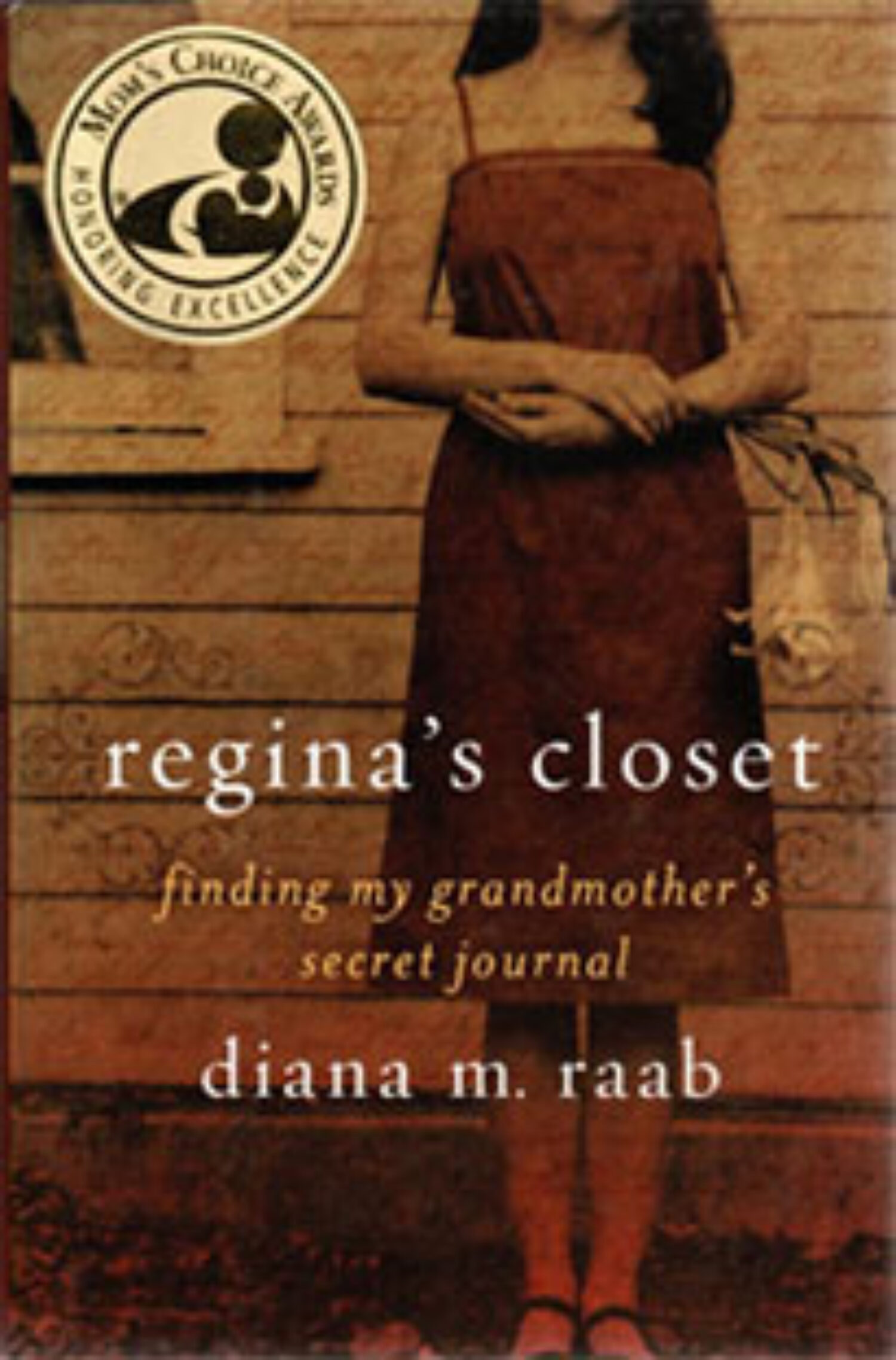
For those of you who have read my first memoir, Regina’s Closet: Finding My Grandmother’s Secret Journal, you know that even though my mother was the one responsible for giving me my first journal and who I will forever be indebted, to also put an indelible mark on my life. She was often prone to depression but her refusal to take medication resulted in her  becoming toxic to those around her. Unfortunately, I was one of the victims. Over the years I have learned to accept her and cope by putting a box around myself while in her presence, but there were times when her ways really hurt me.

So how does this affect you, my reader? Over the course of our lives, we meet hundreds or perhaps thousands of people. There are those who we connect with right away and others with whom we don’t. Sometimes there is chemistry and sometimes not. Some people are easy to be around, others you wouldn’t want to touch with a ten foot pole. We all know the feeling, but sometimes we tend to ignore what we are feeling down deep. Ignoring this feeling can get us into trouble or bring on unhappiness.

Those who negatively impact our lives are called, “toxic people.” I don’t remember where I first heard this term, but I understood it right away. They can be seen anywhere—in our local store, on airplanes, in foreign countries or even in our own family, but one thing is for sure – they are easy to spot. In general terms, they are unhappy, dislike their own lives and carry around a great deal of anger, resentment and bitterness. They seem to complain all the time and might even make you feel that it is your fault that things are not going well. Often, they seem happier after making you unhappy. You feel these traits when you are near them and if you are with them long enough, they could rub off on you.

Those with major depressive disease and/or bipolar disorder are more susceptible to toxic people because they are more easily triggered. I learned this in nursing school during my psychiatry rotation when I asked my mentor how I can tell if someone is depressed. She told me, other than listening to what they say, you can just feel it in their energy.  “When you are with them, you just feel down,” she told me. I have carried this nugget of wisdom with me for the rest of my life and it has served me well.

The other thing about toxic people, which my mother taught me through her actions, is that they often fling insults and hurt towards others. They can be condescending without even realizing it. Being with toxic people can really negatively affect your mental well-being, because they have the innate ability to ‘suck the joy out of life.’

One important thing to remember is that you cannot change someone else’s behavior, but you can adjust your own. Here are some possible ways to cope with a toxic person:

1)    Voice your concerns

2)    Avoid or minimize contact

3)    Try to bring joy into their lives

In summary, you can try to help toxic people, but if they don’t want to help themselves, it will be a losing battle and the best solution will be to just stay away. It will be good for your health.

I have done this quite knowingly with a few select people in my life and have never felt better!

TO MY DEVOTED READERS: There will be a blog, hiatus but I will be back on September 20th. In the meantime, be happy!

The Art of Letter Writing

The letter can be a vital tool to clarify your feelings to either yourself or to others. The purpose of a letter might be to inform, instruct, entertain, amuse, explore psychological problems, keep in touch, or offer love. The advent of the telephone was viewed as a replacement for letter writing, but with the birth of email, there seems to be a resurgence of the age-old art of letter writing.

Many people use  letter writing to release pent-up emotions, such as complaint letters to companies about a malfunctioning product  or letters to the editor about a pressing current event. Typically, when confronting someone on an issue, it’s easier (and healthier) to blow up on the page rather than directly toward the person. Letters are also a good venue to gather your thoughts first, and can be used as a segue to discussion.

Most writers are good letter writers. Authors such as Pam Houston, Fenton Johnson and Shawn Wong frequently write letters. Wong views letter writing as practice for his craft. He says:

“When I was eighteen I started thinking about becoming a writer but as an undergraduate student and later as a graduate student in creative writing, I didn’t really have a career as a writer so I wrote letters, sometimes as many as five or six letters a day. In looking back at the thousands of pages of letters, I realize those letters were how I practiced my writing.”

Author, John McPhee, once said that every book he wrote began with the words, “Dear Mother.” His letters didn’t typically usually end up in his published book, but serves its purpose—it gets him writing. Diarist Anaïs Nin began her first journal entry as a letter to her deranged father as a way to remain connected with him, although she also never sent it. In fact, it is not always necessary to send letters. Sometimes the exercise in writing the letter is all that is needed to clear the mind and calm the psyche.

Some writers use the letter form to warm up their writing. Sometimes it helps to one get into the swing of a story and helps to develop voice. Many, such as myself, write letters in their journal, particularly if they’re having difficulty developing a character in their story.

Others may decide to write letters to their pets. You can really write to whoever or whatever inspires you. It is important to date your letters and in case you decide to send the letter, to keep a copy of it. In the future, it will be amusing and informative to reread your letters, plus you never know how their contents may be used in a future literary work.

When beginning a letter, the best way to start is to say what prompted you to write the letter or why you were thinking of the person at that particular time. The letters we most enjoy receiving are those which carry the writer’s personality. When reading well-written letters we feel as if the person is sitting beside us, looking at us and speaking to us.

Perhaps the most satisfying aspect of letter writing is the opportunity to communicate exactly what’s on your mind. What more could a writer ask for than a specific, hand-picked, captivated reader? So, if you could say anything you wanted to anyone in the world, who would you address?  What would you say?  Sit down, take out a sheet of paper or crack open your journal, choose your audience and begin your journey!

Some Letter-Writing Tips

•                Use simple and easy to understand sentences

•                Avoid using complicated and long words

•                Be specific

•                Break your letter into small parts or paragraphs

•                Make sure your voice or tone is appropriate to the subject of the letter

•                For clarity, read the letter aloud

•                Write, rewrite and polish your letter

What Books Nourish You?

Over the years, my attitude has changed. I used to not be a fan of rereading books, proclaiming that there are simply too many books to read.

But now as a seasoned writer and one who studies the works of my favorite authors, I’ve changed my view on this. I believe it’s important for writers to have books near them which provide nourishment and inspiration.

Anaïs Nin believed that the books which nourish us are not books which tell us how things are, but rather books which show us how to change things in our lives. Nourishing books give us a feeling of being pushed into life. They are books which make us smile and stand proud. They are books we don’t want to sell to the used books stores each time we relocate. They are books which travel with us from residence to residence or from town to town.

For me sometimes the most nourishing book is poetry and sometimes it’s fiction and other times it’s memoir. As a teenager, the most nourishing book for me was Salinger’s book, Catcher in The Rye. As a budding writer, I was fascinated by his honesty and candor and wondered how one could write in a way that was easy for everyone to understand. I also loved the writings of the prophet Khalil Gibran and the poetry of Rod McKuen. I admired their simplicity.

These days, the books which follow me from residence to residence are the journals of Anaïs Nin, the novels of Balzac, Virginia Woolf’s A Room of One’s One, Norman Mailer’s Executioner’s Song and Flaubert’s Madame Bovary. On those days when my attention span is shorter, I might gravitate to my favorite quotation books for the fuel for my creations, and the poetry of Billy Collins is always my favorite, no matter my mood. 

What books nourish you?