Archive for the 'Creative Nonfiction' Category

Dedicated to The Week of Love

Whether you believe in Hallmark Card Days like Valentine’s Day or not, this week would be a good time to think of someone you love, either alive or passed. In the journaling classes I teach, I often suggest writing a love letter or poem to someone. Whether you send it or not is not important, the important thing is that you express what is in your heart. My dad passed away twenty-one years ago, and I always use this day to write him and tell him how much I miss him and what is going on in my life.

Lately, for my doctoral studies, I have been reading a great deal of the Sufi poet, Rumi and I am blown away by his words and sentiments. There are numerous translations of Rumi’s work, but have found the translations by Coleman Barks to be the post powerful and compelling. As Barks says in his introduction to The Essential Rumi, his poems, “are food and drink, nourishment for the part that is hungry for what they give. Call it soul,” (p. xv). Barks goes on to say that his poems help us feel what living in “the ruins feels like…heartbroken, wandering, wordless, lost, and ecstatic for no reason. It’s the psychic space his poems inhabit” (p. xvi). All these feelings are what we all feel now and then and that’s why his poems have resonated with me and so many others over the years. They just fill us up when we are empty and illuminate all that is good when we feel good.

It’s not easy choosing one of my favorite Rumi love poems … I simply adore all of them … but to me, this one is a keeper to be read over and over again.

Buoyancy
by Rumi

Love has taken away my practices
and filled me with poetry.

I tried to keep quietly repeating,
No strength but yours,
but I couldn’t.

I had to clap and sing.
I used to be respectable and chaste and stable,
but who can stand in this strong wind
and remember those things?

A mountain keeps an echo deep inside itself.
That’s how I hold your voice.

I am scrap wood thrown in your fire,
and quickly reduced to smoke.

I saw you and became empty.
This emptiness, more beautiful than existence,
it obliterates existence, and yet when it comes,
existence thrives and creates more existence!

The sky is blue. The world is a blind man
squatting on the road.

But whoever sees your emptiness
sees beyond blue and beyond the blind man.

A great soul hides like Muhammad, or Jesus,
moving through a crowd in a city
where no one knows him.

To praise is to praise
how one surrenders
to the emptiness.

To praise the sun is to praise your own eyes.
Praise, the ocean. What we say, a little ship.

So the sea-journey goes on, and who knows where!
Just to be held by the ocean is the best of luck
we could have. It’s a total waking up!

Why should we grieve that we’ve been sleeping?
It doesn’t matter how long we’ve been unconscious.

We’re groggy, but let the guilt go.
Feel the motions of tenderness
around you, the buoyancy.

HAPPY VALENTINE’S WEEK TO ALL MY READERS!

Namaste,
Diana

Addicted to Writing

Dear Readers:

My new book WRITERS ON THE EDGE: 22 Writers Speak About Addiction and Dependence (Modern History Press) http://www.LHPress.com/writers, is being released on Wednesday, February 1st … Read about it and the idea of writers also being addicted to writing in my latest Huffington Post Post below:

Also, if you live in the greater Los Angeles area, come to the big book launch on February 25th at 4pm. Refreshments served. Surprise guests also!

http://www.huffingtonpost.com/diana-m-raab/the-need-to-write_b_1234878.html

Have a great week!

Diana

Telling Personal Stories

When I was in grade school I wanted to be a writer and one of the first things my English teacher told me was that to be a good writer you must be a good reader. Since that day, I have been a lover of books and have some ever-lasting visual memories of my mother taking me to the library and coming home with a stack of books piled all the way up to my chin.

My preference has always been to read real stories written by real people doing real things. Ralph Waldo Emerson once said, “No matter where you begin, read anything for five hours a day and you will soon be knowing.” My parents used to tell me that “knowledge is power,” and after having survived World War II and having lost most of their possessions as a result, they believed that knowledge was something that could not be taken away from you.

While growing up and through my teen years, I devoured biographies. I enjoyed compelling stories about spiritual journeys and also about other teens adjusting to the trials and tribulations of adolescence. Later, when my daughter got mixed up in a bad crowd, I sought stories written by other parents to help me cope with raising a strong-minded and rebellious adolescent. I even wrote a few of my own stories on the subject. When faced with cancer, I read cancer survivor stories. All these stories helped me navigate difficult times. Reading and learning about people in similar situations helped me realize that I was not alone in my journey.
The ringing in of a new year is a good time to come to grips with what might have plagued us in the previous year.

Journaling is a good way to do this, and another way is to read and hear the voices of others who have been in similar difficult situations. This was my impetus for compiling with co-editor, Jim Brown, my forthcoming anthology, Writers on The Edge: 22 Writers Discuss Dependency and Depression. As renowned author Jerry Stahl states in the foreword, “Open to any piece in this collection, and the scalding, unflinching, overwhelming truths within will shine light on places most people never look.” In fact these are the places many people want to visit – the dark places which are the most difficult to face. Many of us have experienced or at least been exposed to someone with an addiction or depression and the writers in this collection share their stories with honesty and candor. Some write as a cathartic exercise, while at the same time helping others through their own tenuous times. These short essays, confessions, or mini-memoirs share the author’s emotional truth about their addiction. The stories offer hope and ideas and all have a positive slant discussing addictions such as drugs, alcohol, food, sex, love, and gambling.

Poet Chase Twichell in her essay, “Toys in the Attic,” says, “A poem is a portrait of consciousness. It’s a recording of the motions of a mind in time, a mind communicating to others the experience of its own consciousness. When I read or write a poem, I’m trying to open a window between my mind and the minds of others. Poetry is written for others. But it’s also a study of the self, which is a private kind of work.”
In discussing memoir, William Zinnser in his classic book, Inventing the Truth, says, “Memoir is how we make sense of who we are, who we once were, and what values and heritage shaped us.” In another book, Writing About Your Life, he beautifully states, “We come from a tribe of fallible people, prisoners of our own destructiveness, and we have endured to tell the story without judgment and to get on with our lives.” The authors in Writers on the Edge do just that, whether they were involved in a twelve-step program or used writing as a healing modality—they have all succeeded despite their demons, and lead productive lives.

Reading the stories of others can help you learn about yourself. Discoveries are made, memories are revealed and wisdom is shared. Memoir writers courageously face the issues of their pasts and they can serve as role models for all of us. Their stories can provide an understanding of the inner workings of different types of people. Sometimes hearing someone else’s transformative story can inspire you to write your own, keeping in mind that the best writers allow the reader to formulate their own conclusion about the dark places that they or loved ones visit.

Please make your comments here and on where this article was originally published:

http://www.huffingtonpost.com/diana-m-raab/the-power-of-personal-sto_b_1187170.html

Have a super week!
Diana

Tribute to James Hillman

(April 12, 1926 – October 27, 2011)

As a new student in psychology the first book we were asked to read in my doctorate program at the Institute of Transpersonal Psychology was The Soul’s Code: In Search of Character and Calling. This book had a huge impact on me. First, as someone who has numerous degrees from health administration to journalism, to creative nonfiction and now transpersonal psychology, I feel that my soul is still calling me and steering me.

In this book Hillman professes that we are “born with a character; it given; a gift, as the old stories say, from the guardians upon your birth.” His ideas characterize what has been known as the “acorn theory,” whereby it is said that we all hold potential unique characteristics similar to the pattern of an oak tree. In a psychologically healthy life, these unique characteristics are manifested throughout a person’s lifespan, and will be manifested in what is known as their “calling,” or what I prefer to call, “one’s true passion.” The Romans called it “your genius,” and the Greeks called it “your daimon.” Others might call it “your destiny.” Whatever term you are comfortable with works just fine. This concept goes beyond the nature nurture tenet we most often hear about. The acorn theory goes much deeper into the soul or person’s psyche. Sometimes people know their calling early in life and they become possessed by it. This is often seen amongst creative individuals, such as writers, artists and inventors.

My forthcoming book, Writers on the Edge (Modern History Press, February 2012) is a collection of essays written by well-published writers who have not only used writing to help them navigate through tenuous times, but also writers who knew quite early in their lives that they were destined to be writers. Many had turbulent childhoods that resulted in expressing their frustrations creatively through writing. Interestingly, in terms of general success, Hillman says, “According to biographers, the source of success appears to lie in a mother’s doting—or in her neglectful selfishness, which forces an offspring out on its own.”

Hillman passed away on October 27, 2011 at the age of 85. He was a psychologist, scholar, lecturer and author of more than twenty books. He’s considered a Jungian analyst originated the post-Jungian “archetypical psychology.” This branch of psychology identifies with fantasies and myths (gods, goddesses, demigods, mortals and animals), which he claimed, shape and are shaped by our psychological lives. Hillman taught in numerous academic and professional institutions including, Yale University, Syracuse University, the University of Chicago and others. He passed away in his home in Connecticut.

The Magic of Number Ten

I believe in and have a high regard for the number ten. In many ways, it’s regarded as the perfect number. Today, I have even more reason to believe in this number as I celebrate the 10th anniversary of my breast cancer survival. In my self-help memoir, Healing With Words: A Writer’s Cancer Journey, you can read about my journey. Also, at the end of each chapter there are writing prompts for you to do your own writing, whether about cancer or other life-changing events.

While we are on the ten-year-thing, here are some other reasons why I believe 10 is an important number:

• The number 10 implies a sense of completeness and full cycle
• A scale of 1 to 10 is used for ranking things
• There are 10 pins in a bowling lane
• There are 10 official inkblots in the Rorschach inkblot test
• The Snellen chart uses 10 different letters
• We have 10 digits on both our hands and feet
• Ten plagues were inflicted on Egypt in Exodus
• There are 10 Commandments – the cornerstone of Christianity and Judaism
• Jews observe 10 days of Repentance from Rosh Hashanah to Yom Kippur
• There are 10 provinces in Canada
• In the Torah, Jews give 1/10 the of their produce to the poor
• The number 10 is the base of our number system
• In numerology the number 10 brings all sorts of new changes in your life

And finally Verse 10 in Jack Kerouac’s Sutra (Scripture of the Golden Eternity, 1960) says this:

“Kindness and sympathy, understanding and encouragement, these give; they are better than just presents and gifts: no reason in the world why not.”
~ Jack Kerouac

Research on Demand

Because of technology, the world seems to be moving faster. In a recent New York Times article by James Gleick entitled, “Books and Other Fetishes,” (July 16, 2011), he discusses the role of digital media in the search for historical information. The raw material of history appears to be heading for the clouds. What was once hard is now easy. What was slow seems to now be fast, he summarizes.

It appears as if Europe has jumped on the bandwagon of using digitial media to capture historical information, quicker than us. Last month, the British Library announced a project in collaboration with Google which would digitize 40 million pages of books, pamphlets and periodicals dating back to the French Revolution. Of course there’s speculation that Europeans simply have more history to work with than we do, a good excuse for the need for digitalization.

There is a school of thought that this sort of thing called, “techno-enthusiasm” can potentially cheapen scholarship. An English historian Tristain Hung said, “When everything is downloadable, the mystery of history can be lost.”

In fact, my favorite part of school back in the sixties and seventies was going to the library and cracking open volumes of books and journals looking through the table of contents and indexes for answers to my research projects. I was always a research buff and continue to be one. Furthermore, it had additional entertainment value because of the opportunity to meander over to the photocopy machine to copy relevant pages to bring home. Forgive me if I am getting too nostalgic, but I do think we were previously more mindful back then, creating memories one moment at a time.

Doing research back then was simply more alluring, exciting and mysterious, whereas now it might simply involve one or two clicks on the computer. The magic and sense of discovery is minimized. Maybe I am just old-fashioned and love the old way better in the same way that I miss visiting bookstores vs. browsing online.

This reminds me of a time a few weeks ago when I visited the nearest chain bookstore, now a thirty-minute drive from my house. I phoned a writer friend from the reference section and said, “Guess where I am? I am at the Barnes and Noble in Ventura and am so excited to be here. I miss this.”

“I know what you mean,” he said. “I could easily live on the floor of a bookstore.” Now that might just be every writer’s fantasy.

Back to the subject of research. Maybe I am a believer in hard work producing results, thus spending long hours researching in the library or bookstore seems gratifying. The sense of serendipity and chance also seems to be lost during this new digital age.

I guess I better just buckle down and face the changes around me. Who am I fooling? I am aging; times are changing and the world moves on….

Happy Birthday America : Thoughts on Freedom and Justice

On this day in 1776 we claimed our independence from Britain. As a result of this event, our democracy was formed and we became the “Land of the free and brave.” Thinking about this turning point in our history gives me much to ponder and journal about.

In fact, today is a good reminder for all of us to give thanks for the independence we have each and every day of our lives. Imagine the freedom to wake up in the morning and be in charge of our own lives. Something many of us take for granted. This idea really resonates with me lately while turning on the television and observing the stations inundated with the Casey Anthony trial. If she lived in any other place in the world, she would not have had the opportunity for either trial or any legal representation. Her voice would not be heard and chances are because of the horrific crime she’s accused of, she would probably no longer be with us.

Listening to the details of this case hit me hard for numerous reasons. First of all, we lived in Orlando for 15 years and my three children, Rachel, Regine and Josh were raised there. Outside of the opening of Disney World in the 1971 and the Tiger Woods saga some years ago, this is the only time I remember Orlando being in the news for such an extended period of time. Secondly, as a mother myself, I am nauseated at Anthony’s crime and how a mother could do such a thing to her child. It has always astounded me how difficult it is to get married but so easy to become a mother – no credentials necessary. In my opinion, it should be the other way around, but who am I to say. As a woman who experienced infertility and was on bed rest with all three of my kids, I can only say that I appreciate them all that much more.

Casey Anthony has sacrificed so much and hurt so many people and for what? Because the stress of motherhood overwhelmed her and she was unable to continue with her partying lifestyle? This makes no sense to me.

Giving her as much air time as we have is another issue, as Americans are obsessed with sensationalism. I am not claiming to be different, but it’s really gone overboard. There is no doubt that the Casey Anthony is simply not well. Seeing her face on television day after day reminded me of a book I read some years ago, called The Sociopath Next Door by Martha Stout. This is a fabulous and eye-opening book and for all those who are into sensationalism, a great read. In terms of chararacteristics, here’s what she identifies as the characteristics of a sociopath:

charming
sometimes hypochondriac
often looking for schemes
bored
risk-seeking
liars and thieves
flatters
controlling
hate and avoid responsibility

At a glance it might seem that many of these characteristics fit Casey Anthony’s personality, but the last characteristic is the most poignant.

In honor of Independence Day and our democracy, I cannot help but believe that justice will be served and at the risk of using a cliché, “what goes around comes around.”

NOTE TO READERS: I will be taking a two-week hiatus. Be happy and be well!

Compelling Confessions

This past week I taught a workshop at the Santa Barbara Writers’ Conference called “From Notebook to Memoir.”

http://www.sbwriters.com/

For the most part, the workshop emphasized how to use the scribblings in your notebooks to craft a memoir. In reality, those scribblings include random thoughts, lists and confessions. A well-crafted memoir exhibits a confessional tone and tells the emotional truth of a story. I told my students that often writing about personal experiences can be cathartic and should make us feel good. However, there are times when confessing can hurt and at those times it’s simply best to stop writing and do something else.

A recent article in Spirituality and Health called “Why Confession Feels So Good,” by Peggy La Cerra focused on the confessions one makes in church but it had some salient points to ponder outside of the church setting.

http://www.spiritualityhealth.com/mag
azine/2011-may-june/2011-may-june.html

For example, “Humans across various traditions and cultures have developed rituals that serve the purpose of purging the participants of residual guilt and shame.” For example, those involved in groups such as Weight Watchers and twelve-step programs for addiction, must report their faults, shortcomings and weaknesses to their sponsors; Buddhists report to their superiors; Jews make their confessions to God and atone on holidays like Yom Kippur; Muslims confess to Allah and Christians confess at Church to a minister, pastor or priest and do penance.

These days, many of these practices are being scrutinized and personally I prefer the confessions that go onto the pages of a journal, possibly to be turned into poetry or memoir. I recently picked up a volume on my bookshelf which I had bought years ago called, After Confession: Poetry as Autobiography edited by Kate Sontag & David Graham. The issues with bad confessional poetry are similar to those with bad memoir and this is addressed in the early part of the book. The editor deftly states: “Aesthetically speaking, personal poems can go wrong in many ways: they might indulge in the elevation of trivial or merely uninteresting domestic detail; they might simply whine, recounting; they might ignore important aspects of the world beyond the poet’s doorstep and thus remain cloistered in the prison of self; they might mistake the tawdry or sensational for the boldly honest; and in fact, they might fall anywhere along the deadly spectrum that runs from cocktail-party bore to megalomaniac.”

These are precisely the points I make in my memoir class. I believe the most important point is that in order to craft a compelling memoir, the writer needs to identify a universal truth that their readers can relate to and more times than not, this can be a challenge.

The New Psychoanalysis

The New Psychoanalysis

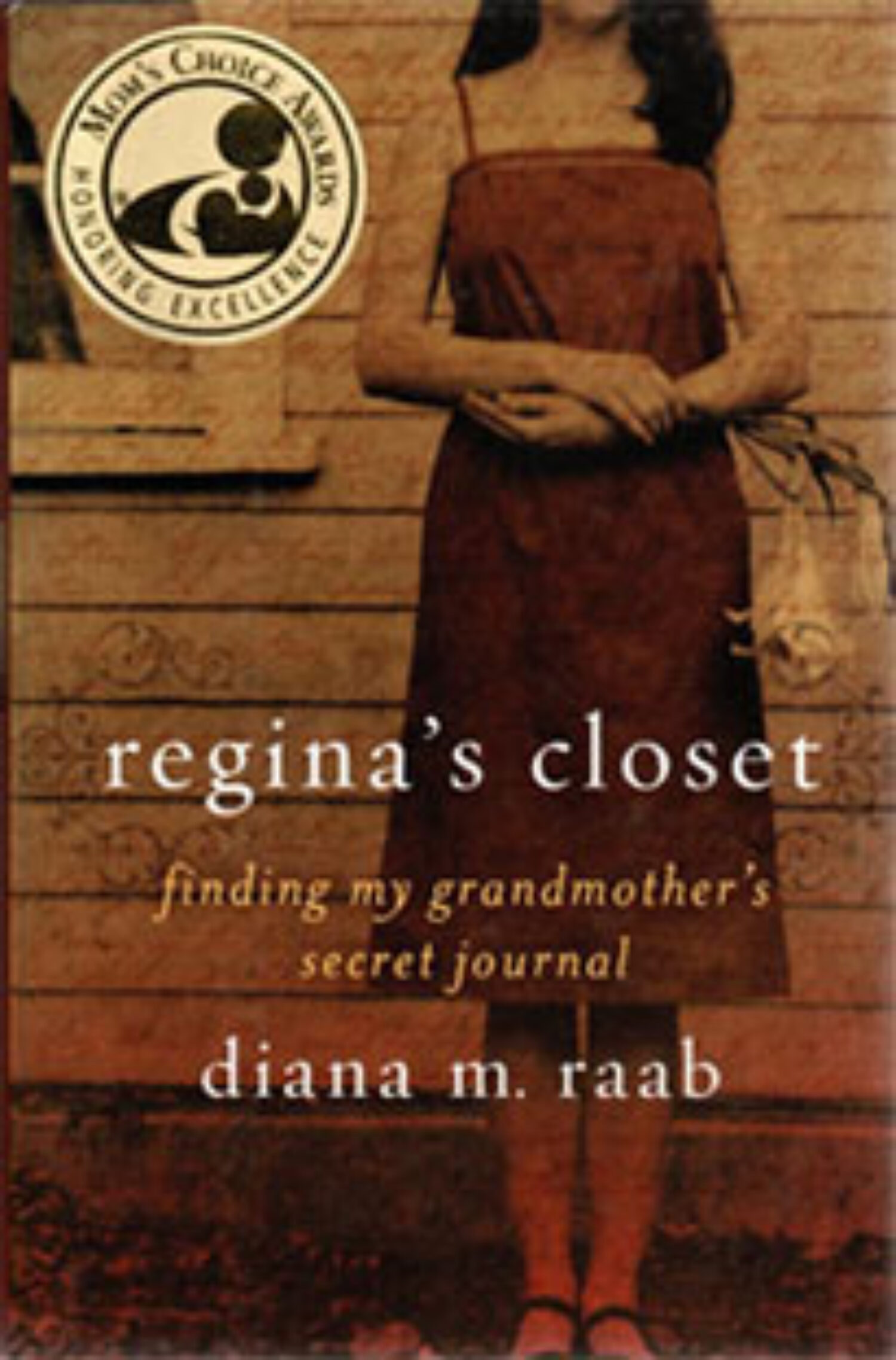
In the 1960s my grandmother was depressed and eventually committed suicide because she could no longer live with the torment of her life as an orphan following World War I (see Regina’s Closet: Finding My Grandmother’s Secret Journal, 2007). Back in the1960s no one suggested she see a psychotherapist. Those appointments were primarily reserved for the ‘real’ mentally ill, ‘crazy, or dysfunctional persons. The best her family doctor could offer was a prescription valium. In the end, it was this prescription which she used to end her life. In reality, this form of treatment was a band aid rather than a solution. Thankfully, now nearly fifty years later, this is no longer the case—therapy is suggested to those with all sorts of problems.

Chances are you or someone you know has had therapy. If you live in places such as California (like me), you might even find yourself discussing your intimate therapy sessions with friends at a cocktail party – something still frowned upon in other parts of the country.

In the June 2011 issue of Psychology Today, writer Mary Knight Raskin explores the trends in analysis and how psychotherapy, as developed by Sigmund Freud, recently celebrated its 100th anniversary. She discusses the benefits of therapy and how it can help a person go from leading a dysfunctional to a functional lifestyle.

She uses the example of writer, Gary Shteyngart, author of three best-selling novels. Prior to his writing career, the author’s life was in a state of major dysfunction. The chaos began at the age of seven, when he and his family immigrated from Leningrad to New York City. Being uplifted from his homeland left a deep scar on the young man, resulting in feelings of alienation and depression. In his twenties the feelings got so intense that he embarked on the journey of psychoanalysis with success as it lead to a productive writing career.

Over the years, experts realized that a lot happens in the subconscious part of our minds. Although there have been changes in how psychotherapy has been practiced since its inception a century ago, the basic premise as to what makes us tick has not changed. For example, the role of the unconscious mind is still strong and it is still believed that childhood experiences create a template for adult behavior. Talking about these experiences (in moderation) can lead to a greater understanding of the adult self, helping us figure out why we do what we do and how we can be a better person as a result. Understanding these experiences and behaviors can lead to positive changes and potential enlightenment.

Remember that we are a complex and multi-layered species. Chances are a single perspective or therapy will not provide enough information or ideas to foster significant change. In the end it is a combination of modalities which can help us become our best selves.

Finding Your Voice – The Oscar’s Merge With Writing

One of the greatest challenges of being a writer is finding one’s voice. I was reminded of this phenomenon while watching the Oscar’s last week. I was delighted that “The King’s Speech,” won best picture as I thought the movie was phenomenal. It conveyed numerous poignant messages, but for me, the most important one was that discovering our voice is difficult and takes a great deal of courage, whether it means finding it verbally or on the page.

For those who are unfamiliar with the movie’s storyline—the future king of England had a speech impediment which he had to overcome to assume his position. He was ridiculed and mocked and it seemed as if he would never succeed, until he finally sought the assistance of a guide to help him with his stuttering problem.

It’s a writer’s voice, style, pattern or beat that draws us to certain writers who we read over and over again. Many of my students ask, “So how do you know when you find your voice?” I tell them that you know you have found your voice, when you speak authentically, sincerely and from the heart with both elegance and grace. It also feels natural and the writing simply pours onto the page. This, however, is not always an easy task.

The most effective way to discover your voice, is to write, write, and write some more. It’s a good idea to write about subjects which you are passionate about. This is when your true writing style emerges. A recent article in the New York Times by Dani Shapiro entitled, “How to Find Your Voice,” (January 7, 2011) interviewed a few authors who offered suggestions on this endeavor.

Christopher R. Beha, for example, suggested that writing is all about discovery and therefore you should write about what puzzles you. “If you begin with what you know, where do you go next? If you begin with uncertainty, possibilities will present themselves. You might even find that you know more than you thought you did,” he says.

Many books have been written on discovering your voice and they offer all sorts of suggestions. Here are some of my favorites:

1) Write a letter to a friend or loved one. Your true voice will emerge in letters. You will soon see how natural it feels to do this type of writing. Many writers actually begin their writing day by writing a letter, as a way to get their creative juices flowing.
2) Write like you speak. For example, imagine that you are sitting across the table from a friend and telling a story.
3) Think about different possible moods. Make a list of 50 words associated with different moods, from happy to sad to lethargic. You will know which mood best reflects you and your voice because the words will flow.
4) Think about your personality and make a list of 50 words which describe your personality. Write a few pages about an activity and infuse your prose with those words.
5) Finally, read your work out loud and see how natural (or unnatural) it feels.

The more persistent and regular you are with your writing, the more quickly your true voice will emerge. In “The King’s Speech,” the king’s courage enabled him to persist and grow into someone who could speak to a troubled nation and inspire others despite great challenges.

I wish you joy in finding and holding onto your voice. I hope you can sing out and share your voice with others—loved ones, friends and colleagues!