Archive for the 'Memory' Category

Dedicated to The Week of Love

Whether you believe in Hallmark Card Days like Valentine’s Day or not, this week would be a good time to think of someone you love, either alive or passed. In the journaling classes I teach, I often suggest writing a love letter or poem to someone. Whether you send it or not is not important, the important thing is that you express what is in your heart. My dad passed away twenty-one years ago, and I always use this day to write him and tell him how much I miss him and what is going on in my life.

Lately, for my doctoral studies, I have been reading a great deal of the Sufi poet, Rumi and I am blown away by his words and sentiments. There are numerous translations of Rumi’s work, but have found the translations by Coleman Barks to be the post powerful and compelling. As Barks says in his introduction to The Essential Rumi, his poems, “are food and drink, nourishment for the part that is hungry for what they give. Call it soul,” (p. xv). Barks goes on to say that his poems help us feel what living in “the ruins feels like…heartbroken, wandering, wordless, lost, and ecstatic for no reason. It’s the psychic space his poems inhabit” (p. xvi). All these feelings are what we all feel now and then and that’s why his poems have resonated with me and so many others over the years. They just fill us up when we are empty and illuminate all that is good when we feel good.

It’s not easy choosing one of my favorite Rumi love poems … I simply adore all of them … but to me, this one is a keeper to be read over and over again.

Buoyancy
by Rumi

Love has taken away my practices
and filled me with poetry.

I tried to keep quietly repeating,
No strength but yours,
but I couldn’t.

I had to clap and sing.
I used to be respectable and chaste and stable,
but who can stand in this strong wind
and remember those things?

A mountain keeps an echo deep inside itself.
That’s how I hold your voice.

I am scrap wood thrown in your fire,
and quickly reduced to smoke.

I saw you and became empty.
This emptiness, more beautiful than existence,
it obliterates existence, and yet when it comes,
existence thrives and creates more existence!

The sky is blue. The world is a blind man
squatting on the road.

But whoever sees your emptiness
sees beyond blue and beyond the blind man.

A great soul hides like Muhammad, or Jesus,
moving through a crowd in a city
where no one knows him.

To praise is to praise
how one surrenders
to the emptiness.

To praise the sun is to praise your own eyes.
Praise, the ocean. What we say, a little ship.

So the sea-journey goes on, and who knows where!
Just to be held by the ocean is the best of luck
we could have. It’s a total waking up!

Why should we grieve that we’ve been sleeping?
It doesn’t matter how long we’ve been unconscious.

We’re groggy, but let the guilt go.
Feel the motions of tenderness
around you, the buoyancy.

HAPPY VALENTINE’S WEEK TO ALL MY READERS!

Namaste,
Diana

Research on Demand

Because of technology, the world seems to be moving faster. In a recent New York Times article by James Gleick entitled, “Books and Other Fetishes,” (July 16, 2011), he discusses the role of digital media in the search for historical information. The raw material of history appears to be heading for the clouds. What was once hard is now easy. What was slow seems to now be fast, he summarizes.

It appears as if Europe has jumped on the bandwagon of using digitial media to capture historical information, quicker than us. Last month, the British Library announced a project in collaboration with Google which would digitize 40 million pages of books, pamphlets and periodicals dating back to the French Revolution. Of course there’s speculation that Europeans simply have more history to work with than we do, a good excuse for the need for digitalization.

There is a school of thought that this sort of thing called, “techno-enthusiasm” can potentially cheapen scholarship. An English historian Tristain Hung said, “When everything is downloadable, the mystery of history can be lost.”

In fact, my favorite part of school back in the sixties and seventies was going to the library and cracking open volumes of books and journals looking through the table of contents and indexes for answers to my research projects. I was always a research buff and continue to be one. Furthermore, it had additional entertainment value because of the opportunity to meander over to the photocopy machine to copy relevant pages to bring home. Forgive me if I am getting too nostalgic, but I do think we were previously more mindful back then, creating memories one moment at a time.

Doing research back then was simply more alluring, exciting and mysterious, whereas now it might simply involve one or two clicks on the computer. The magic and sense of discovery is minimized. Maybe I am just old-fashioned and love the old way better in the same way that I miss visiting bookstores vs. browsing online.

This reminds me of a time a few weeks ago when I visited the nearest chain bookstore, now a thirty-minute drive from my house. I phoned a writer friend from the reference section and said, “Guess where I am? I am at the Barnes and Noble in Ventura and am so excited to be here. I miss this.”

“I know what you mean,” he said. “I could easily live on the floor of a bookstore.” Now that might just be every writer’s fantasy.

Back to the subject of research. Maybe I am a believer in hard work producing results, thus spending long hours researching in the library or bookstore seems gratifying. The sense of serendipity and chance also seems to be lost during this new digital age.

I guess I better just buckle down and face the changes around me. Who am I fooling? I am aging; times are changing and the world moves on….

In Memory

I just joined this site called, “FlexWriters Creative Network,” and I could not resist cutting and pasting a poem they had posted in honor of today, Memorial Day. We should remember that this is not a day to celebrate, but a day to honor and remember those who have lost their lives while in the military service. Thank you for all you have done to protect our freedom.

http://www.flexwriterscreativenetwork.net/magazine.html

WE REMEMBER

by Dori Wheeler

Today is the day we remember those
Who went to war and fought our foes
They’ve gone away to fight our wars
Lived and died so our flag still soars
Some treated pourly when they came back
When some wouldn’t fight, they picked up the slack
My hats off to our sons and daughters
Who’ve had to live in deplorable quarters
Men and women who have gone off to fight
To save our country from a terrible plight
Today is the day we remember those
Even though this war really blows
They protect our country, home of the brave
Sadly, some had to come home to a grave
Men and women who have gone off to fight
Eternal candles that will forever light
They deserve so much more then a parade
After going to war and being afraid
Today is the day we remember those
Who fought against the ones we really appose
Stars and stripes forever wave
Freedom is what we are trying to save
I don’t really believe in this war
But I believe in our troops forever more
I know our country is very strong
But in this war, we don’t belong
Today is the day we remember those.

What Story Do We Tell ?

Whether you write fiction, nonfiction or poetry, there’s no doubt you have a unique story to tell from your very own perspective. For many writers, reliving and retelling childhood stories are common platforms for their work. We often reflect on those times because they were filled with pain, joy or unanswered questions.

Though we might have a sense of what story we need to tell, once in a while we get stumped. Many writers say their best story ideas come to mind when they’re not sitting at their desk ‘working,’ but rather when they’re out and about. It’s important to remain alert to those special moments in everyday life—odd discoveries and chance remarks made by others in social, work or casual settings.

My typical day begins with reading the news. An article or story might spark my interest, which drives me to surf the web for more information. If I am in the middle of another project, I will toss the idea into my “Writing Ideas,” folder which contains stories I hope to tell one day. Whether I get to writing them or not is another topic, the important thing is to have that folder as a back-up for those days when my well runs dry.

In addition to the “Writing Ideas” folder here are some questions to ask yourself which might also lead to new stories:

1) What’s going through your head?
2) Who are your villains? Who are your heroes?
3) What are you obsessed by?
4) What inspires you?
5) Where are you in your life now?
6) What stories are you compelled to read?

Whatever you choose to write, you will soon realize that the creative journey is similar to life’s journey—unpredictable, unstructured, mysterious and laden with miracles.

In her book, Negotiating With the Dead: A Writer on Writing (2002), Margaret Atwood says, “Writing has to do with darkness, and a desire or perhaps a compulsion to enter it, and, with luck, to illuminate it, and to bring something back out into the light.”

In Writing (1993) Marguerite Duras says, “Finding yourself in a hole, at the bottom of a hole, in almost total solitude, and discovering that only writing can save you. To be without the slightest subject for a book, the slightest idea for a book, is to find yourself, once again, before a book. A vast emptiness. A possible book. Before nothing. Before something like living, naked writing, like something terrible, terrible to overcome.”

Sometimes the stories we choose to write help us to learn more about know ourselves and to figure out the world around us. Oftentimes, it is about making a discovery. Even our darkest—or unknown—thoughts, memories and fears, can transform themselves to reveal value and meaning for us in our lives now. And with any luck, for others as well!

Writing About Difficult Subjects in Memoir

Writing memoir can be viewed as a sort of literary alchemy. It is one way to transform your unpleasant past into an art form. This exercise can be cathartic, painful and confusing—things to be aware of before setting down this path. Many people believe they have a story to share but have trouble deciding whether to actually write about it. I say, if the story feels like a knot in your stomach, then it is something you should write whether it’s for publication or not. If there is an internal yanking and feeling that you cannot go to your grave leaving this story untold. That’s pretty much how I felt when writing my two memoirs, Regina’s Closet and Healing With Words.

When you finally decide to tell your story, you should know that it may not be easy getting down to the emotional truth of your subject matter. Sometimes it’s much easier to skirt the deep dark traumas of our past and write about the glossy and lighter events which shaped us.

Yet, writing about trauma can be life-changing for both you and your reader. My advice is to be brave and it will pay off.  Your first draft should be raw and long. Remember to be simple in your thoughts. Tell the truth and be straightforward. You can edit in subsequent drafts. If you have endured difficult times, the good news is that you have survived well enough to be able to write about them.

In my reading on how other writers have coped with writing about difficult subject matter. Many writers suggest not to throw yourself a pity party on the page, but instead, focus on writing the facts. Leave the reader to make their own decisions. In general, readers don’t like the narrative to whine. It is a turn-off and ineffective, however, there is also nothing wrong with letting the reader feel uncomfortable. In fact, if they are, they might be inspired to write their own painful story. This would be a plus for everyone involved.

Many people continue to be haunted by painful wounds of childhood and writing has a tendency to set people free from the shackles. Some might try to write their memoir in the third person in an attempt to remove or distance themselves from the story, but more often than not, however, this does not work because the immediacy is often lost.

Some people ask how they can protect themselves and remain ‘sane,’ while writing their painful story. My answer varies depending upon the person. Psychotherapy might be the answer for you or having someone trustworthy you can talk to on a regular basis, whether it’s an editor or dear friend. It’s good to have someone to call in time of need, just for inspiration or to prod you along—someone to tell that you “can do it.” Some people lean towards writing groups for support, although I have never personally found them helpful, as often times instead of supporting one another’s literary works, participants use the forum to  destructively criticize one another’s work.

Art Spiegelman, the author of the graphic memoir, The Complete Maus: A Survivor’s Tale, says to protect himself from the pain of his past, he wears a bicycle helmet so that when he hits his head against the wall it doesn’t hurt so much. This reminds me of a fiction workshop I once took at the University of the Iowa where Jonis Agee suggested we wear masks while writing. This was a great way to become someone else.

In summary, if a subject is scary or feels dangerous the best thing to do is just write and deal with the post-traumatic stress situation afterwards. Sometimes when you write what you remember about an event, it is one way of separating yourself from it. In a way, you gain a sense of control over your old memory.

Writing a Compelling Memoir

On Saturday, I participated in a panel at the Ventura Book Festival called, “Writing a Compelling Memoir.” For those who were unable to attend, here are some highlights from presentation:

Abigail Thomas, in her book, Thinking About Memoir, says that writing a memoir is about keeping your eyes, ears and heart open. It’s about letting your mind open up and wander and about letting one thing lead to another.

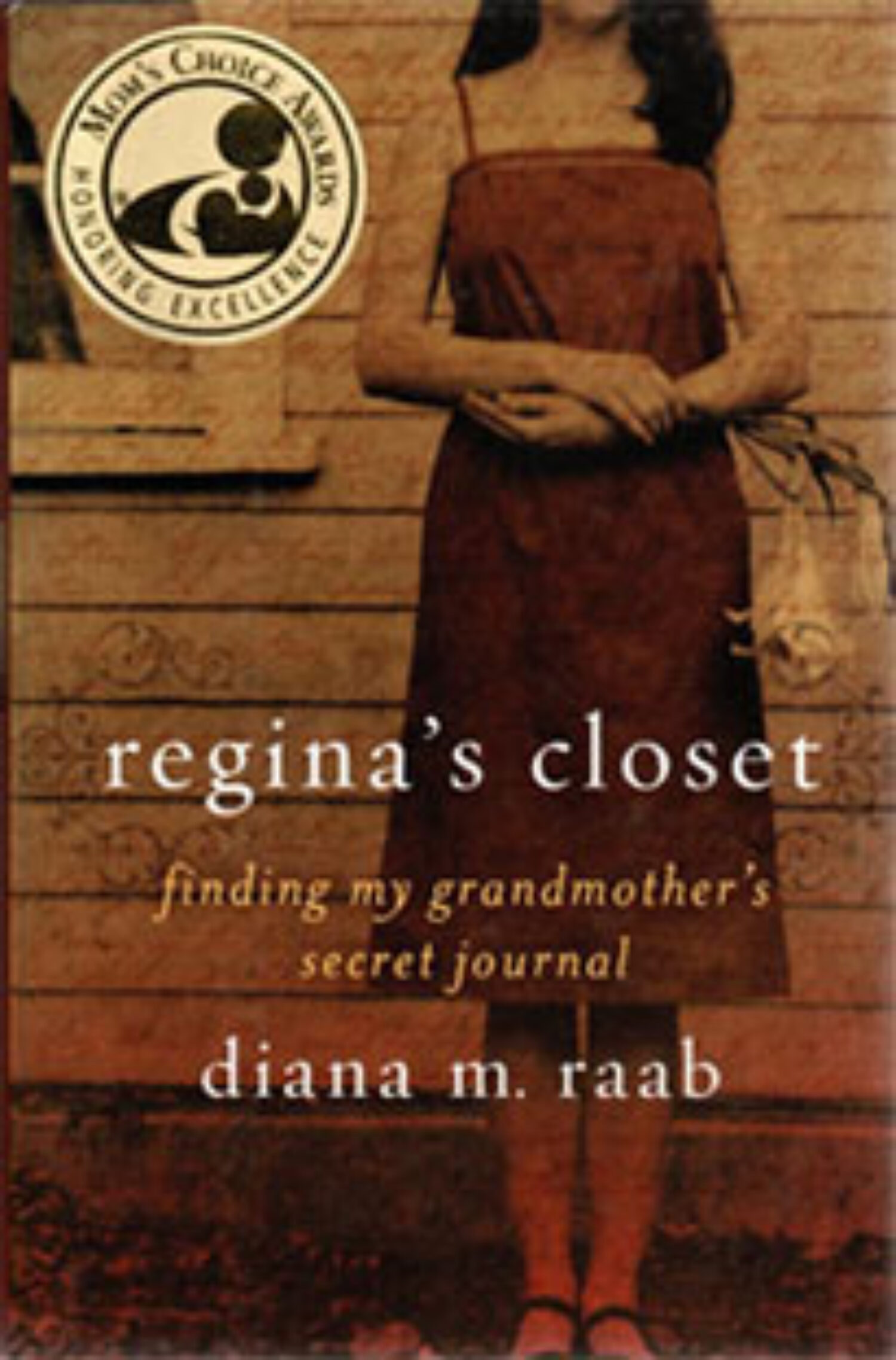
Many people are driven to write memoir as a result of pain, loss or trauma. But when considering publication, one question you must ask is, “who cares?” Why would people want to read your book? You must have something to share which is universal. The impetus for writing my first memoir, Regina’s Closet: Finding My Grandmother’s Secret Journal (http://www.amazon.com/Reginas-Closet-Finding-Grandmothers-Journal/dp/0825305756/ref=sr_1_1?s=books&ie=UTF8&qid=1279570174&sr=1-1) was to explore the motivation behind my grandmother’s suicide. It’s not that I was contemplating suicide, but after my first diagnosis I became depressed. I knew that my grandmother battled the same demon and I wanted to understand how she dealt with it. I also wondered if maybe she too had cancer and took her life because of the stigma associated with the disease in the 1960s. In the end, I learned that she did not have cancer, but never fully healed from the traumas she encountered as an orphan in Poland during World War I.

The way in which you begin your memoir, depends upon your story. An effective way is to begin by writing about a transformational moment in your life. For Regina’s Closet, I wrote about the day I found my grandmother dead. This became the book’s opening scene. In Healing With Words, (http://www.amazon.com/Healing-Words-writers-cancer-journey/dp/1615990100/ref=sr_1_1?ie=UTF8&s=books&qid=1279569966&sr=8-1), I began by describing what I thought would be a routine annual mammogram, but which ended up being a breast cancer diagnosis. This became that book’s opening scene.

According to Lee Gutkind in his book, Keep it Real, “scenes are the primary building blocks of creative nonfiction. They are little stories, episodes, anecdotes or other opportunities for the creative nonfiction writer to be artful and use all the literary techniques available to fiction writers, such as dialogue, description, action and suspense.”

When identifying a scene remember that something must happen. There must be a beginning, middle and end and a bunch of things that happen in between in order to have the building blocks for the story.

From a broader perspective, here are eight tips on writing a compelling memoir:

1) Find the memoir’s focus

2) Find the memoir’s structure

3) Show don’t tell

4) Use a compelling voice

5) Create compelling scenes

6) Use reflection and musings

7) Use fictional technique

8) Write your emotional truth

In summary, many people write memoir not necessarily because they want to write one, but more often because they have a story which they need to tell, either to find an answer to a mysterious question or to make some sense of a situation. Writing is a journey like no other. Whatever  one’s motive is for reason for writing a memoir, it will surely be a rewarding experience!

Forgetfulness

I wrote this blog in honor of my cousin, Jed’s 55th birthday. (Happy Birthday, Jed!)

Most of my favorite poems are found on the pages of Billy Collins’s poetry collections. So many of his sentiments and images resonate with me. If I had to chose one poem to share, it would be, “Forgetfulness.” The main reason is that this poem inspired me to rediscover the poet in me who had been dormant since childhood.

This is how it happened. It was 2003 or 2004, and I was in the charter class of Spalding University’s low-residency program, working on my MFA. Our class was invited to a Billy Collins reading at a neighboring university. It was just after Billy completed his term as Poet Laureate of the United States. The university auditorium was packed and Billy read many poignant poems, including “Forgetfulness.”

I vividly remember chuckling to myself throughout his entire reading. It was just about the time of my fiftieth birthday and I was beginning to forget more than I remembered. Billy received a lot of laughs during his reading, but with an audience filled with baby boomers, I think he got the most chuckles while reading this poem. If you have ever heard Billy read, you understand his talent and dry voice. In his poem, “Forgetfulness,” he incorporates his classic teasing technique told in a conversational and accessible manner. His imaging is extremely clever and it continues to resonate with me this many years after that first discovery.

I rarely will choose to spend the time to stand in line for an author signings, but after Billy’s reading, I purchased all his books piled all the way up to my chin and decided to wait for his signature on each one.  I didn’t care how long it took me to reach the front of the line. I knew that his reading would launch the new poet in me and I wanted to avail myself of the opportunity to read the poems of a giant.

You can hear him read on u-tube or you can read it here:

http://www.youtube.com/watch?v=wrEPJh14mcU

Forgetfulness

The name of the author is the first to go

followed obediently by the title, the plot,

the heartbreaking conclusion, the entire novel

which suddenly becomes one you have never read,

never even heard of,

as if, one by one, the memories you used to harbor

decided to retire to the southern hemisphere of the brain,

to a little fishing village where there are no phones.

Long ago you kissed the names of the nine Muses goodbye

and watched the quadratic equation pack its bag,

and even now as you memorize the order of the planets,

something else is slipping away, a state flower perhaps,

the address of an uncle, the capital of Paraguay.

Whatever it is you are struggling to remember,

it is not poised on the tip of your tongue,

not even lurking in some obscure corner of your spleen.

It has floated away down a dark mythological river

whose name begins with an L as far as you can recall,

well on your own way to oblivion where you will join those

who have even forgotten how to swim and how to ride a bicycle.

No wonder you rise in the middle of the night

to look up the date of a famous battle in a book on war.

No wonder the moon in the window seems to have drifted

out of a love poem that you used to know by heart.