Archive for the 'Health' Category

Addicted to Writing

Dear Readers:

My new book WRITERS ON THE EDGE: 22 Writers Speak About Addiction and Dependence (Modern History Press) http://www.LHPress.com/writers, is being released on Wednesday, February 1st … Read about it and the idea of writers also being addicted to writing in my latest Huffington Post Post below:

Also, if you live in the greater Los Angeles area, come to the big book launch on February 25th at 4pm. Refreshments served. Surprise guests also!

http://www.huffingtonpost.com/diana-m-raab/the-need-to-write_b_1234878.html

Have a great week!

Diana

The Spiritual Experience of Eating

After the holidays many of us are complaining that we ate too much and not only did we eat too much, but too much of the wrong things.

I often suggest food journaling to ascertain the circumstances under which we eat. It has worked for me before and it can be very revealing. Sometimes we eat unconsciously and do not even know we are doing it!

If you decide to food journal and notice that you are eating too much and/or too often there is something else you can try. In the recent issue of The Soul/Body Connection, there was a great article, “How to Make Every Bite a Spiritual Experience” by Jean L. Kristeller, PhD. The exercises in the article were once shared with me at a seminar discussing the healing power of writing.

The idea is that journaling in combination with mindfulness while eating can make for a delicious experience. The article discusses how we can bring joy and balance back into our relationship with food. It is mostly about slowing down and savoring each bite. If you take time to watch slim individuals in restaurants eat, you will note, in general, how slow they eat and how many times they chew each piece of food. Another thing they do is that they often leave something on the plate and do not finish everything.

The author calls her approach the Mindfulness-Based Eating Awareness Training and she says that it does cut down on binging. She discusses a few meditations around eating, but the first one is called, “The Experience of Hunger.” In this meditation, she suggests shortly before a meal and for one minute, to stop and focus your attention on your breath, in the same way you might in a normal meditation practice. She then suggests you rate your hunger on a scale of 1 to 7 (7 the hungriest). The idea is to identify if you really need to eat or is it emotional or impulsive eating which is driving you to the food. Then you should think about how you will handle the foods and while eating, stop every few minutes to reassess your hunger and see if it is increasing or decreasing.

Food addiction is an increasing problem in the United States. In my forthcoming collection, Writers on the Edge: 22 Writers Speak About Addiction and Dependency, Margaret Bullitt-Jonas does a fine job sharing her own journey in her essay, “Putting Down the Duck,” which is an excerpt of her memoir, Holy Hunger: A Memoir of Desire.

Transpersonal Psychology with Stanislav Grof

This past week I attended my first seminar for my PhD in Transpersonal Psychology at the Institute of Transpersonal Psychology in Palo Alto, CA. The keynote speaker was Stanislav Grof, author of Psychology of the Future (SUNY Press, 2000). His book and discussion were illuminating. Dr. Grof is a psychiatrist with more than sixty years of experience in the field of non-ordinary states of consciousness, who conducted a great deal of research with hallucinogenics in the 1960s. I immediately connected with him; after all, I am a baby boomer who grew up in New York in the 1960s. You bet I did my own experimentation to bring me to altered states of consciousness, although it was never called that. It was simply referred to as “getting high.”

Grof’s premise involves the idea that hallucinogenics have the ability to help us transcend to places which assist us in understanding who we are and what we are here for. So much of what he said resonated with me and it was nice to hear how eloquently he articulates his ideas. His discussion reminded me of an incident in my own adolescence. When my beloved grandfather who lived with us suddenly collapsed from a heart attack I remember feeling deep sadness and being offered LSD by some friends. They said the drug would not necessarily remove my grief nor help me escape it, but rather, it would help me reconnect with my grandfather at a more profound level.

As an open-minded teenager, I accepted their offering and since that day forward have believed in the power of hallucinogens.
Back in the 1960s the discipline of transpersonal psychology was not yet formulated. So I sort of consider myself an early practitioner, with my experimentation with LSD and practice of transcendental meditation. In some ways, I feel like a pioneer amongst my peers! In view of this, one of the most interesting ideas that I came away with from Grof’s talk was the idea that the deepest force or motive behind alcoholism and other forms of addiction is the misguided craving for some sort of transcendence. I had not heard this theory before and not only does it make absolute sense, but it also gives credence to my own experimentation with hallucinogenics. It is a fascinating idea that those with a tendency toward various addictions are searching for transcendence or a way to bring their lives to another level, whether they choose to use illicit drugs, alcohol, sex, food, or gambling.

The seminar also reminded me that the world is one big family, and that no matter where we live, who we are or what are our spiritual or cultural orientations, there is a common thread running through our lives. This is the ultimate quest for happiness. Everything we do and say is motivated by this common quest. On that note, I would like to feel a smile from all my readers!

The Magic of Number Ten

I believe in and have a high regard for the number ten. In many ways, it’s regarded as the perfect number. Today, I have even more reason to believe in this number as I celebrate the 10th anniversary of my breast cancer survival. In my self-help memoir, Healing With Words: A Writer’s Cancer Journey, you can read about my journey. Also, at the end of each chapter there are writing prompts for you to do your own writing, whether about cancer or other life-changing events.

While we are on the ten-year-thing, here are some other reasons why I believe 10 is an important number:

• The number 10 implies a sense of completeness and full cycle
• A scale of 1 to 10 is used for ranking things
• There are 10 pins in a bowling lane
• There are 10 official inkblots in the Rorschach inkblot test
• The Snellen chart uses 10 different letters
• We have 10 digits on both our hands and feet
• Ten plagues were inflicted on Egypt in Exodus
• There are 10 Commandments – the cornerstone of Christianity and Judaism
• Jews observe 10 days of Repentance from Rosh Hashanah to Yom Kippur
• There are 10 provinces in Canada
• In the Torah, Jews give 1/10 the of their produce to the poor
• The number 10 is the base of our number system
• In numerology the number 10 brings all sorts of new changes in your life

And finally Verse 10 in Jack Kerouac’s Sutra (Scripture of the Golden Eternity, 1960) says this:

“Kindness and sympathy, understanding and encouragement, these give; they are better than just presents and gifts: no reason in the world why not.”
~ Jack Kerouac

The Full Moon’s Effects

We have all heard that the full moon can affect human behavior and this past week’s full moon (June 15th), had a huge affect on me. I particularly recall the effects of the full moon from my days practicing as a registered nurse and the number of patients we admitted into the hospital during and around the full moon; often for baby deliveries and other ailments.

I’m not quite sure why this most recent full moon had such a dramatic affect on me. It seemed to last three or four days. During that time, I was energetic and the most discerning part was that no matter how tired I was at night I was unable to fall asleep. I lay in bed staring at the ceiling even though I avoided coffee late in the day.

The full moon represents fertility, celebration and a sense of completion. It has a tendency to give us an energy surge and also heightens our emotions. It is already known that the full moon increases the concentration of positive ions in the atmosphere resulting in both positive and negative effects which might . fluctuations in hormonal balance, hyperactivity, increased creativity, depression, road rage and migraines.

For the most part, people are affected by this increase in positive ions, while few people are affected by negative ions. Increased positive ions tends to cause an increase in serotonin in the way that anti-depressants do. For those of us who live in California, winds such as the Santa Ana winds also release positive ions in the atmosphere. So if you feel good during those winds then that might be why!

Research has shown that creative individuals, such as writers, who are working on a particular project may find that they are likely to get more ideas and thoughts pertaining to their project, creativity and writing These types of thoughts will arise out of the creative part of our brains.
During the full moon days, some people believe that their spiritual thoughts are also heightened because Spirituality lies in the sub-conscious part of the mind.

So what suggestions do I have for the full moon time of the month? From my readings, I concur that you should not fight this wonderful energy surge by taking medications or by using other crutches, but rather, try to embrace the energy and use it to your advantage. Stay up late and create. Go with the flow of what you are feeling. Write in your journal about what happened during the past month and what you might have accomplished or thought about. Think about what you want to do different in the coming month. Some people also recommend taking care of yourself in other ways during the full moon, such as eating wholesome foods, such as soups and eating more fresh fruits and vegetables.

Since you have no idea what affects the full moon will have on you, it has been suggested that you refrain from making any major decisions during the days surrounding the full moon.

To prepare you, here are the upcoming full moon dates for the remaining months of 2011:

August 13
September 12
October 12
November 10
December 10

Namaste,
Diana

Happy “Ditch New Year’s Resolution Day”

You might not realize it, but today and every year, January 17th, is officially “Ditch New Year’s Resolution Day,” and this might be one of my favorite holidays next to my birthday and Thanksgiving. My father used to say that New Year’s Resolutions were meant to be broken. For some people making New Year’s resolutions is quite simply an annual habit that they do while sipping on their champagne on New Year’s Eve. For others, it is a good time to commit to a positive change in their lives. If you took my advice of an earlier blog this year, you might have already made your resolution, but now is your chance to break that resolution and celebrate today. In effect, it’s your chance to get out of a completely unrealistic New Year’s Resolution. Furthermore, this year the holiday coincidentally falls on Martin Luther King Day, honoring a wonderful man who was a spokesperson for the civil rights movement. There is something to be said about it being our civil right to ditch our New Year’s Resolution – so I hereby grant you permission!

In summary, there is not much information about this holiday and who initiated it in the first place, but there is some advice for those who have chosen to observe it.

For example, try to celebrate by doing some or all of the following:

1 – Eat a lot of chocolate
2 – Play instead of work
3 – Do what you want instead of what you ‘should’ do
4- Instead of saving money give a donation to someone in need
5 – Call in sick to work or leave a little earlier today

To me this sounds like National Freedom Day!

I would love to hear how about your own celebration…….

Until next time,
Namaste,
Diana

To The New Year

by W.S. Merwin, from Present Company

With what stillness at last
you appear in the valley
your first sunlight reaching down
to touch the tips of a few
high leaves that do not stir
as though they had not noticed
and did not know you at all
then the voice of a dove calls
from far away in itself
to the hush of the morning

so this is the sound of you
here and now whether or not
anyone hears it this is
where we have come with our age
our knowledge such as it is
and our hopes such as they are
invisible before us
untouched and still possible.

Poetry as Medicine

Poems are not words, after all, but fires for the cold, ropes let down to the lost…as necessary as bread in the pockets of the hungry.” ~ Mary Oliver

There has been a great deal of discussion regarding the healing power of writing and reading poetry. Once again, I was reminded of this in a newly-released book called, Saved By A Poem: The Transformative Power of Words, by Kim Rosen. In her books, Rosen claims that a poem can be powerful medicine not only for the mind but for the body and soul as well. She has learned by heart more than a hundred poems, which she carries inside of her as teachers, healers and guides.

Rosen was recently interviewed by Alison Luterman in the Sun Magazine (December 2010) and I found it fascinating. She discussed the public’s sensibility about poetry and many of her ideas resonated with me in the sense that many are threatened or afraid of poetry. Part of her motivation for compiling her recent collection was to wake Americans up to the power of poetry as a way to enrich our lives. She talks about poetry as a lantern that shines in dark places within us and refers to poems as powerful medicine for personal transformation.

“To me a good poem is like a sacred mind-altering substance: you take it into your system, and it carries you beyond your ordinary ways of understanding,” she says. “Like a shaman’s drum, the best of a poem can literally entrain the rhythms of your body: your heartbeat, your breath, even your brain waves, altering consciousness.”

Perie Longo, PhD, MFT, Santa Barbara’s former Poet Laureate, who held several board positions for the National Association for Poetry Therapy also wrote a wonderful article on the subject called, “Healing Effects of Poetry.” Longo says that “the focus of poetry for healing is connection to the individual for self-expression and growth, whereas the focus of poetry as art is the poem itself. But both use the same tools and techniques; the end product is often the same.” Longo teaches poetry for healing and in her classes has many tips to help spark the writing process. She suggests to her class to begin with the phrase, “I have the right…”The article is filled with lots of useful information.

http://www.allthingshealing.com/Psychotherapy/Healing-Effects-of-Poetry/6350

As a teen, I wrote poetry inspired by reading the works of Rod McKuen, but really did not return to the genre until my 40s while raising children and feeling some strong emotions pertaining to child-rearing and life in general. What really inspired me to begin again was attending a reading by Billy Collins in 2002 during my MFA in Writing at Spalding University in Louisville, Kentucky. I realized how accessible and funny narrative poetry could be. I laughed and cried listening to Billy read. I went home that night and wrote my first poem about how men love watching women park because they think we don’t know how to drive.

Since then I have incorporated writing poetry into my journaling classes. The holiday season is a wonderful time to bring poetry into your life to help cope with the stresses that accompany it. Try it and I bet you will like itTry it you will like it!

Balancing Optimism and Pessimism

I have always thought or believed that it is healthier to be an optimist than it is to be a pessimist. An article in the September 2010 issue (http://www.odemagazine.com/doc/of)  of “Ode: For Intelligent Optimists,” called, “No Silver Linings, Please,” says that recently a handful of psychologists think differently about optimism and pessimism. They are saying that, in fact, healthy doses of pessimism may be an important ingredient to overcome  psychological obstacles and the achievement of personal goals.

“Defensive pessimism,” can be employed when you get a book proposal rejected or when you get a cancer diagnosis twice in five years as I did—is a psychological stance that involves accepting the fact that things can go drastically wrong and being able to defensively prepare oneself for any eventuality. In other words this is an offense to achieve a positive outcome.

Thus it is suggested that we not get too elated or joyous when receiving good news. In this way there is less of a chance to be disappointed. In other words, a tinge of pessimism can be the most optimistic thing you can do.

Those living with cancer can react in two ways when given the bad news—they can treat the diagnosis with anger and resentment or turn a negative into a positive. This can be done by framing the disease as a gift to write and share stories to help and inform others in similar situations.

Creative individuals, particularly writers, are typically very hard on themselves and their creative process. They often air on the side of pessimism thinking that their work is not good enough and will be rejected by agents, editors and publishers. The positive side of this is that those who are in a negative frame of mind tend to be more alert to their surroundings compared to those who are in positive states of mind. Being alert to one’s surroundings is a vital characteristic for the writer. Perhaps in certain situations, a healthy dose of pessimism can be advantageous. In other words, hope for the best, but prepare for the worst!

Finding Focus

The last time I discussed finding focus was in my memoir workshop in Ventura, California.  What I want to talk about here, however, is how to find focus in our daily life. Whether you are an author, artist, health care worker, therapist, esthetician, painter, publicist, scientist, developer, entrepreneur, grower, parent or senior citizen, it’s an important skill to have.

We all might have our own ways of slowing down and finding a peace of mind. For me, regular meditation definitely helps. Even though some may be under the illusion that regular meditation practice is complicated, it’s really not. All you need is patience, time and a technique that works for you. I began my practice in the 1970s with Mahareshi Yogi and I have tried many different disciplines over the years. What I learned is that the most important thing is consistency.

The recent issue of Yoga At Home Magazine — http://www.yogajournal.com —  a great article called, “Peace of Mind” by Janice Gates where she shared some ways to help you get your mind to focus. In combination with sharing my own ideas about the practice, I would like to mention some of the tips she offered.

Many who meditate do so regularly. Some prefer meditating early in the morning as a nice way to begin the day, while others might do it at the end of their yoga practice. If you have young children or other early morning commitments, it may be more challenging to find a slot of time which will work for you, but surely you can make it happen.

Personally, I like beginning my day with meditation before the busyness sets in. After identifying the best time of day for you, the next thing to do is to find a place where you will not be disturbed. It’s best to sit on a cushion on the floor, but a chair with a back will also work. It is important to have a quiet place. Close your eyes and cross your legs in Indian fashion. While seated, check in with yourself to see how you are feeling emotionally and physically. Some practitioners suggest making an intention for each meditation, such as cultivating calm, happiness and health. Remember, the more regularly you meditate, the easier the practice will become.

Next, the challenge is to train your  mind to focus and stay in the moment. It is perfectly normal for your mind to wander, but to stay focused try to bring your attention back to your breath. Let your thoughts come to you and with each breath, let them float away like a cloud. If you still have difficulty focusing, try counting your breaths. For example, inhale, then say the number “one” and then exhale and say the number “two.” Do this all the way up to ten and then start over again.

Another way to stay focused is with the use of a mantra or chant. When I studied transcendental mediation we were each given a personal mantra, but really, you can just repeat any word or sound in your head. Some people repeat the word “shanty,” which means peace, over and over again.

Another way to focus is to use a burning candle. Place the candle on a table near where you are meditating –preferably about two feet away. Without blinking, stare at the flame for about one minute. Then close your eyes and imagine the flame in the area of your third eye (the space between your eyebrows).

If you are the type of person who has difficulty sitting still, you might consider a an outdoor walking meditation. In walking meditation, the idea is to focus on each step you take. Notice how the ground feels beneath your feet. Whenever your mind wanders, bring it back to your feet like you did bringing it back to your breath. After you’ve done this for a while then bring your attention to your surroundings; notice the colors and textures of nature.

In summary, it takes time to develop and perfect a new habit like meditation. So as Janice Gates suggests, be patient with yourself. Start with five or ten minutes a day and if you are able, gradually increase to forty-five minutes.

Writing a Compelling Memoir

On Saturday, I participated in a panel at the Ventura Book Festival called, “Writing a Compelling Memoir.” For those who were unable to attend, here are some highlights from presentation:

Abigail Thomas, in her book, Thinking About Memoir, says that writing a memoir is about keeping your eyes, ears and heart open. It’s about letting your mind open up and wander and about letting one thing lead to another.

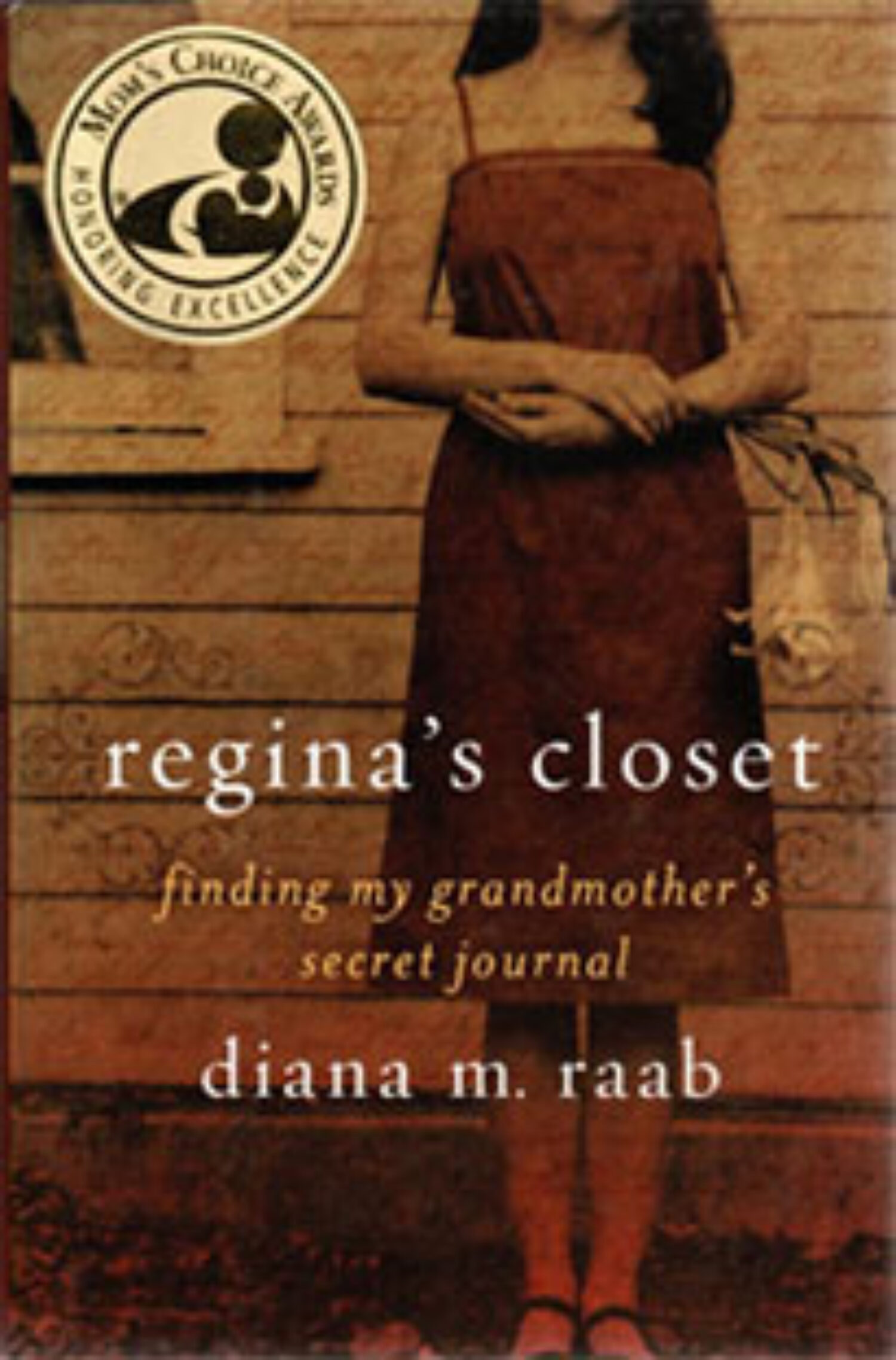
Many people are driven to write memoir as a result of pain, loss or trauma. But when considering publication, one question you must ask is, “who cares?” Why would people want to read your book? You must have something to share which is universal. The impetus for writing my first memoir, Regina’s Closet: Finding My Grandmother’s Secret Journal (http://www.amazon.com/Reginas-Closet-Finding-Grandmothers-Journal/dp/0825305756/ref=sr_1_1?s=books&ie=UTF8&qid=1279570174&sr=1-1) was to explore the motivation behind my grandmother’s suicide. It’s not that I was contemplating suicide, but after my first diagnosis I became depressed. I knew that my grandmother battled the same demon and I wanted to understand how she dealt with it. I also wondered if maybe she too had cancer and took her life because of the stigma associated with the disease in the 1960s. In the end, I learned that she did not have cancer, but never fully healed from the traumas she encountered as an orphan in Poland during World War I.

The way in which you begin your memoir, depends upon your story. An effective way is to begin by writing about a transformational moment in your life. For Regina’s Closet, I wrote about the day I found my grandmother dead. This became the book’s opening scene. In Healing With Words, (http://www.amazon.com/Healing-Words-writers-cancer-journey/dp/1615990100/ref=sr_1_1?ie=UTF8&s=books&qid=1279569966&sr=8-1), I began by describing what I thought would be a routine annual mammogram, but which ended up being a breast cancer diagnosis. This became that book’s opening scene.

According to Lee Gutkind in his book, Keep it Real, “scenes are the primary building blocks of creative nonfiction. They are little stories, episodes, anecdotes or other opportunities for the creative nonfiction writer to be artful and use all the literary techniques available to fiction writers, such as dialogue, description, action and suspense.”

When identifying a scene remember that something must happen. There must be a beginning, middle and end and a bunch of things that happen in between in order to have the building blocks for the story.

From a broader perspective, here are eight tips on writing a compelling memoir:

1) Find the memoir’s focus

2) Find the memoir’s structure

3) Show don’t tell

4) Use a compelling voice

5) Create compelling scenes

6) Use reflection and musings

7) Use fictional technique

8) Write your emotional truth

In summary, many people write memoir not necessarily because they want to write one, but more often because they have a story which they need to tell, either to find an answer to a mysterious question or to make some sense of a situation. Writing is a journey like no other. Whatever  one’s motive is for reason for writing a memoir, it will surely be a rewarding experience!