Archive for the 'General Information' Category

The Magic of Number Ten

I believe in and have a high regard for the number ten. In many ways, it’s regarded as the perfect number. Today, I have even more reason to believe in this number as I celebrate the 10th anniversary of my breast cancer survival. In my self-help memoir, Healing With Words: A Writer’s Cancer Journey, you can read about my journey. Also, at the end of each chapter there are writing prompts for you to do your own writing, whether about cancer or other life-changing events.

While we are on the ten-year-thing, here are some other reasons why I believe 10 is an important number:

• The number 10 implies a sense of completeness and full cycle
• A scale of 1 to 10 is used for ranking things
• There are 10 pins in a bowling lane
• There are 10 official inkblots in the Rorschach inkblot test
• The Snellen chart uses 10 different letters
• We have 10 digits on both our hands and feet
• Ten plagues were inflicted on Egypt in Exodus
• There are 10 Commandments – the cornerstone of Christianity and Judaism
• Jews observe 10 days of Repentance from Rosh Hashanah to Yom Kippur
• There are 10 provinces in Canada
• In the Torah, Jews give 1/10 the of their produce to the poor
• The number 10 is the base of our number system
• In numerology the number 10 brings all sorts of new changes in your life

And finally Verse 10 in Jack Kerouac’s Sutra (Scripture of the Golden Eternity, 1960) says this:

“Kindness and sympathy, understanding and encouragement, these give; they are better than just presents and gifts: no reason in the world why not.”
~ Jack Kerouac

Travel, Walking and Creativity

This past weekend I attended an event to celebrate the opening of a new terminal at the Santa Barbara airport. The event was called “The Art of Travel,” and it was a spectacular event with wine tasting and lots of great people-watching. As I approached one of the winery tables featuring a wine tasting the woman serving the table asked me where I was traveling to. She took me by surprise as I forgot for a few moments that I was at the airport and yes, at some point in the near future I would be traveling somewhere. “Let’s see,” I said, “always wanted to go to Ireland and Peru, so one of those places.” The woman paused and poured me a glass of wine and with a smile wished me a safe trip. I walked away and ruminated on the possibilities.

When I arrived home, I was inspired to glance at the travel section of The New York Times on my Ipad. There was a review about a new book called The Tao of Travel by Paul Theroux. It seems to be a philosophical book on travel, which I might have to pick up the next time I consider travel writing. The review discussed how writer Thoreau maintained his health and spirit by sauntering four hours a day. In this book Paul Theroux explored walking as a means of travel, although many of us don’t necessarily equate walking with a form of travel, it really is.

I began to ponder my own passion for walking and hiking and how it began. First, on the streets of Paris, where my grandfather took me each Christmas holiday, and also on the hills of New York State on hikes with my mother. These days, I continue my passion on beach walks with my dog and also on the tread mill at the gym. It seems life is all about evolution, transformation and revision.

I thought the book reviewer posed a pertinent question—why do people not think of walking as a form of travel? He quoted poet Philip Larkin who said “travel is a deliberate step backwards.” In other words it creates a new objective or homecoming and I could not agree more.

Many years ago, Patricia Fry wrote an article called “Meditation Walking for Writers,” where she suggested a walking meditation technique to help if you’re stuck in your writing. The technique is simple. The first step is to establish a schedule, anywhere between forty-five and sixty minutes each day. Dress comfortably and find a quiet place to walk. Fry suggests that while walking focusing solely only your senses—hear the sound of your shoes hitting the pavement, a sprinkler turning on, or the birds chirping. She then suggests feeling the air against your skin and how the muscles in your legs tighten with each step. Pay attention to the aromas, whether it’s the blooming flowers, budding trees or grass being cut. In other words, put yourself in the moment.

Beth Baruch Joselow in her book, Writing Without the Muse, also suggests in her chapter “Go Outside,” to explore the outdoors and discover something unfamiliar—something growing in your garden, something living under a rock, something discarded in the alley. She suggests bringing that something back to your desk to examine all its facets. She recommends writing a description of it using all your senses. She takes the exercise one step further and suggests describing the item using someone else’s voice, someone you know.

Once you try these mind-clearing techniques, you can start allowing creative ideas to filter in. Fry claims that meditation walks provide an ideal arena for problem-solving. When she feels overwhelmed, she walks to change her approach to life, whether it results in slowing down or figuring out what to do next. She suggests replacing negative thoughts with positive ones. If you think positively, then chances are it will soon become a reality.
Meditation walking is a way to relax and increase your awareness while getting some of that fresh air and exercise we all need and who knows, the side effect might be a fabulous poem or story!

In Memory

I just joined this site called, “FlexWriters Creative Network,” and I could not resist cutting and pasting a poem they had posted in honor of today, Memorial Day. We should remember that this is not a day to celebrate, but a day to honor and remember those who have lost their lives while in the military service. Thank you for all you have done to protect our freedom.

http://www.flexwriterscreativenetwork.net/magazine.html

WE REMEMBER

by Dori Wheeler

Today is the day we remember those
Who went to war and fought our foes
They’ve gone away to fight our wars
Lived and died so our flag still soars
Some treated pourly when they came back
When some wouldn’t fight, they picked up the slack
My hats off to our sons and daughters
Who’ve had to live in deplorable quarters
Men and women who have gone off to fight
To save our country from a terrible plight
Today is the day we remember those
Even though this war really blows
They protect our country, home of the brave
Sadly, some had to come home to a grave
Men and women who have gone off to fight
Eternal candles that will forever light
They deserve so much more then a parade
After going to war and being afraid
Today is the day we remember those
Who fought against the ones we really appose
Stars and stripes forever wave
Freedom is what we are trying to save
I don’t really believe in this war
But I believe in our troops forever more
I know our country is very strong
But in this war, we don’t belong
Today is the day we remember those.

Double Whammy Weekend – New Frontiers

This past weekend was a double whammy wonderful one for me—Saturday was my birthday and Sunday, Mother’s Day. As someone who embraces the celebration of life, I took full advantage of my lot, even though my kids—Rachel, Regine and Josh—sadly all live on the east coast. I felt their love across the miles. Next year I vow for us to somehow be together, at least for one of these festivities, preferably Mother’s Day.

My husband now calls me Heinz 57. It has many different flavors and there are days when I feel like this as I have so many interests. One interest which I will address this year is my lifelong fascination with psychology, what makes us do the things we do and how the human mind works. Perhaps this fascination began on the streets of Paris where I would sit in cafes for hours as a child with my grandfather people-watching. This pastime of course also lead to my passion for writing.

So this summer I will merge my fascination with people, writing and psychology into one big study. I was just accepted into a PhD Program in Transpersonal Psychology at the Institute of Transpersonal Psychology in Palo Alto.

http://www.itp.edu

Transpersonal Psychology is the branch of psychology which deals with the spiritual aspects of the human experience and studies a person’s highest potential through his/her peak and mystical experiences. I believe that this is the new wave of psychology and the psychology of the future. This branch of psychology involves transcending the physical world and realizations through a person’s individual intuition. Writers such as Whitman, Emerson and Thoreau were all students and advocates of transcendentalism.

I am hoping that my work in this field will put me in even closer touch with the human psyche.

Many of my forthcoming blog discussions will be on the merging of literary arts and the psychological aspects of the world we live in. Please excuse any excessive psychobabble and feel free to comment on anything I say. This is an open invitation to all of my readers.

Next week I will discuss the New Psychoanalysis in more detail.

Enjoy your week!

Nostalgia – Is it Good or Bad ?

Lately I have been thinking a lot about nostalgia. Perhaps it was sparked by watching the Royal Wedding and how vividly I remember the day of Princess Diana’s car accident. It was the day my nephew Dylan was born. My motions ran rampant. I did not know whether to be happy or sad. It was also the day of my grandfather Sam’s birthday, but he was born in 1897. Dylan begins college in the Fall. He’s will be attending Rollins College in Orlando, Florida. I love him and am very proud of him.

All these events remind me of the passage of time, but while observing this rapid passage of time, I question whether it is a good idea to focus on it. In other words, is nostalgia valuable or detrimental to our lives? Or should it be done in moderation?

According to The Oxford Dictionary, nostalgia is a “sentimental longing or wistful affection for the past, typically for a period or place with happy personal associations.” I view this as a healthy desire, but others believe that too much nostalgia might be pathological. Thus, I decided to journal about my nostalgic sensibilities. I also did some personal research on the subject because I encourage many of my journaling students to write about their pasts and if I am directing them down a pathological path, I should probably know this and suggest other ideas. For example, one of my favorite prompts is to write about your first experience with a bicycle and my students tend to love this one.

In general, fiction, nonfiction and poetry writers are frequently writing about the past. We just cannot help ourselves. Does this mean we are pathological and need psychoanalysis? In fact, numerous magazines call for stories describing situations from our pasts. For example, Nostalgia Magazinehttp://www.nostalgiamagazine.net asks for first person stories that recapture the essence of life and memories we cherish from our younger days. The site talks about reliving “the days when teenage couples sipped milkshakes at the soda fountain, when families gathered around the radio for nightly entertainment, when men wore hats in public and ladies only wore dresses.”

They make nostalgia sound so positive, so why is it considered not healthy to think about our pasts?
For centuries a sense of nostalgia was considered a disease and a form of depression. Soldiers even feared it as homesickness, and thought it could kill them. Dr. Krystine Batcho, a psychology professor who studies nostalgia, has not found any signs that this nostalgia is a deadly disease. In fact, quite the opposite. She says, “It helps remind you who you are in reference to other people.” In fact, Dr. Batcho believes that a good use of nostalgia could be an effective coping mechanism. She adds: “You can’t go back and do it again, but you can relive it in memory. And that’s why I think nostalgia actually exists. To enable us to relive the good times.”

Having been struck with numerous losses and two cancers, I believe that reliving good times can be a critical tool for surviving bad times. Dr. Batcho says, “If right now everything is terrible and bleak, if you’re out of work and you can’t pay your mortgage and you’ve been evicted and you think, ‘there’s nowhere for me to turn,’ it is actually healthy to look to the past and to say, ‘What else have I survived before?’”

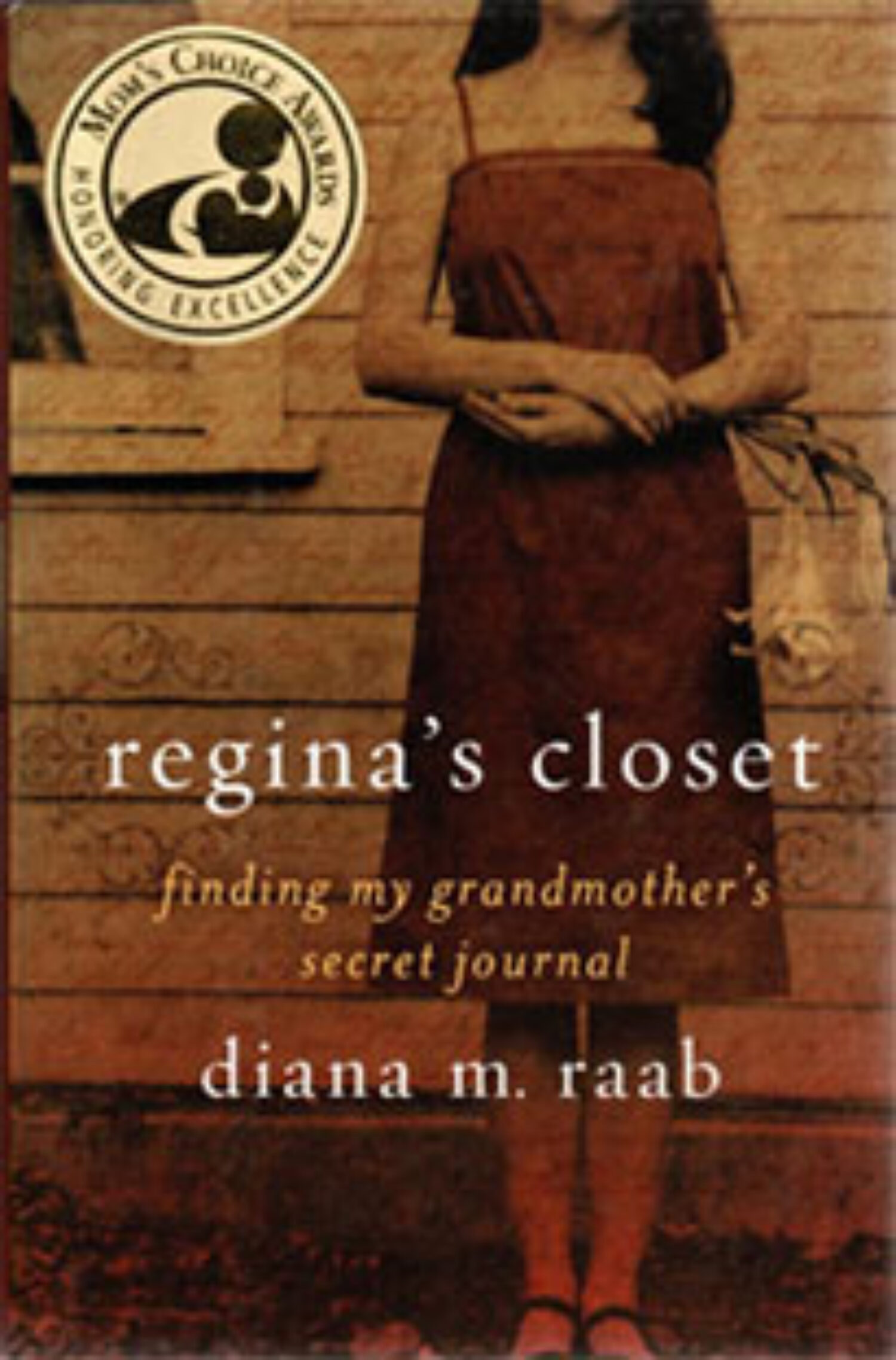
The quickest way to trigger nostalgic thoughts is by using the sense of smell and I find I do this frequently. For example, while working on my memoir, Regina’s Closet: Finding My Grandmother’s Secret Journal (http://www.dianaraab.com/ReginasCloset/regina.html I took intermittent whiffs of my grandmother’s perfume bottle to get a sense of her. Also, when I use my favorite soap, I am reminded of my aunt’s house in New York where I spent many of my childhood weekends.

Studies have shown that those born before 1930 are more likely to remember the smells of nature, such as pine trees, hay, marsh, etc., and those born after 1950 are more likely to describe artificial smells, such as the smell of Crayola crayons and Play Doh.

Whatever you use to trigger your own nostalgia, you might be interested in knowing how nostalgic you really are. You can find out by taking the Nostalgia Inventory Test developed in 1995 by Dr. Krystne Batcho. (http://www.cbsnews.com/htdocs/pdf/Batcho_Nostalgia_Inventory.pdf?tag=contentMain;contentBody).

Let me know how you do. Personally, my results were interesting. I had always thought of my self as quite a nostalgic person, however I only scored 87 out of a possible 180, which makes me just average. In all honesty, I am happy with these results; I was never a person to like extremes!

PS. This blog was written a few days ago before the great news that Bin Laden was killed….I hope his demise provides some peace and closure for all the families of his victims.

Studying Ralph Waldo Emerson

Once in a while I will choose an author or poet to read about in some detail, typically because I am being called to them or because their name crosses my desk a few times within a short period of time.

This week, Ralph Waldo Emerson is that poet. I first stumbled upon his name while investigating a doctorate in Transpersonal Psychology and he was quoted on numerous occasions, mainly because he was part of the transcendental movement which began in the mid-nineteenth century. Transcendalism is at the core of transpersonal psychology which is orientated towards many streams of thought and experience—philosophy, religion and psychology. In fact, Abraham Maslow, who played a key role in the emergence of this new psychology, studied Emerson and viewed him as a self-actualizing person. Both Maslow and Emerson rejected organized religion and believed in the transcendent forms of love, goodness, justice and beauty, in a similar way that Henry David Thoreau and Walt Whitman did.

Speaking of Whitman, I just finished the wonderful book Collage of Myself: Walt Whitman and the Making of Leaves of Grass by Matt Miller where I learned about the poignant relationship between Whitman and Emerson. Emerson wrote Whitman one of the most famous letters written to an aspiring writer which gave Whitman the confidence to forge ahead with his work. You can view the letter on this website:

http://www.classroomelectric.org/volume1/belasco/whitman-emerson.htm

Just after finishing this book, I heard from a good friend that he had recently written an essay for Harper’s Magazine on Emerson called, “Between Insanity and Fat Dullness: How I became an Emersonian.” (January 2011). For a few months prior to writing the essay, Phillip Lopate submerged himself in Emerson’s recently published journals. Lopate’s poignant essay intrigued me on many levels, and I am grateful for his writing, since I do not believe I will be able to carve out the time to read the 1,900 pages of Emerson’s journals.

Lopate says Emerson began keeping his journals “as a dreamy would-be-poet.” He goes on to say that “the journals give us, in full, Emerson’s thinking about his life.” Lopate confesses that he was truly taken by Emerson’s life and how he has become a model for him on how to overcome anxiety and despair, while at the same time making resilience eloquent.

As a journal-keeper myself, I liked that Lopate pointed to the idea that Emerson’s journals revealed his most vulnerable side. I ask you, if you cannot be vulnerable while writing in a journal, then where can you be?
Emerson began keeping journals at the age of sixteen and he filled more than 182 volumes which until now, remained unpublished. Lopate eloquently declares that Emerson was “indeed the weatherman of his own consciousness, charting his moods just as he observed on walks the changing aspects of nature and sky.” He continues, “What I respond to most in Emerson is his even keeled preoccupation with daily life, the daily mental round, and with that his resistance to the bullying closures of the apocalyptic imagination.”

Lopate also discusses Emerson’s social side and how he tried to stretch himself to accommodate others and become larger soled and more responsive, a sentiment at the core of transpersonal psychology. He also revealed that Emerson oscillated between being enchanted and annoyed by his friend’s eccentricities. Interestingly, he worried that Thoreau’s going to jail was ‘one step to suicide’ and that his retreat to the woods might end in ‘want and madness.’ I also learned that Emerson was the one who inspired Thoreau to keep a journal.

I surmise that these wise men who studied transcendentalism were simply seeking spiritual guides who could lead them into their own personal futures. In the end, they decided that the spiritual guide or God (or whatever term you prefer) is within each of us and does not represent any external entity. I could not agree more profoundly.

The Nature of Love

In honor of Valentine’s Day I would like to discuss an article I just read for a psychology course. It’s called, “The Nature of Love,” by Harry F. Harlow. It was first published in American Psychologist in 1958. However, I see this as a timeless subject. The article opens with the line, “Love is a wondrous state, deep, tender, and rewarding.” He continues to say, that “the little we know about love does not transcend simple observation, and the little we write about it has been written by poets and novelists.” As a poet myself, who has read a great deal of poetry, I believe this to be very true. Another interesting factoid is that “The word ‘love’ has the highest frequency of any word cited in Bartlett’s Book of Familiar Quotations.”

The article explores how we develop our need for love and Harlow basically believes that our initial love responses are made by the infant to the mother or mother substitute. It is during infancy that we learn the power of how to love. He also says that mothers are most responsible for our primary drives which include hunger, thirst and pain and that we learn how to love through the affection associated with these drives. The mother’s function, he purports, whether human or subhuman or surrogate, is to provide a safe haven for the infant to protect him or her against danger. In fact, he said, that given the situation where both parents are present, the frightened child clings to its mother and not its father.

Harlow did some research and found that baby monkeys in the laboratory showed a strong attachment to the cloth mother over the metal mother. He said that when the infants were separated from their mother and then suddenly saw her, they rushed to her, climbed up, clung tightly and rubbed their heads against her body. The study also showed that whether the infant was breast fed or bottle fed was of less importance than the actual contact comfort. “Love is an emotion that does not need to be bottle- or spoon-fed, and we may be sure that there is nothing to be gained by giving lip service to love,” he said.

He concluded by saying that mothers can be replaced for child care and that women in the working classes are not needed in the home because of their primary mammalian capabilities. He said, and rightfully so, that in the future, which is now, neonatal nursing will not be a necessity, but a luxury which will probably be limited to the wealthy upper class. And now, more than forty years later, this is definitely the case.

Happy Valentine’s Day to you, my beloved readers!

The Art of Rejection : Giving and Receiving

This past weekend I attended the annual AWP (Association of Writers and Writing Programs) in DC, the largest writing conference in the country. There were 5000+ attendees. I was honored to moderate a panel discussion entitled, “The Art of Rejection: Giving and Receiving.” My esteemed panelists included Molly Peacock, Philip F. Deaver, Geeta Kothari, Wendy Call and Kevin Watson. Each panelist made a presentation on various aspects of rejection.

I introduced our topic by thanking all the editors and publishers in the audience who in the past have rejected my work, which inspired me to pull this panel together. Here’s a glimpse at my introductory remarks:

Rejection is inherent to many aspects of life, and the literary life is no exception. Rejections happen to emerging writers, published writers and literary greats. For example, Normal Mailer’s The Naked and the Dead was rejected by 11 publishers before it was accepted; Elie Weisel’s classic book Night was turned down by at least 15 publishers. Ayn Rand’s The Fountainhead—which now sells 150,000 copies a year—was turned down at least a dozen times.

If we let them, rejections can suck our spirits of their very essence. So, why do we torture ourselves like this? The reason is that rejection is a rite of passage in an author’s life. In order to ease the sting of receiving a rejection letter and to grow stronger as a result, it is important to understand what they are and what they are not, how to cope with them and how to move on.

A rejection slip says nothing about your potential. It is not a rejection of you as an individual nor the value of your writing endeavors, but rather, it is the rejection of a piece of work submitted for possible publication.

If you’re an editor or publisher and also a writer, the task of giving a rejection can be equally difficult. When I owned a small publishing company back in the 1980s I made sure each writer received a personal rejection letter, because I understood what it was like being on the other side.

Saul Bellow says, “Rejections are not altogether a bad thing. They teach a writer to rely on his own judgment and to say in his heart of hearts, “To hell with you.”

The panelists all had wonderful insights and we finished with a lively Q & A session. I was delighted that at the end of the panel a gentleman came to the podium and reached out to shake my hand. “I just want to say that I was not one of the editors to reject your work.” I looked down at his badge and it was Jay Rubin, the editor of a wonderful publication, Alehouse. I smiled and thanked him for accepting my essay some years back called, “The Poet’s Notebook.” Thanks again, Jay!

What Story Do We Tell ?

Whether you write fiction, nonfiction or poetry, there’s no doubt you have a unique story to tell from your very own perspective. For many writers, reliving and retelling childhood stories are common platforms for their work. We often reflect on those times because they were filled with pain, joy or unanswered questions.

Though we might have a sense of what story we need to tell, once in a while we get stumped. Many writers say their best story ideas come to mind when they’re not sitting at their desk ‘working,’ but rather when they’re out and about. It’s important to remain alert to those special moments in everyday life—odd discoveries and chance remarks made by others in social, work or casual settings.

My typical day begins with reading the news. An article or story might spark my interest, which drives me to surf the web for more information. If I am in the middle of another project, I will toss the idea into my “Writing Ideas,” folder which contains stories I hope to tell one day. Whether I get to writing them or not is another topic, the important thing is to have that folder as a back-up for those days when my well runs dry.

In addition to the “Writing Ideas” folder here are some questions to ask yourself which might also lead to new stories:

1) What’s going through your head?
2) Who are your villains? Who are your heroes?
3) What are you obsessed by?
4) What inspires you?
5) Where are you in your life now?
6) What stories are you compelled to read?

Whatever you choose to write, you will soon realize that the creative journey is similar to life’s journey—unpredictable, unstructured, mysterious and laden with miracles.

In her book, Negotiating With the Dead: A Writer on Writing (2002), Margaret Atwood says, “Writing has to do with darkness, and a desire or perhaps a compulsion to enter it, and, with luck, to illuminate it, and to bring something back out into the light.”

In Writing (1993) Marguerite Duras says, “Finding yourself in a hole, at the bottom of a hole, in almost total solitude, and discovering that only writing can save you. To be without the slightest subject for a book, the slightest idea for a book, is to find yourself, once again, before a book. A vast emptiness. A possible book. Before nothing. Before something like living, naked writing, like something terrible, terrible to overcome.”

Sometimes the stories we choose to write help us to learn more about know ourselves and to figure out the world around us. Oftentimes, it is about making a discovery. Even our darkest—or unknown—thoughts, memories and fears, can transform themselves to reveal value and meaning for us in our lives now. And with any luck, for others as well!

The Magic of a Good Book

What makes a good book? What makes it hang around for so many years? Why is it that some books you are unable to put down? Many people have speculated on the answer to this question. Personally, I’m not so sure what makes a book timeless. Let us speculate together.

When you cannot put a book down, it might indicate that the author logically composed the book and that the book flows intuitively. The story and its characters are believable. A believable character is also one who wants something. In fact, the author might spend an entire book helping them character get what he or she wants. It has been said that an unmet desire is what makes a story move forward. In fact, when the protagonist gets what they want, the story is usually over.

I also believe that voice makes a good book. The voice is the individual writing style of a writer and what distinguishes one writer from the next. Voice refers to the tone and feeling of the writing, accomplished and this is done through word choice and sentence structure. It is the way an author’s writing sounds on the page, whether it be friendly, formal, chatty or distant. Every writer has a distinct voice and it is this plot which propel a story forward. Often the voice in memoir is easier to detect, because it’s written in the first person.

One of my favorite first-person booksis still as popular as it was at the time of its first release in 1951—Catcher in the Rye by J.D. Salinger who died about one year ago at the age of ninety-one. Salinger used the repetition of certain words which helped to establish both voice and the character development of his protagonist, Holden Caulfield.

In summary, a good classic book teaches you a great deal about life, enriches your mind, provides you with a moral and reveals a passion worth investigating.

Here’s a partial list of some of my favorite books, in no particular order. Perhaps you can share some of yours:

Catcher in the Rye by J.D. Salinger
La Comedie Humaine by Honore Balzac
The Journals of Anaïs Nin
The Executioner’s Song by Norman Mailer
Ahab’s Wife by Sena Jeter Naslund
Madame Bovary by Gustave Flaubert
This Boy’s Life by Tobias Wolff
The Color of Water by James McBride
Blue Angel by Francine Prose
Angela’s Ashes by Frank McCourt
The Glass Castle by Jeannette Walls
Gift From the Sea by Anne Morrow Lindbergh
Memoirs of a Geisha by Arthur Golden
The Liar’s Club by Mary Karr
My Invented Country by Isabel Allende
Darkness Invisible by William Styron
Of Human Bondage by W. Somerset Maugham
Walden by Henry David Thoreau
A Separate Piece by John Knowles
The Awakening by Kate Chopin
My Antonia by Willa Cather
Siddhartha by Herman Hesse