Archive for the 'breast cancer' Category

Thank You Cancer ….

Dear Readers

There is no cancer in my family, no cancer of any kind, except for mine. I am now 57 and it’s been 10 years since my diagnosis and I have never felt better.

Read more on my latest blog entry in honor of Breast Cancer Awareness Month, on The Huffington Post

http://www.huffingtonpost.com/red-room/breast-cancer-surgery-_b_967025.html

Here’s to your health ..

Namaste,
Diana

Keeping Time : 150 Years of Journaling

A few years back I submitted some very personal journal entries to a proposed anthology. I was delighted to hear that Keeping Time: 150 years of Journal Writing edited by Mary Azrael and Kendra Kopelke was recently published. This is a rare collection of journal entries all under one cover. As the editors state in their poignant introduction, “For many people, journal writing is a private activity, spontaneous and revealing, not intended for an audience of strangers.” But these editors did a stellar job of putting together 37 wonderful pieces with subjects ranging from everyday life parental issues, raising children, nature, travel, health and historical events. “Keeping Time,” they go on to say, “stands as witness to the times spanning from our great grandparents to today. It opens a way into our history at its most intimately and sincerely felt, and expands our sense of what a notebook can do to connect us more fully to our lives.”

My submission represented the year 2001, and I have posted it below:

I have been keeping a journal since the age of ten. Over the years, my journal has been my friend and confidant to help me through difficult times. I strongly believe in the powerful healing qualities of the written word.
Today, I teach journaling to breast cancer survivors and high-risk teens. During my breast cancer journey, writing became my lifeline and a way to give voice to my deepest feelings.

The following is an excerpt from my memoir/self-help book, HEALING WITH WORDS: A WRITER’S CANCER JOURNEY.

August 22 (one-day post-op)
I wake up in the Intensive Care Unit (ICU) today and Simon sits beside me holding my hand. One part of me wants to look down at the hospital gown covering this corset-like gauze bandage around my chest. Yet another part of me is scared out of my mind. The nurse helps me to the bathroom and I avoid the mirror as if it holds the most dreaded secret. I want to rip it off the bathroom wall. I never want to see myself naked. While walking back to bed, I look over at Simon and begin sobbing with no respite. I know in my heart that one day soon I will have to look at my chest. My hope is that my plastic surgeon will make all the necessary explanations. I am happy that the surgery is behind me, but now I must begin preparing to walk down an even more arduous road. I must get used to the new me.

August 23
Today my mood oscillates back and forth. One moment I want to touch my newly-created breast and the next minute I never want to see it. I am pleased that the reconstruction was done immediately following the mastectomy. After breakfast, I pulled the nurse’s cord to help me sit up. I am terribly sore from being in one position. By the time she arrives moments later, I have already changed my mind. I put my hand over my right breast and feel nothing. I do the same on the left. I can only feel the slight pressure of my hand. How will I ever get used to having no sensations. My right nipple had always been more sensitive than and easily stimulated than my left, but now there is a sense of nothingness, numbness, a void.

Today the nurse removed the bandage around my chest. I looked the other way while crying into my pillow. I felt nothing. My plastic surgeon said some sensations might eventually return, but never again could I become sexually aroused on my right side. So, I have two breasts, but really only one. My sensations have been severed forever. Never again would I experience that sublime tingling when Simon runs his fingers over my rather large nipple—never again on that side. Never could I experience the joy and tingles from let-down reflex when my babies sucked for the first time. I loved that sensation which permeated my soul and brought me such joy.

August 27
The books I have read, and my nursing experience warned me that depression is common following many surgeries, particularly breast surgery, because of the huge psychological component of losing a breast. I should be optimistic because my breast surgeon says that the cancer has been removed. He says I am lucky that it did not spread into my lymph nodes. Yes, this is a true blessing, but there are moments when this is not enough to console me. My father taught me to look at the glass half full and not half empty. I’m trying. Really trying. But, this entire event has been surreal. My defenses are stripped. I have no strength left in my body except for the weeping. Tears flow like an endless river. They pour out without warning and dry up without notice.

August 28
I look around me and see all the technology. I think of my husband, an engineer, and how people like himself have made mine and so many others’ survival possible. He is a fixer. On so many other occasions he wants to quickly make everything better for me. His smile and touch are so healing. He has so much power, but he cannot bring my breast back to me. He says he wishes he had a magical wand to make me feel better. I tell him that the wand was discarded the day it brought him into my life. One person cannot be bestowed with any more luck than me. He implores me to think positively.

Sometimes life is not so simple. I don’t want to say this to him because he tries so hard to soothe me. It’s still early in my post-operative period, but I already feel physically and emotionally changed and drained. In some ways it is easier being far from home. My predicament somehow seems clearer and my mind less distracted by familiar surroundings.

September 3
Today I am nearly two weeks post-op. I do not feel any better emotionally than the day they rolled me out of the cold and sterile operating room. My emotional strength is barely returning. I still get teary-eyed for no obvious reason. This morning, the nurses bathed me. They helped me to the chair where I tried reading a magazine, but my mind wandered. Everything makes me cry, even glancing at the latest hairstyles in the magazine. I feel trapped inside this body that I don’t know anymore.

Here’s what I look like. On my right side is a drainage tube tucked into a hole beneath my mastectomy site. On the same side, another tube leads to the incision in my back where they have removed the muscle and tissue to cup my saline implants. The tube leads to this thing that looks like a hand grenade which dangles from my side. This grenade drains the blood from my wounds, but I think it does the same from my heart. It needs to be emptied three times each day. It’s gross and yet another reminder of my missing breast. When we go to dinner at the hotel’s restaurant, the only thing I can wear are baggy men’s shirts to hide my tube and stupid grenade.

Getting up and going to the bathroom is such an ordeal. I need at least ten minutes to prepare for the departure from my bed. Getting all the wires organized is truly a monumental task. I cannot lean on my back; the drainage tube sticks straight out. I cannot lean on my right side—another tube. They hurt like hell. There are no more comfortable positions left for me. Jeannine [mother-in-law] asked if I have been writing. She must be kidding! I have so much to write about, but I cannot focus. My mind wanders beyond belief. Life is fuzzy and not even eyeglasses can help. I am just plain frustrated. I can only muster these few words and even these exhaust all of my energy.

September 4
Today I will go visit my plastic surgeon. It seems as if the past couple of weeks have been surreal. A thick cloud suspends over me. How did I get here? I was diligent about my annual mammograms and check-ups. On the first day of my menstrual cycle I diligently did self-breast exams in the shower. There is no cancer in my family. Why am I lying here all mutilated?

I have never thought much about cancer, but one thing I know is that if cancer is in your body, you better get it out quickly. Having had reconstructive surgery at the same time as my mastectomy has put my mind at ease. Even though I have refrained from looking at myself naked in the mirror, there was a sense of relief to waking up with a mound on my right side, even if it was not my own breast, but just a sack of saline water.

September 6
I’m trying to take the position that cancer is no longer lurking inside of me. I did have cancer, but it is now all gone. All of it. I don’t like the sound of the term ‘breast cancer.’ People equate cancer with death. I refuse to die.
When I first learned about my breast cancer, I wanted to hear everybody else’s escapades and everyone’s medical sagas. It seems that everyone knows someone who has had breast cancer. This is not surprising since the statistics have now risen to one in eight women. Listening to other people’s stories is boring at times, and at other times scary. Sometimes it’s inspiring to learn that others are less fortunate than me. The woman in the corridor told me about her stage III cancer. Okay, she made me feel lucky, but I just don’t want to be surrounded by negative energy.

I am so afraid that the cancer will come back. I cry about losing the breast and also about having to lose my other one. Crying comes so easily. Sometimes the tears last a few minutes, other times an hour. It all depends.

Keeping Time is available from Amazon at the link below, and it is a wonderful read. I surely hope you take the time to order and read it.

http://www.amazon.com/Keeping-Time-Years-Journal-Writing/dp/0963138545/ref=sr_1_1?ie=UTF8&s=books&qid=1297999546&sr=8-1

Wellness and Writing

This past weekend, and for the third year in a row, I attended the Wellness and Writing Connections Conference in Atlanta. http://www.wellnessandwritingconnections.com/. I also facilitated a workshop called, “From Journal to Memoir.” The Director of the Conference, John Evans, Ph.D. is an amazing person with vision and a huge heart, who is unfortunately fighting with the demon of cancer.

The conference was packed with many compelling workshops and speakers, but for me the highlight was speaking with Brenda Stockdale, the author of You Can Beat the Odds: Surprising Factors Behind Chronic Illness and Cancer.

For more than thirteen years, Stockdale has been the director of mind/body medicine for Georgia Cancer Treatment Center. She was the national program director for the cancer support organization founded by best-selling author and surgeon, Bernie Siegel, MD.

Stockdale unequivocally believes, and research strongly supports, the connection between low stress levels and a decrease in the incidence of cancer. The mechanisms are obvious—stress can control how the immune system works and increase a person’s vulnerability for cancer.

More often than we would like to admit, each of us have heard of a physician who has given a cancer patient six months to live. How does it happen that the person outlives all predictions? According to Stockdale, it’s simple. “The effect begins in a tiny part of the brain called the limbic system. This is where your experience is translated into a physical reality—like when your heart races because you are scared or excited. In this magical area of the brain, sights, sounds, thoughts and feelings are translated into biological events at lightening speed.” Thus we can have some control as to what happens in our bodies.

When Stockdale discusses the mind/body connection, she refers to applied psychoneuroimmunology, psychopharmacology, applied psychophysiology and informed recent findings in epigenetics. Her belief and more recent research have proven that the seemingly soft interventions such as writing can affect the sensitive world of the cell to facilitate rejuvenation. By regular expressive writing or journaling you can help to identify the psychological events, stresses and situations in your life, which influence your mood and your body. Writing down both your symptoms and feelings helps you to connect the dots. Sometimes sitting on smoldering negative emotions can unnecessarily use up precious positive energy.

When trying to conquer a disease, it is really not mind over matter or body, but the idea is that mind and matter affect one another. Essentially, our beliefs and belief systems become our biology. Studies have shown that those who have not gotten sick or were able to conquer their illness had the 3 C’s:

  1. control (sense of self-mastery)
  2. commitment (to themselves)
  3. challenge (the ability to see their current situation as a turning point rather than an end point)

The conference will be on hiatus for 2011, but will be strong and vibrant in March 2012.

Here’s to your health and all good things!

Diana

(Happy) Breast Cancer Awareness Month

Hello Girlfriends – this is your reminder that October is breast cancer awareness month. So if you are due for your self-breast exam or mammogram, now is the time!

Since my latest memoir, Healing With Words was released in June and also because I am a registered nurse, I cannot resist promoting health awareness. For those of you who journal, you might want to pick up a copy of the book, available on Amazon and bn.com as there are many journaling prompts and resources. In addition, the author proceeds are donated to the Mayo Clinic.

SOME FACTOIDS

  • If you are 40+ you should have a screening mammogram every year unless it’s suggested more frequently
  • Avoid scheduling a mammogram when you have tender breasts, i.e. the week before your period
  • Do not wear deodorant or powder when going for your mammogram
  • Women in their 20s and 30s should have a clinical breast exam (CBE) as part of a their health exam. This should be done at least every 3 years. After age 40, women should have a breast exam by a health professional every year.
  • Breast cancer is the second leading cause of cancer death in women, exceeded only by lung cancer
  • The chance that breast cancer will be responsible for a woman’s death is about 1 in 35 (about 3%)
  • About 207,090 new cases of invasive breast cancer will be diagnosed in women each year
  • About 54,010 new cases of carcinoma in situ (CIS) will be diagnosed (CIS is non-invasive and is the earliest form of breast cancer)

SOME ORGANIZATIONS AND SUPPORT GROUPS (from Healing With Words)

American Breast Cancer Foundation

(877) 539-2543

www.abcf.org

American Cancer Society

(800) ACS-2345

www.cancer.org

BreastCancer.org

www.breastcancer.org

The Breast Cancer Fund

(415) 346-8223

www.breastcancerfund.org

Breast Cancer Network of Strength

(800) 221-2141

www.networkofstrength.org

California Breast Cancer Organizations

(530) 304-2746

www.cabco-org.us

Cancer Network

www.cancernetwork.com

Cancer Research Institute

(800) 99-CANCER

www.cancerresearch.org

Johns Hopkins Avon Foundation Breast Cancer Center

(443) 287-2778

www.hopkinsbreastcenter.org

International Cancer Alliance

(301) 656-3461

www.icare.org

Lance Armstrong Foundation

(877) 236-8820

www.livestrong.com

Living Beyond Breast Cancer

(888) 753-5222

www.lbbc.org

Mothers Supporting Daughters with Breast Cancer

(410) 778-1982

www.mothersdaughters.org

National Asian Women’s Health Organization

www.nawho.org

National Breast Cancer Coalition

(202) 296-7477

www.stopbreastcancer.org

National Cancer Institute

(800) 4-CANCER

www.cancer.gov

National Center for Complementary and Alternative Medicine

(888) 644-6226

www.nccam.nih.gov

National Cancer Coalition

www.nationalcancercoalition.org

National Coalition for Cancer Survivorship

(888) 650-9127

www.canceradvocacy.org

National Women’s Health Network

(202) 682-2640

www.nwhn.org

Native American Cancer Research

(800) 537-8295

www.natamcancer.org

Office of Minority Health Resource Center

(800) 444-6472

www.minorityhealth.hhs.gov

OncoChat

www.oncochat.org

Patient Advocate Foundation

(800) 532-5274

www.patientadvocate.org

Dr. Susan Love Research Foundation

(866) 569-0388

www.dslrf.org

Susan G. Komen Breast Cancer Foundation

(877) 465-6636

www.komen.org

Cancer Support Community

(888) 793-WELL

www.thewellnesscommunity.org

Young Survival Coalition

(877) YSC-1011

www.youngsurvival.org

Here’s to your health!

Have a great and remember whatever your experience, make sure to write about it in your journals and notebooks!

Cheers,

Diana

Writing a Compelling Memoir

On Saturday, I participated in a panel at the Ventura Book Festival called, “Writing a Compelling Memoir.” For those who were unable to attend, here are some highlights from presentation:

Abigail Thomas, in her book, Thinking About Memoir, says that writing a memoir is about keeping your eyes, ears and heart open. It’s about letting your mind open up and wander and about letting one thing lead to another.

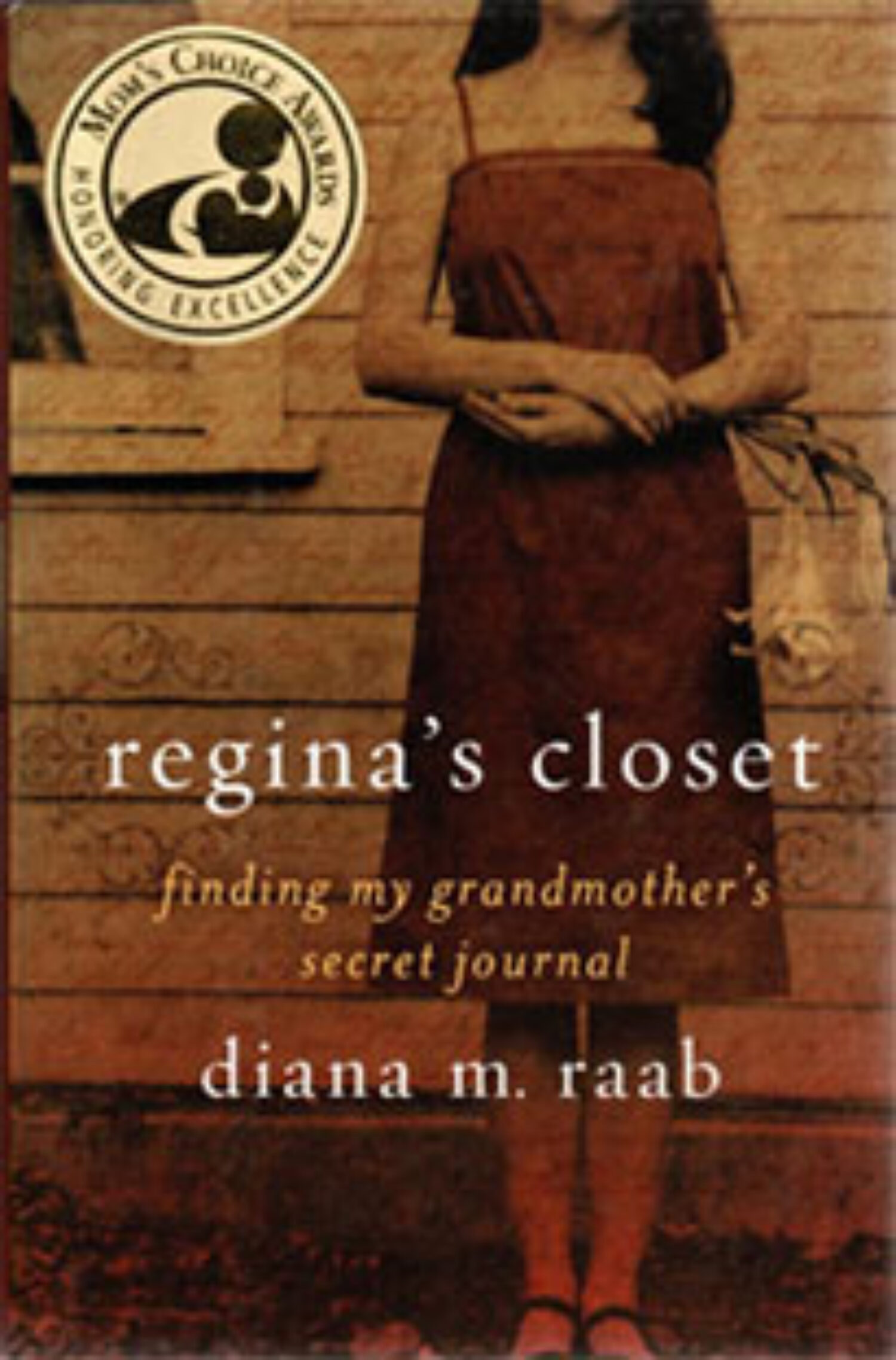
Many people are driven to write memoir as a result of pain, loss or trauma. But when considering publication, one question you must ask is, “who cares?” Why would people want to read your book? You must have something to share which is universal. The impetus for writing my first memoir, Regina’s Closet: Finding My Grandmother’s Secret Journal (http://www.amazon.com/Reginas-Closet-Finding-Grandmothers-Journal/dp/0825305756/ref=sr_1_1?s=books&ie=UTF8&qid=1279570174&sr=1-1) was to explore the motivation behind my grandmother’s suicide. It’s not that I was contemplating suicide, but after my first diagnosis I became depressed. I knew that my grandmother battled the same demon and I wanted to understand how she dealt with it. I also wondered if maybe she too had cancer and took her life because of the stigma associated with the disease in the 1960s. In the end, I learned that she did not have cancer, but never fully healed from the traumas she encountered as an orphan in Poland during World War I.

The way in which you begin your memoir, depends upon your story. An effective way is to begin by writing about a transformational moment in your life. For Regina’s Closet, I wrote about the day I found my grandmother dead. This became the book’s opening scene. In Healing With Words, (http://www.amazon.com/Healing-Words-writers-cancer-journey/dp/1615990100/ref=sr_1_1?ie=UTF8&s=books&qid=1279569966&sr=8-1), I began by describing what I thought would be a routine annual mammogram, but which ended up being a breast cancer diagnosis. This became that book’s opening scene.

According to Lee Gutkind in his book, Keep it Real, “scenes are the primary building blocks of creative nonfiction. They are little stories, episodes, anecdotes or other opportunities for the creative nonfiction writer to be artful and use all the literary techniques available to fiction writers, such as dialogue, description, action and suspense.”

When identifying a scene remember that something must happen. There must be a beginning, middle and end and a bunch of things that happen in between in order to have the building blocks for the story.

From a broader perspective, here are eight tips on writing a compelling memoir:

1) Find the memoir’s focus

2) Find the memoir’s structure

3) Show don’t tell

4) Use a compelling voice

5) Create compelling scenes

6) Use reflection and musings

7) Use fictional technique

8) Write your emotional truth

In summary, many people write memoir not necessarily because they want to write one, but more often because they have a story which they need to tell, either to find an answer to a mysterious question or to make some sense of a situation. Writing is a journey like no other. Whatever  one’s motive is for reason for writing a memoir, it will surely be a rewarding experience!

Blog Tour Exhaustion

I am on a book tour with my latest memoir/self help book, HEALING WITH WORDS: A WRITER’S CANCER JOURNEY and I am exhausted. But I haven’t even boarded an airplane yet. My state of exhaustion is probably a combination of planning for my daughter, Regine’s wedding on July 3rd and these two blog tours set up for me since the book’s release on June lst.

When the idea of a blog tour was first presented to me by my publisher and three publicity firms, I thought it was a great idea—a book tour from home, how cool, no suitcase, no boarding passes, no security checks or airport transfers.

What I quickly realized was that in many ways a blog tour is more tiring than a traveling book tour. The part I love about in-person book tours is greeting and meeting my readers, visiting interesting cities and writing in my favorite place, the airplane. This list does not include my favorite pastime of people-watching in airport terminals which supplies me with endless story ideas. One major advantage of the traveling book tour is that it gets the writer away from the computer and the seductiveness of the social network scene. Surely, you will agree that we spend far too much time on the computer and it is leading to an enormous amount of stress. In fact, a colleague of mine was recently diagnosed with psoriasis which is stress-related and for this very reason, her doctor prescribed an internet holiday!

During the course of my blog tour, I also realized that in addition to doing my creative work, the blog tour meant I would have to write answers to interview questions and sometimes even craft original material to be posted on the host’s blog site. I was also informed by one blog tour coordinator that many bloggers do not like reprints. I thought to myself—gosh, that’s a big demand of someone who doesn’t even paid for filling up the pages of a stranger’s blog!

Similar to a physical book tour—the blog book can make the author feel special by spotlighting an interview. But in no way does it match up to the charge an author receives by seeing a room full of people keenly listening and enthusiastically asking questions.
All this makes me wonder what the future holds for authors. Are we going to become even more isolated in our writing studios? Are we going to completely forget our social skills?

Does anyone have a crystal ball to provide me with answers? If yes, I would love to hear from you!

New Book Release: Healing With Words


Released June 1st, Loving Healing Press.
Available @ 1-888-761-6268
or from Amazon.com/BN.com or from Distributors (Ingram, New Leaf)

Diana Raab will be reading from
Healing With Words:

Skirball Center
June 9th, 7pm
UCLA Extension Writers’ Publication Party

About the Book:

This  is a memoir and self-help book written by a nurse, author, and mother of three, who at the age of forty-seven found her life shattered by a diagnosis with DCIS with invasion. Five years later she was diagnosed once again to yet another, seemingly unrelated and incurable blood cancer‹multiple myeloma. The book includes the author’s experiences, reflections, poetry,  journal entries, in addition to writing prompts for readers to express their own personal story. Since early childhood, Raab has drawn strength from the practice of journaling.

From the Foreword:

“I applaud the author for having the courage to share her very personal story in the form of narrative, journal entries and poems”~ Melvin Silverstein, Director of Breast Program, Hoag Memorial Hospital

EARLY REVIEW

“Diana is a woman who knows what it is to live fully in the face of mortality.  She will add value to the life of every person who reads this book.” – Sena Jeter Naslund, Author of AHAB’S WIFE and ABUNDANCE: A NOVEL OF MARIE ANTOINETTE

FOR REVIEWERS: Email publicity@dianaraab.com for review copies

Journaling Breast Cancer Awareness Month

BREAST CANCER AWARENESS MONTH

October is many things, including the anniversary of National Breast Cancer Awareness Month. Although breast cancer awareness should be promoted all year round, this month tends to focus on an intense campaign to promote awareness, education and empowerment to women of all ages. Given my background as an educator and registered nurse, I cannot help, but to share some reminders and statistics.

Statistics show that one in eight women will get breast cancer at some point during their lifetime. Here are statistics broken down in age:

Age 30 to39  – 1 in 233

Age 40 to 49 – 1 in 69

Age 50 to 59 – 1 in 38

Age 60 to 69 – 1 in 27

For more information, check out this website: http://www.nbcam.org/about_nbcam.cfm.

Personally, eight years have already passed since my diagnosis with breast cancer and I have to say that I feel better than ever. Because I feel so good I want to urge women over the age of forty to get annual mammograms. The reason I am still here today is because mine saved my life. My type of cancer, called DCIS (ductal carcinoma in situ) is sometimes called, ‘precancer,’ and is only detected on mammograms.

Coincidentally, this month the Mayo Clinic Women’s Health Source Newsletter featured an article, entitled, “Ductal Carcinoma: A Highly Treatable Breast Cancer.” The article says that before mammograms very few women were diagnosed with DCIS and now more than 62,000 cases are diagnosed yearly, which also accounts for about 20 percent of all new cases of breast cancer diagnosed each year. The good news is that its treatment is extremely successful with a 10-year survival rate of almost 100 percent.

DCIS occurs when abnormal cells multiply and form a tumor or growth in the mammary duct.  The first sign is the growth of calcium deposits (calcifications) which on a mammogram look like clusters of white spots, often confused with talcum powder. In general, DCIS is not life-threatening, but if not treated early, it can progress into invasive cancer. The biggest challenge with this type of cancer is deciding on its treatment. Fortunately due to the diligence of my fabulous doctors, mine saved my life.

Ultimately  we are all responsible for our own health and the more  we understand about our own bodies, the better we can take care of ourselves and maintain a path of health. For me, one of the most beneficial paths to my own health was writing about my experience in my forthcoming memoir Healing With Words: A Writer’s Cancer Story, which will be out in the Summer of 2010, just before next year’s Breast Cancer Awareness Month. Here’s one poem from that book:

To My Daughters

You were the first I thought of

when diagnosed with what

strikes one in eight women.

It was too soon to leave you,

but I thought it a good sign

that none of us were born

under its pestilent zodiac.

I stared at the stars and wished upon

each one that you’d never wake up

as I did this morning to one real breast

and one fake one; but that the memories

you carry will be only sweet ones,

and then I remembered you had your

early traumas of being born too soon,

and losing a beloved grandpa too young

and then I had this urge to show you

the scars on the same breast

you cuddled as babies, but then wondered

why you’d want to see my imperfections

and perhaps your destiny.

I caved in and showed you anyway,

hoping you’d learn to be careful, as

if it really mattered, because your grandpa

used to say when your time’s up, it’s up.

May he always watch over you.