Archive for the '1960s' Category

Writing Is Cheaper Than Therapy

My colleagues and I would not be the first writers who write to dissipate pain. For example, D.H. Lawrence sat at his mother’s bedside and while she was dying, he wrote poems about her, and an early draft of Sons and Lovers, his novel which explored their complicated, loving, painful and close relationship. Marcel Proust wrote Remembrance of Things Past while sick in bed with asthma. Flannery O’Connor wrote some of her best stories while dying from lupus.

May Sarton and Anaïs Nin wrote in their diaries to pull them through difficult times. In her book, Recovering, May Sarton chronicles her battles with depression and cancer. Anaïs Nin used her journals to address her deranged father who left the family when she was young. Nin’s journal entries became a four-volume collection of published books.

James Pennebaker, the author of Writing to Heal says “Writing dissolves some of the barriers between you and others. If you write, it’s easier to communicate with others.” Pennebaker believes that there’s a certain type of writing which erupts when we’re faced with loss, death, abuse, depression and trauma. He does have one rule that he calls, “the flip out rule,” which proclaims that if you get too upset when writing, then it’s probably best to stop.
Whether affected by change, loss or pain, finding the time and courage to write can support the healing process. Some people prefer to write nonfiction, while others may choose fiction or poetic modalities to help them express their thoughts and feelings. Each writer must choose the genre most compatible with their stories, sensibilities and personalities, choosing what liberates and empowers them. In the end, this is what healing is all about.

A writer friend (thanks KB!) who is an avid reader of this blog, just forwarded me an article from the magazine section of the New York Times (March 23, 2012), called, “Why Talk Therapy is on the Wane and Writing Workshops Are on the Rise,” by Steve Almond. Coincidentally, I met Steve at AWP a number of years ago, where he was on a panel and I remember him not only because his talk was compelling, but because he stood at the side of the podium giving away copies of his newly-release book, an unusual gesture for writers. As the son of two therapists, he truly knows what he is talking about. In this article, he defends writing as a cure, particularly in this boom of memoir and biography and the idea, as he states, that “artists should be forged by the fires of ‘real life.’” Almond is teaching a workshop for those in their 50s and 60s (yes, my age group) and admits that it does not really matter whether they become published writers or not. The important thing is that the students “have found a way to face the toughest truths within themselves, to begin to make sense of them, and maybe even beauty. In a world that feels increasingly impersonal and atomized, I can’t think of a more thrilling mission,” he concludes.

Writers and Their Dark Places

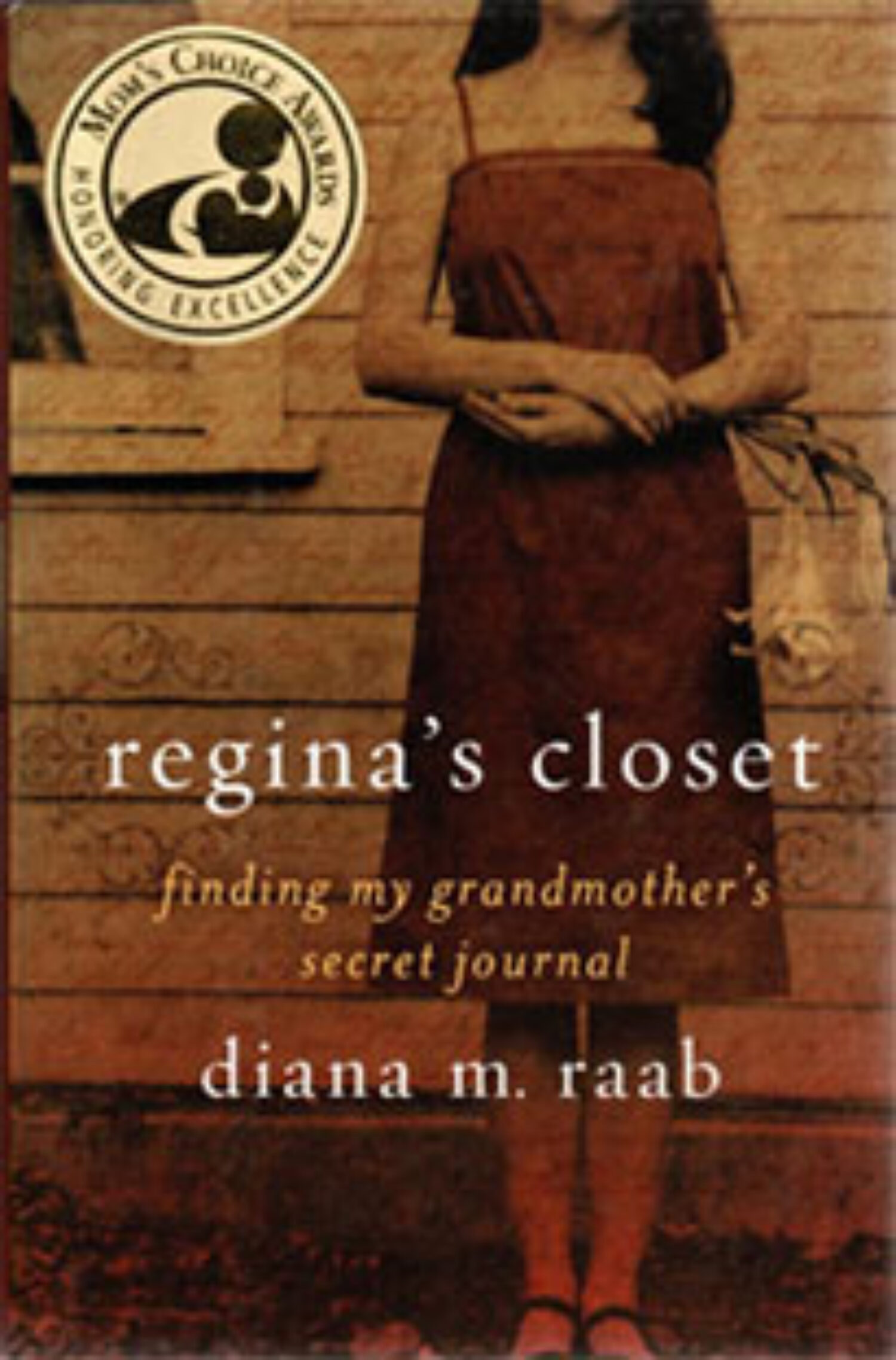
When I was ten years old my grandmother and caretaker committed suicide in her bedroom beside mine. It was Labor Day weekend and I knocked on her bedroom door to see if I could swim in a friend’s pool. With a child’s intuition, I knew something was seriously wrong and phoned my mother at work. Within minutes, an ambulance arrived at the front door. They took my grandmother away on a stretcher and I never saw her again. The emotions and visuals from that experience left me with an indelible wound which writing helped me heal.

It was the 1960s, a time when children were not typically welcome at funerals. Instead, my mother bought me a gold-embossed Khalil Gibran journal with sayings on the top of each page. She left me with a babysitter and told me to write down my feelings on the pages of my new journal.

To read more … check out my blog post in THE HUFFINGTON POST..

http://www.huffingtonpost.com/diana-m-raab/writers-and-their-dark-pl_b_994138.html


Have a good week !

Namaste,
Diana

The Joy of Meditating

In keeping with my young adulthood passions, I have recently circled back to my young adulthood passion of group meditation in addition to my private practice at home every morning. Recently I have been attending the local Buddhist Center that practices Kadampa Buddhism founded by Geshe Kelsang Gyatso. This type of practice is dedicated to people everywhere to help us find meaning and purpose in our everyday lives. The goal is to develop a sense of peace and happiness. In this week’s discussion the Monk spoke about how the spiritual mind feels a larger goal in life and does not get caught up in the little things happening. He tends to focus on what he can do.
Often times when I talk about meditating, people tell me they want to do it but don’t know how to start. Of course, the answer is there are many different ways to meditate and you must find the right one for you. For example, some people like guided meditation to music while others prefer the quiet. It is really a wonderful way to start your day. Here are some basic guidelines for beginners:

- Find a quiet time and place
- Sit cross-legged on a cushion or a chair. It’s important that your back is straight.
- Rest your hands comfortably on your knees or lap, palms facing upward
- Close your eyes
- Focus on your breath. Nostril breathing is best.
- Do this for 10-15 minutes a day

The biggest challenge is fighting what Natalie Goldberg calls “the monkey mind.” Whenever your thoughts wander away from your breath, it’s important that you bring your attention back to your breath. Do not become obsessed or wrapped up in an idea or “to do list.” This is not the idea of meditation. It’s all about relaxation. Over time, you will notice a sense of calm and spacious feeling of the mind. You can also practice this exercise with your eyes open, waiting in line at the bank, supermarket or seated in a doctor’s office. Focusing on your breath can be enlightening. Try it!

Transpersonal Psychology with Stanislav Grof

This past week I attended my first seminar for my PhD in Transpersonal Psychology at the Institute of Transpersonal Psychology in Palo Alto, CA. The keynote speaker was Stanislav Grof, author of Psychology of the Future (SUNY Press, 2000). His book and discussion were illuminating. Dr. Grof is a psychiatrist with more than sixty years of experience in the field of non-ordinary states of consciousness, who conducted a great deal of research with hallucinogenics in the 1960s. I immediately connected with him; after all, I am a baby boomer who grew up in New York in the 1960s. You bet I did my own experimentation to bring me to altered states of consciousness, although it was never called that. It was simply referred to as “getting high.”

Grof’s premise involves the idea that hallucinogenics have the ability to help us transcend to places which assist us in understanding who we are and what we are here for. So much of what he said resonated with me and it was nice to hear how eloquently he articulates his ideas. His discussion reminded me of an incident in my own adolescence. When my beloved grandfather who lived with us suddenly collapsed from a heart attack I remember feeling deep sadness and being offered LSD by some friends. They said the drug would not necessarily remove my grief nor help me escape it, but rather, it would help me reconnect with my grandfather at a more profound level.

As an open-minded teenager, I accepted their offering and since that day forward have believed in the power of hallucinogens.
Back in the 1960s the discipline of transpersonal psychology was not yet formulated. So I sort of consider myself an early practitioner, with my experimentation with LSD and practice of transcendental meditation. In some ways, I feel like a pioneer amongst my peers! In view of this, one of the most interesting ideas that I came away with from Grof’s talk was the idea that the deepest force or motive behind alcoholism and other forms of addiction is the misguided craving for some sort of transcendence. I had not heard this theory before and not only does it make absolute sense, but it also gives credence to my own experimentation with hallucinogenics. It is a fascinating idea that those with a tendency toward various addictions are searching for transcendence or a way to bring their lives to another level, whether they choose to use illicit drugs, alcohol, sex, food, or gambling.

The seminar also reminded me that the world is one big family, and that no matter where we live, who we are or what are our spiritual or cultural orientations, there is a common thread running through our lives. This is the ultimate quest for happiness. Everything we do and say is motivated by this common quest. On that note, I would like to feel a smile from all my readers!

Research on Demand

Because of technology, the world seems to be moving faster. In a recent New York Times article by James Gleick entitled, “Books and Other Fetishes,” (July 16, 2011), he discusses the role of digital media in the search for historical information. The raw material of history appears to be heading for the clouds. What was once hard is now easy. What was slow seems to now be fast, he summarizes.

It appears as if Europe has jumped on the bandwagon of using digitial media to capture historical information, quicker than us. Last month, the British Library announced a project in collaboration with Google which would digitize 40 million pages of books, pamphlets and periodicals dating back to the French Revolution. Of course there’s speculation that Europeans simply have more history to work with than we do, a good excuse for the need for digitalization.

There is a school of thought that this sort of thing called, “techno-enthusiasm” can potentially cheapen scholarship. An English historian Tristain Hung said, “When everything is downloadable, the mystery of history can be lost.”

In fact, my favorite part of school back in the sixties and seventies was going to the library and cracking open volumes of books and journals looking through the table of contents and indexes for answers to my research projects. I was always a research buff and continue to be one. Furthermore, it had additional entertainment value because of the opportunity to meander over to the photocopy machine to copy relevant pages to bring home. Forgive me if I am getting too nostalgic, but I do think we were previously more mindful back then, creating memories one moment at a time.

Doing research back then was simply more alluring, exciting and mysterious, whereas now it might simply involve one or two clicks on the computer. The magic and sense of discovery is minimized. Maybe I am just old-fashioned and love the old way better in the same way that I miss visiting bookstores vs. browsing online.

This reminds me of a time a few weeks ago when I visited the nearest chain bookstore, now a thirty-minute drive from my house. I phoned a writer friend from the reference section and said, “Guess where I am? I am at the Barnes and Noble in Ventura and am so excited to be here. I miss this.”

“I know what you mean,” he said. “I could easily live on the floor of a bookstore.” Now that might just be every writer’s fantasy.

Back to the subject of research. Maybe I am a believer in hard work producing results, thus spending long hours researching in the library or bookstore seems gratifying. The sense of serendipity and chance also seems to be lost during this new digital age.

I guess I better just buckle down and face the changes around me. Who am I fooling? I am aging; times are changing and the world moves on….

Writing For Happiness

The headline of an article in yesterday’s New York Times was entitled, “In Midlife, Boomers are Happy—And Suicidal.” (http://www.nytimes.com/2010/06/13/weekinreview/13cohen.html?emc=eta1).

This was certainly catchy enough to make me stop and read what the article had to say, particularly because of some recent turning points in my life, such as I recently celebrated my 56th birthday, my sister-in-law, Serena celebrated her 50th and my middle daughter, Regine, is getting married in less than three weeks.

The article began like this, “If you are suddenly feeling confused about whether to greet middle age with open arms or dread, it is understandable. In recent weeks, researchers reported that Americans in midlife are a remarkably contented lot, and that they also have the highest rate of suicide.” Surely Charles Dickens was correct when he said, “It was the best of times, it was the worst of times.” (http://en.wikipedia.org/wiki/A_Tale_of_Two_Cities)

At first, I was confused by the article’s opening paragraph, but while glancing over some recent pages of my journal depicting my own life, I completely understand the author, Patricia Cohen’s sentiments.

My husband and I have raised three wonderful kids who are now living on their own. We are lucky to have made an independent life for ourselves and are able to carve out enough time to follow some buried passions. Being in our 50s is also a time when we catch a glimpse of ailing health, whether it be from an elevated blood cholesterol or menopausal hot flashes. Coupled with this, many of us are finding that the time we had spent raising our kids are now devoted to taking care of our elderly parents. (I am thankful for each day that my mother remains independent at the age of 80).

It has been said that our generation of baby boomers is also called, “the sandwich generation.” Most of us have replaced the once urgent pressures of raising kids with more long-term and philosophical pressures like what we want to do with the rest of our lives. In a sense, many of us have re-entered the turmoil and confusion of adolescence.

In the journaling workshops I teach, I see many of my adult students at this juncture in their lives. The journaling process helps them understand not only how they are feeling, but helps them identify the right path for them.

By now, most of my readers understand that my solution to most of life’s dilemmas and questions lies in our freedom to pull out our notebooks and write down our emotional truth.

Here are some prompts to help you rekindle the joy in your life:

  • Describe how you are feeling right now
  • If you could be doing one thing to make you happy, what would it be?
  • Write a page describing your ideal life.
  • Write a love letter to yourself to read whenever you need to be nurtured and reminded of your hopes and dreams.

Remember that you are the star of your life story. You are responsible for the choices you have made in your life. If you are not happy, choose to be happy and make a change. You CAN do it. That’s the power of positive thinking and journaling can help you reach this goal!

Possibilities, Shamanic Healers and Reflections

Last Wednesday at Chaucer’s Bookstore in Santa Barbara, I attended a reading by a writing friend, Hope Edelman. We had first met at the University of Iowa’s Summer Writing Program back in the 1990s—where I was the student and she the instructor. I vividly recall sitting on the bench by the river, chatting as she pushed her baby carriage back and forth, cajoling her crying daughter. As the author of Motherless Daughters , I remember observing that her maternal instinct was strong. Today, that baby is twelve years old and the subject of her latest book, The Possibility of Everything. There are only a handful of nonfiction writers who I truly admire and whose work resonates deep inside my psyche and Hope is one of those.

The subject of Hope’s new book will intrigue even those who do not have a spiritual streak. Hope describes the book’s impetus as the introduction of ‘Dodo,’ into her three-year old daughter Maya’s life. As we learned during her powerful reading, Dodo was Maya’s imaginary friend who insidiously infiltrated every aspect of this young family’s life. This imaginary friend would instruct Maya to take random and bizarre actions, such as walking into a room where her mother was, hitting her and then leaving.

To help fix the problem, most parents would decide on the traditional medical route and pull the child down a path of intense psychoanalysis and perhaps years of treatment with a long train of still-unanswered questions as to whether the child is schizophrenic. But not Hope and her husband Uzi. with the encouragement of their Nicaraguan nanny, the couple decided to pursue nontraditional modalities.They packed their bags and took their daughter to Belize hoping that the healers there would help Maya banish Dodo from her life. The book is about that journey which ultimately lead to Maya’s cure.

A link has been made between children who have imaginary friends and creativity. As a matter of fact, Hope admitted that she had imaginary friends as a little girl, but supposedly they did not adversely affect her childhood nor her childhood relationships. In other words, unlike her daughter Maya, she did not become obsessed by her imaginary friend. As an only child, I also had imaginary friends, who helped to fill the gap of having siblings as playmates. After hearing Hope’s story, I have grown even more curious about the connection between these friends and creativity. I wondered if any of my readers have any comments.

I have only begun The Possibility of Everything, but cannot put it down. In addition to wanting to hear Hope’s story and her family’s extremely unorthodox choice to journey in Belize and visit shamanic healers, I am also intrigued by the idea of shamanic healers, in general, and other complimentary modalities.  I would love to hear about your experiences in this area.

Teenage Memories

This summer marked the 40th anniversary of Woodstock. It also marked the summer my sweet niece Laura turned sixteen. The summer I turned fifteen, my parents sent me to an International Teen Camp in Switzerland to learn French and it was one i will never forget.

This would be my first trip overseas without my parents. About one month before my departure date, I started taking the trip seriously and I began the arduous task of packing. I wondered how I’d fit my entire bedroom into one suitcase, or more realistically, how I’d go without all of my stuff for eight weeks. It’s not that I used everything everyday, but the security of all those things provided endless comfort and support in my early adolescent years.

From the attic I pulled down the largest suitcase I could find. Years later, my father reminded me that I had jammed everything into that suitcase, “except,” he added, “our kitchen sink!”

Like nearly every teen, music was an essential ingredient of my everyday happiness, but those were the days before iPods and CDs. To listen to music we had to use record players or use tape cassettes. I wouldn’t dream of venturing overseas for an entire summer without my record player. So a few days before leaving, I packed the rather large device in the middle of my suitcase, saddled between stacks of clothes. On the other side of the suitcase I tucked in my favorite forty-five records.

The Beatles song, Let it Be, had just been released and it was already my favorite. I stored that record separately in my backpack. Only four years before, the Beatles first appeared on the Ed Sullivan Show. I vividly remember my parents and I watching the extravaganza of those four cool British guys chatting with the talk show host and providing a sampling of their mesmerizing music.

By the time my trip to Switzerland came along, I had already blasted the song over and over stereo in my bedroom, decorated with neon posters and accentuated by strobe light hanging from the ceiling. One day, my music was so loud that my parents decided to install a wall-to-wall brown cork bulletin board to insulate them from the vibrations. It also gave me a chance to hang some favorite memorabilia and posters, but I think what they were really trying to do was create a sound barrier between our rooms!

The wise lyrics and pleasant melody of the Beatles song had a very calming effect on me, particularly during my homesick moments in Switzerland. Before long, I learned that it was also a favorite song amongst teens from all around the world. The song became our common denominator, as we struggled to communicate. What amazed me was how perfectly the foreigners sang the song, even though they had no idea what the words meant! I am not so sure things have changed today as people around the world still sing Beatles’ tunes.

I’m amazed about the timelessness of that song and how it still brings tears to my eyes. I am also in awe about the power of music and how it often does this so easily and with so much magic.

Now, nearly forty years later, Let it Be still conjures up images of those wonderful camp days, and the dances with boys from countries around the world, such as, France, Kuwait, Italy and the United States. I wonder what song and memories my niece Laura will have of her sixteenth year. Will her memories be as vivid and fun as mine? I surely hope so.